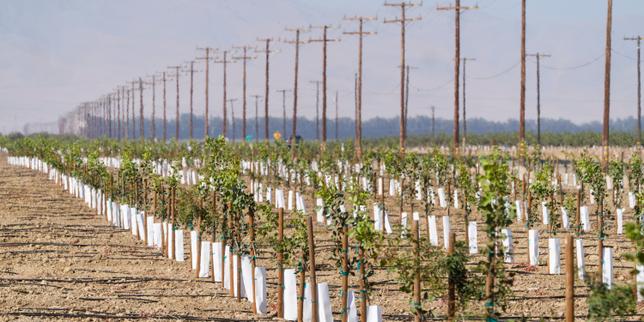
California nut growers are currently caught in a vice between record-breaking harvests and a collapsing geopolitical framework. While the state produces 80% of the world’s almonds and nearly half of the global pistachio supply, the escalating tensions between Washington and Tehran have effectively weaponized the global nut trade. This isn't just about tariffs. It is a fundamental shift in how food moves across borders when two major producers—the United States and Iran—are locked in a decades-long diplomatic freeze that has recently turned scorching hot.
The primary issue is the loss of market stability. When Iran faces sanctions or internal turmoil, the global supply of pistachios fluctuates wildly, forcing California farmers to ramp up production to fill the void. However, when those same geopolitical tensions spill over into regional conflicts or trade blockades, the logistics of moving California’s multi-billion dollar "green gold" through the Middle East becomes a nightmare of insurance premiums and shipping delays.
The Pistachio Proxy War
For years, the pistachio was the ultimate symbol of the competition between the Central Valley and the Kerman province. Iran was the historical heavyweight, but California overtook them through massive irrigation projects and industrialized farming. Now, that rivalry has morphed into a proxy war where the weapons are export credits and phytosanitary regulations.
Iran has historically used its pistachio exports as a way to bypass traditional financial systems. It is a hard currency crop. When the U.S. tightens the screws on Iranian banking, Tehran pushes its nuts into the global market at a discount, often through third-party intermediaries in Turkey or the UAE. This floods the market and depresses prices for the family farms in Fresno and Bakersfield.
California farmers operate on thin margins despite the massive scale. They have to deal with the Sustainable Groundwater Management Act (SGMA) and rising labor costs. They cannot compete with subsidized, sanctions-busting Iranian crops that don't have to meet the same environmental or labor standards. The friction between the two nations creates a price floor that is constantly falling out from under the American grower.
Cargo Ships and Cruise Missiles
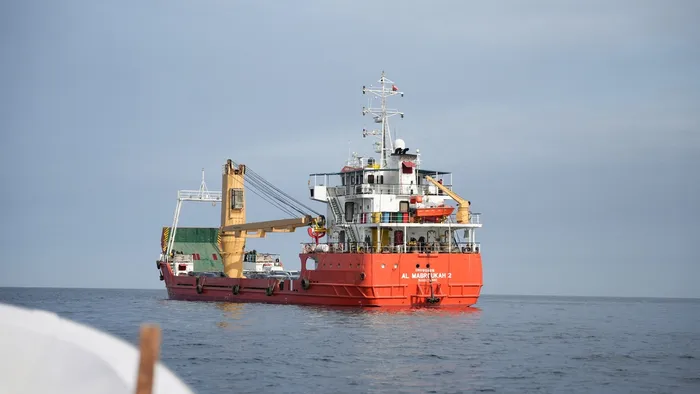
The logistics of the nut trade are surprisingly fragile. Most people don't think about the Strait of Hormuz when they buy a bag of snacks at a gas station, but that narrow waterway is a literal bottleneck for the industry.
When conflict flares up in the Middle East, shipping companies hike their rates. "War risk" surcharges can add thousands of dollars to the cost of a single container. For a California exporter sending walnuts to buyers in Israel, Jordan, or the Gulf States, these costs are often impossible to absorb. The ships have to take longer routes around the Cape of Good Hope, adding weeks to the journey.
Nuts are shelf-stable, but they aren't immortal. Heat and moisture during an extended sea voyage can lead to rancidity or mold. A three-week delay isn't just a late delivery; it can be a total loss of the cargo. The insurance companies are the only ones winning in this scenario. They raise premiums the moment a drone is spotted in the Red Sea, and those costs are passed directly down to the farmer who already spent a fortune on water and fertilizer.
The Hidden Cost of the Dollar
The strength of the U.S. dollar is another silent killer in this equation. As the U.S. maintains a hardline stance against Iran and other regional players, the dollar often spikes in value compared to the currencies of importing nations like India or Turkey.
A strong dollar makes California pistachios more expensive for foreign buyers. At the same time, the Iranian Rial's weakness makes their exports look like a bargain. Buyers in Mumbai or Istanbul are pragmatic. They might prefer the quality and reliability of California nuts, but they won't pay a 30% premium just to support a U.S. ally when the Iranian alternative is sitting in a warehouse nearby.
The Domestic Fallout
In the Central Valley, the anxiety is palpable. We are seeing a massive consolidation of land. Small-scale farmers are selling out to massive investment firms and insurance conglomerates. These institutional investors have the capital to weather a five-year geopolitical storm, but the multi-generational family farm does not.
The irony is thick. The very policies intended to exert pressure on foreign adversaries are indirectly hollowing out the agricultural backbone of the American West. When we talk about "food security," we usually focus on domestic supply. But for California, food security is tied to the ability to export. If the export market dies, the trees come down.
Water is the Ultimate Leverage
You cannot discuss California nuts without discussing water. The state is effectively exporting its limited water supply in the form of almonds and pistachios. Every gallon used to grow a nut that gets stuck in a shipping container because of a regional war is a gallon wasted.
There is a growing movement of critics who argue that California should pivot away from these thirsty export crops. They see the geopolitical volatility as a sign that the current model is unsustainable. If the world is going to be this unstable, why are we betting our most precious resource on the hope that the Middle East will stay quiet enough for our ships to pass?
The China Factor
China is the elephant in the room. As the U.S. and Iran clash, China has stepped in as the primary buyer for Iranian oil and agricultural products. This creates a closed-loop economy that bypasses Western influence entirely.
California used to dominate the Chinese nut market. However, the trade wars that began years ago, combined with the current geopolitical alignment, have seen China diversify its suppliers. They are investing heavily in pistachio orchards in Central Asia and providing a steady market for Iranian goods.
This leaves California farmers searching for new markets in an increasingly fragmented world. They are looking at Southeast Asia and North Africa, but those regions are also sensitive to the price shocks caused by the U.S.-Iran conflict. There is no easy escape from the gravity of global politics.
Survival of the Largest
The industry is currently in a period of "brutal Darwinism." Only the operations with the most sophisticated hedging strategies and the deepest pockets are surviving. They use complex financial instruments to bet against currency fluctuations and lock in shipping rates years in advance.
The average grower doesn't have a desk of high-frequency traders. They have a tractor and a prayer.
We are seeing a shift toward "vertical integration" where the same company owns the trees, the processing plant, the shipping company, and the distribution network in the destination country. This is the only way to minimize the "friction" caused by international conflict. If you control every step of the chain, you can find ways to move the product even when the traditional routes are blocked.
The Reality of the "New Normal"
There is no "back to normal" coming for the nut industry. The era of frictionless global trade is over. The idea that you could grow a crop in a desert in California and sell it to a wholesaler in Dubai without worrying about a missile strike or a sudden shift in Sanctions Law is a relic of the 1990s.
Farmers now have to be amateur CIA analysts. They have to watch the news from Tehran as closely as they watch the weather reports from the Sierras. A speech by a cleric in Qom can have a bigger impact on the price of pistachios than a heatwave in Modesto.
The struggle is not just about competing with Iranian farmers on quality or price. It is about navigating a world where the trade route itself is a battlefield. For the California nut industry to survive, it has to stop pretending it exists in a vacuum of "free trade."
The green gold of the Central Valley is being held hostage by the geopolitical realities of the 21st century. The solution isn't more subsidies or better marketing; it’s a radical reassessment of how we value and protect our agricultural exports in an age of permanent instability. Growers must diversify not just their crops, but their logistical pathways, or risk becoming collateral damage in a conflict they didn't start and cannot end.