Diplomatic pronouncements frequently obscure the cold mechanics of statecraft beneath a veneer of shared values and optimistic forecasts. The declaration by US Secretary of State Marco Rubio during his May 2026 visit to New Delhi regarding forthcoming, non-specific announcements to strengthen ties serves as a classic case study. While media narratives focus on personal chemistry between executive leaders, a rigorous analysis reveals that the bilateral trajectory is dictated by three rigid structural pillars: supply chain insulation, energy market stabilization, and defensive technology integration.
The underlying reality of contemporary international relations prevents either Washington or New Delhi from relying on sentiment. Instead, both states operate under a transactional framework where alignment is driven by a shared, urgent need to mitigate external vulnerabilities. By analyzing the strategic mechanisms at play, we can move past the vague rhetoric of partnership and examine the quantifiable economic and security levers driving this bilateral architecture.
The Tri-Hub Supply Chain Model and Pax Silica
The primary mechanism driving the modern US-India economic relationship is structural decoupling from concentrated manufacturing centers, specifically within the technology and semiconductor sectors. This is operationalized through India’s integration into "Pax Silica" and the formalization of the Quad Critical Minerals Initiative. The economic logic here is dictated by a diversification function designed to minimize supply chain vulnerabilities.
[Global Supply Chain Vulnerability] ---> [Quad Critical Minerals Initiative] ---> [Pax Silica Integration]
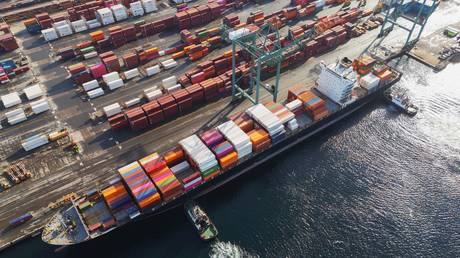
To quantify the current baseline, Indian corporate entities have scaled their capital expenditure within the United States to 20 billion dollars. This capital deployment serves a dual purpose: it secures market access for Indian firms within the American industrial base while providing the US with distributed manufacturing partners. The strategic imperative is governed by the concentration risk of critical minerals, where single-nation dominance over resources like synthetic and natural graphite introduces a single point of failure for next-generation energy storage and defense systems.
The structural response relies on establishing redundant supply architectures. This process is not seamless; it creates an immediate friction point between short-term cost optimization and long-term strategic resilience. While moving production facilities out of entrenched hubs increases short-term capital expenditures, the long-term payoff is a reduction in geopolitical risk premiums. The upcoming bilateral agreements are mathematically bound to prioritize this risk-mitigation framework over traditional free-trade agreements.
The Strategic Balance Sheet of the America First Visa Framework
A concrete manifestation of this transactional diplomacy is the introduction of the modified visa scheduling tool. This initiative must be evaluated through the lens of human capital optimization and domestic border security, rather than as a standard immigration pathway.
The structural mechanics of this policy operate on a strict prioritization matrix:
- Priority Tier: Allocated exclusively to high-value business professionals whose immediate travel directly correlates with capital deployment, joint venture execution, or supply chain construction.
- Vetting Function: Enhanced screening protocols at newly expanded consular facilities, treating every visa allocation as a sovereign national security evaluation rather than an administrative formality.
- The Foreign Repatriation Mandate: A systemic shift requiring temporary visa holders seeking permanent residency to return to their home countries to complete processing.
This policy creates a complex operational bottleneck. While it accelerates the mobility of executive and technical talent directly tied to bilateral commerce, it simultaneously increases the friction and regulatory burden for the broader, non-strategic labor pool. The strategy aims to decouple high-value economic collaboration from open-ended immigration pipelines, ensuring that human capital flows are explicitly aligned with national industrial policies.
The Energy Security Equation Amid West Asian Volatility
The ongoing conflict involving Iran has introduced severe volatility into global energy markets, forcing a structural recalibration of India’s crude oil import architecture. India, as a major net energy importer, has historically balanced its budget by sourcing discounted crude from various sanctioned or high-risk suppliers, notably Russia.
Washington’s strategic counter-offer relies on expanding US liquefied natural gas (LNG) and crude exports to the subcontinent. The economic formula behind this push is straightforward:
$$V_s = f(D_s, P_m)$$
Where:
- $V_s$ represents India's supply vulnerability.
- $D_s$ represents the diversification index of energy suppliers.
- $P_m$ represents the market premium driven by geopolitical friction points.
The US objective is to leverage its domestic energy surplus to replace volatile supply lines, effectively attempting to shift India away from alternative non-Western supply webs. However, this strategic shift faces a major economic hurdle: price differentials. US energy exports operate on commercial market terms, whereas alternative sources often come with heavy geopolitical discounts.
Therefore, any meaningful shift in India's energy sourcing depends on the US providing long-term pricing guarantees or structural financing tools to offset the higher cost of American energy products. Without these financial mechanisms, diplomatic declarations about energy security will remain secondary to India's fiscal realities.
Defense Tech Integration and Co-Production Boundaries
The defense component of the relationship has shifted from standard buyer-seller transactions to co-production and technology transfers under the Quad framework. This transition is visible in the preparations for the May 2026 Quad Foreign Ministers' meeting in New Delhi. The primary objective is to build an integrated defense ecosystem in the Indo-Pacific capable of maintaining maritime security and protecting sea lines of communication.
The primary limitation of this framework is the friction between technology sharing and domestic industrial protectionism. The US defense industrial base operates under strict export controls, which frequently clash with India’s domestic manufacturing mandates.
[US Export Controls] <--- Structural Friction ---> [India's Co-Production Mandates]
This structural mismatch creates an operational bottleneck that slows down the deployment of joint platforms. Rather than aiming for full systemic integration, realistic progress will likely be limited to specific, modular sectors, such as unmanned aerial vehicles, maritime domain awareness systems, and secure communications hardware.
The Transactional Reality of Executive Diplomacy
The diplomatic alignment between New Delhi and Washington is fundamentally transactional, driven by overlapping strategic vulnerabilities rather than a shared ideological vision. The personal rapport between executive leaders serves as a useful tool to overcome bureaucratic inertia, but it cannot override core national interests. India’s historical commitment to strategic autonomy remains a central pillar of its foreign policy, as demonstrated by its continued engagement with alternative multilateral forums like BRICS.
Consequently, the upcoming agreements will not result in a formal treaty alliance. Instead, the relationship will function as a series of specific, issue-by-issue partnerships. The success of this strategic alignment will be measured by how effectively both nations can manage trade disputes, handle unilateral tariff implementations, and navigate differing approaches to global conflicts, all while continuing to build decoupled supply chains and secure defense networks.
The optimal strategy for corporate and political planners is to ignore the sweeping diplomatic rhetoric and focus entirely on the precise policy mechanisms being deployed. Future capital allocation should prioritize initiatives that fit squarely within the recognized strategic sectors: critical mineral processing, high-value technical manufacturing, modular defense co-production, and commercial energy infrastructure. Projects outside these parameters will face increasing regulatory headwinds as both governments continue to prioritize national security over open market access.