You are trapped in an endless scroll. Netflix uses an automated recommendation system to guess what you want based on your past habits, but you spend 20 minutes clicking through menus just to settle on an episode of a sitcom you have already watched five times. It is a common modern frustration.
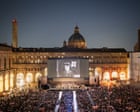
Yet, in the northern Italian city of Bologna, something entirely opposite is happening. Thousands of twenty-somethings are packed into a Renaissance square, staring at a massive outdoor screen showing a black-and-white silent movie from 1925 with a live piano player providing the soundtrack.
This is Il Cinema Ritrovato. The event celebrates its 40th anniversary this year, running from June 20 to 28. It is a celebration of fully restored, long-buried, and forgotten cinema. While traditional movie theaters struggle to fill seats, this highly specialized gathering drew a massive crowd of 140,000 attendees last year.
The most surprising part? The audience is getting drastically younger.
Digital natives who grew up with smartphones are traveling across continents to watch century-old films. To understand why this shift is happening, you have to look at how modern content delivery systems have stripped the discovery process out of art.
The problem with automated curation
Online platforms operate on a simple logic: give people more of what they already like. If you watch a true-crime docuseries, your dashboard will suggest five more just like it. Over time, your digital world shrinks. You get a repetitive stream of similar content designed to keep you watching without ever challenging your taste.
Bologna turns that model upside down.
The festival screens over 500 films across nine days. You don't browse a database based on your past data; you sit in a dark theater like the Cinema Modernissimo and watch whatever the programmers unearthed from global archives.
Co-founder Gian Luca Farinelli notes that for younger viewers, old films feel completely new. They didn't grow up with these movies, so seeing them isn't an exercise in nostalgia. It is an act of pure discovery.
Consider the 1965 surrealist film A Spring for the Thirsty, directed by Ukrainian filmmaker Yuri Ilyenko. Soviet authorities banned it for decades because of its political and artistic choices. The film was meticulously restored at Bologna's specialized laboratory, L'Immagine Ritrovato. When young cinephiles watch it today, they aren't consuming a generic piece of mass entertainment. They are experiencing a piece of history that someone tried to erase.
Why physical spaces beat digital isolation
Watching a movie on a phone or laptop is an isolated experience. You can pause it, check your notifications, or look away when the pace slows down. It requires very little commitment.
The appeal of Bologna lies heavily in its physical environment. Every night, the central Piazza Maggiore transforms into a massive open-air theater.
[The Piazza Maggiore Experience]
- 140,000 annual attendees sharing a single space
- Massive outdoor screen framed by Renaissance architecture
- Restored classics like Charlie Chaplin's "The Gold Rush"
- Zero algorithmic filters or targeted ads
Sitting shoulder-to-shoulder with thousands of strangers creates a distinct psychological reaction. You can't fast-forward through a slow scene. You have to sit with the film, feel the crowd's collective energy, laugh together, and experience the story at the exact pace the director intended.
This communal environment is exactly what digital media lacks. Younger audiences aren't rejecting technology; they are looking for meaningful experiences that technology has stripped away. They want context, history, and a shared reality.
The archival work behind the screen
The event isn't just a marathon of old movies; it relies on an intensive preservation effort. The Cineteca di Bologna, which organizes the event, houses one of the world's premier laboratories for film restoration.
Restoring a film isn't as simple as running a digital filter over an old video file. It involves tracking down decaying physical negatives from international vaults, cleaning dust and scratches frame by frame, and correcting color fading. The goal is to match the original presentation as closely as possible without introducing modern digital artifacts.
This year's lineup features a massive retrospective of Italian director Luchino Visconti, including a presentation of his masterpiece Il Gattopardo. It also shines a light on historical screen legends like Barbara Stanwyck and Josephine Baker.
By treating film history as a living narrative rather than a dead archive, the organizers make the past feel relevant. They present the contradictions, conflicts, and political struggles of past eras through the lenses of the people who lived them.
How to break out of your own media bubble
You don't need to fly to northern Italy tomorrow to change how you consume art, though attending Il Cinema Ritrovato requires purchasing a festival pass via their official platform. You can start breaking out of your algorithmic bubble right now by changing your habits.
First, stop letting automated recommendations choose your media. Seek out independent restoration labels like The Criterion Collection, Milestone Films, or Flicker Alley. These organizations focus on historical preservation and offer curated selections that bypass mainstream corporate distribution channels.
Second, seek out local repertory theaters or film societies in your area. Look for venues that screen physical prints or host specialized retrospectives. The act of leaving your home, paying for a ticket, and sitting in a room with other people completely changes your relationship with what you are watching.
The growth of Bologna's audience proves that people want depth. They want things that are rare, difficult to find, and full of historical friction. Turn off the recommendation engine, close the endless scroll, and go look for something old that you have never heard of before.