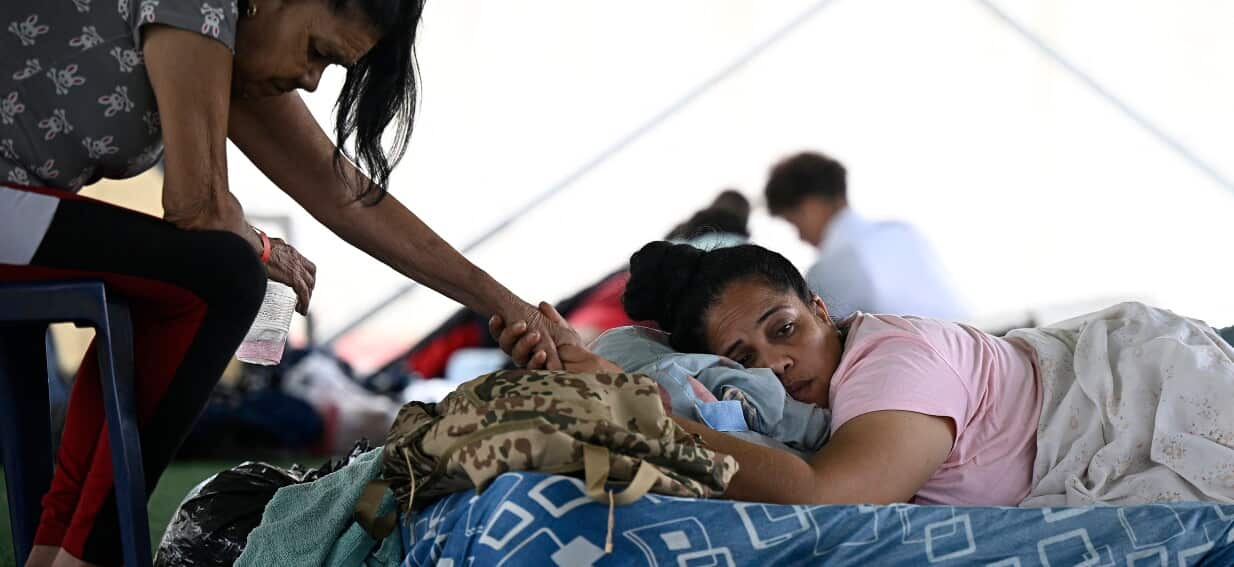
Getting a call approving a medical evacuation two weeks after the patient has already died isn't a freak administrative glitch. It's the standard reality for thousands of critically ill and injured people trapped in Gaza.
The medical system in the strip has completely buckled. Hospitals are mostly rubble, basic supplies don't exist, and the specialized care needed for cancer, severe burns, and complex trauma is completely gone. Yet, the bureaucratic system designed to let the sickest patients leave for treatment is so broken, slow, and unpredictable that it functions less like a lifeline and more like a lottery where the prize arrives too late. If you enjoyed this article, you might want to check out: this related article.
We need to look at how this system actually operates, why it fails so catastrophically, and what international agencies are saying about the bottleneck.
How the Gaza Medical Evacuation System Actually Works
Before May 2024, the primary route for medical evacuation was through the Rafah crossing into Egypt. When that crossing closed, the options shrunk to almost nothing. Currently, evacuations rely on highly coordinated, irregular transfers managed through the World Health Organization (WHO), UNICEF, and various international governments, which must clear patient lists through Israeli authorities. For another angle on this event, check out the recent update from The Guardian.
The process is supposed to prioritize the most critical cases. In practice, it's a black box.
- The Application: Local doctors identify patients who cannot be treated with available resources—such as children with advanced oncology needs or patients requiring complex vascular surgery.
- The Review: Patient files are submitted to international coordinators, who then pass them to Israeli authorities for security clearance.
- The Approval: If cleared, patients are scheduled for transport, often through the Kerem Shalom crossing, to be flown to receiving countries like the UAE, Romania, or Jordan.
The core issue isn't a lack of willing hospitals abroad. Countries have stepped up offering hundreds of beds. The bottleneck is the approval rate. According to data from the WHO, less than half of the patients who apply for medical evacuation are actually approved. Thousands of requests sit in limbo for months. For a stage-four cancer patient or a child with deep infected burns, a three-month delay is a death sentence.
The Real Numbers Behind the Backlog
To understand the scale, you have to look at the hard data provided by humanitarian organizations operating on the ground.
According to WHO situation reports, more than 14,000 patients currently require medical evacuation outside the Gaza Strip. Since October 2023, only a fraction of those have successfully left. The closure of the Rafah crossing in May 2024 choked the exit rate down to a trickle. Prior to the closure, around 100 patients left per day. Afterward, that number plummeted to occasional groups of 20 or 30 every few weeks.
| Patient Status | Estimated Numbers |
|---|---|
| Total requiring urgent evacuation | Over 14,000 |
| Children waiting for oncology care | Estimated 1,500+ |
| Average approval time | Weeks to months |
This backlog creates a secondary crisis inside the remaining partial hospitals. Patients who should be in specialized clinics abroad occupy the few functioning beds left in Gaza, consuming scarce oxygen and pain medication that doctors must ration.
Why the Delay is Fatal for Trauma and Oncology
Medical delays don't just postpone recovery. They change the prognosis entirely. Doctors working with NGOs like Médecins Sans Frontières (Doctors Without Borders) report that wounds that would be manageable with standard antibiotics and clean dressings turn into systemic sepsis while waiting for paperwork.
Take pediatric oncology. Cancer doesn't pause for security screenings. A child needing chemotherapy needs it on a strict, predictable cycle. When that cycle breaks, the cancer mutates and spreads. By the time an approval notice finally comes through, the treatment options that might have worked six months ago are no longer viable.
Then there's the issue of companions. Israeli policy generally requires patients to be accompanied by a guardian, but the security clearance for the companion is handled separately. It's common for a sick child to get approval while their mother is denied. Parents face an agonizing choice: send their terrified, dying child alone to a foreign country, or refuse the evacuation and stay together in a war zone. This bureaucratic friction adds days or weeks of renegotiation to an already sluggish process.
What International Aid Agencies Are Demanding
Humanitarian groups aren't just complaining. They have laid out specific, actionable steps to fix the evacuation pipeline immediately. If you want to see this crisis resolved, these are the policy shifts that matter.
First, establish permanent, predictable medical corridors. Relying on ad hoc agreements every few weeks makes planning impossible for receiving hospitals. The WHO has repeatedly called for the reopening of the Rafah and Kerem Shalom crossings specifically for medical transfers, completely independent of political or military negotiations.
Second, streamline the security vetting process for pediatric patients and their immediate caregivers. The current system treats every application with the same prolonged timeline. Categorizing children and their mothers under an expedited review process would save lives within days.
Finally, international pressure must focus on securing blanket approvals for medical transport vehicles. Ambulances face hours of delays at checkpoints within Gaza just trying to reach the exit points. Giving UN-vetted medical convoys protected, uninterrupted passage is the only way to ensure patients survive the journey to the border.