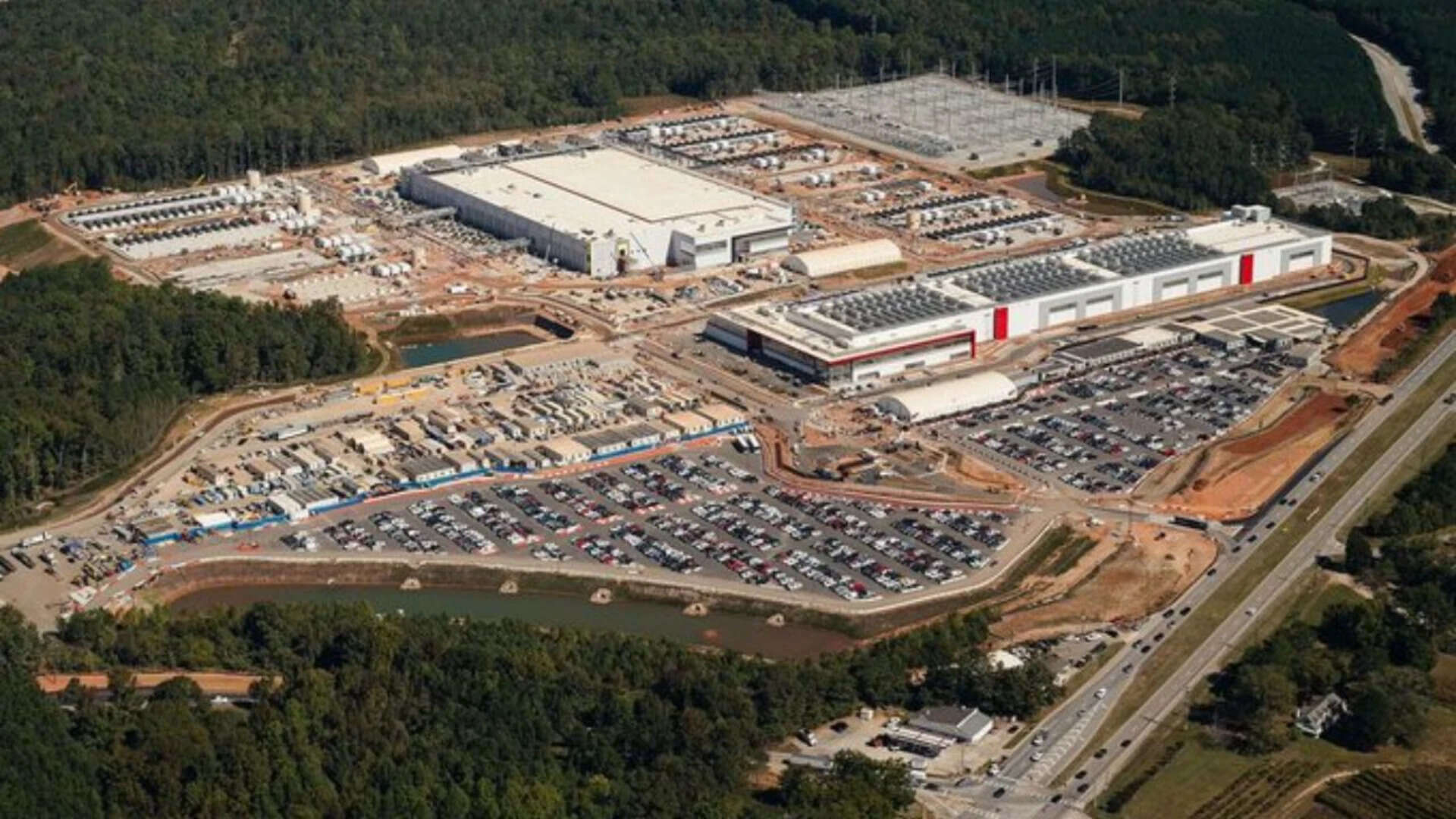
Hyperscale data centre deployment faces a structural bottleneck that cannot be solved by software optimization or capital expenditure alone: the physical reality of acoustic propagation in municipal zones. Microsoft’s $7.3 billion infrastructure investment highlights a growing friction between hyper-growth AI compute demands and local zoning realities. When a multi-billion-dollar facility faces litigation from adjacent residents due to uninterrupted, low-frequency acoustic emissions, the issue is not merely public relations. It represents an operational failure to account for the total cost of cooling thermodynamics.
To evaluate this structural vulnerability, hyperscale infrastructure deployment must be analyzed through three distinct lenses: the thermodynamics of continuous mechanical load, the acoustic physics of low-frequency attenuation, and the regulatory asymmetry between industrial zoning and residential habitability.
The Mechanical Core: Why AI Compute Demands Continuous Acoustic Output
The core driver of data centre noise is the physical relationship between computational workload and heat dissipation. Traditional cloud computing workloads are bursty, creating peak demand cycles followed by periods of thermal cooling. Artificial intelligence workloads, specifically large language model training and continuous inference pipelines, run high-density workloads over extended periods.
This creates a persistent thermal profile. The heat rejection mechanisms required to prevent silicon degradation operate under a continuous, unyielding load function.
The Heat Rejection Loop
To understand the acoustic generation, one must trace the energy path from the chip to the atmosphere:
- Silicon Heat Generation: High-density server racks generate thermal energy that must be transferred immediately via liquid cooling blocks or high-velocity air handlers.
- Chiller and Condenser Load: The internal facility air handlers transfer heat to a chilled water loop. This loop relies on external cooling towers, chillers, and computer room air conditioning (CRAC) units to expel heat into the ambient air.
- Fan Velocity and Aerodynamic Noise: The primary source of audible disturbance stems from the rotation of massive condenser fan blades and compressor units. To move the volume of air required to cool a $7.3 billion asset base, these fans must maintain high RPMs, generating continuous aerodynamic shear stress against the air.
This mechanical reality creates a flat-line acoustic profile. Unlike traditional industrial facilities that scale down operations during nocturnal shifts, a data centre running AI optimization workloads demands identical cooling capacity at 3:00 AM as it does at 3:00 PM. The human perception of this noise changes drastically between these periods because ambient urban noise drops during nocturnal hours, exposing the facility's baseline acoustic output.
The Physics of Low-Frequency Attenuation Failures
Industrial operators often make the mistake of evaluating acoustic impact using weighted decibel scales (dBA) that mimic the human ear's sensitivity to mid-range frequencies. This approach fails to account for the specific acoustic signature of data centres: low-frequency rumble.
Low-frequency noise, typically defined between 20 Hz and 250 Hz, behaves differently than high-frequency sound waves. High-frequency sounds are easily absorbed by standard atmospheric conditions, vegetation, and standard building facades. Low-frequency waves possess long wavelengths that pass through structural barriers with minimal energy loss.
The Barrier Inefficiency Problem
Standard mitigation strategy relies on erecting perimeter acoustic barriers or acoustic louvers around condenser yards. While effective against high-frequency fan blade hiss, these barriers are largely transparent to low-frequency hums generated by massive compressors and structural vibrations. The sound waves diffract over the top of standard acoustic walls, bending downward toward surrounding properties due to atmospheric refraction, particularly during nighttime thermal inversions.
Structural Resonance and Human Physiology
When low-frequency acoustic energy reaches residential structures, it often matches the natural resonant frequencies of walls, windows, and interior air volumes. This creates an amplification effect inside homes, transforming a minor external acoustic signature into a noticeable internal hum.
This specific frequency profile disrupts human sleep architecture. Unlike intermittent noise, which triggers acute arousal responses, continuous low-frequency noise prevents individuals from entering deep REM states, creating long-term physiological strain. Litigation brought by community members is driven by this persistent sensory intrusion, transforming an engineering oversight into a liability exposure.
Regulatory Asymmetry and the Failure of Traditional Zoning
The legal vulnerability of tech conglomerates stems from an outdated regulatory framework. Most local municipal ordinances rely on static noise limits defined decades ago for traditional industrial zones, such as warehouses or manufacturing plants. These frameworks are ill-equipped for hyperscale data infrastructure.
The Decibel Flaw in Municipal Codes
A typical municipal noise ordinance might permit an industrial property to emit up to 55 dBA at the residential property line during nighttime hours. A data centre may technically operate within this numerical boundary while still generating severe community disruption.
The issue lies in the nature of the sound. Standard dBA metrics average out acoustic energy over time and suppress the measurement of low frequencies. A continuous, tonal hum at 50 dB in the 60 Hz band feels significantly more intrusive than a fluctuating, broad-spectrum sound of 55 dBA, yet municipal frameworks often treat them identically.
Tort Law vs. Zoning Compliance
Tech companies frequently use compliance with local zoning laws as a primary defense. However, compliance with a municipal ordinance does not grant immunity from common-law private nuisance claims.
The legal standard for a private nuisance rests on whether an activity causes a substantial and unreasonable interference with the use and enjoyment of land. A court evaluating a lawsuit brought by sleep-deprived neighbors looks past regulatory compliance to analyze the actual human impact. When a facility emits an uninterrupted noise that prevents sleep, plaintiffs have a viable path to secure injunctions or damages, regardless of whether the facility satisfies local decibel limits.
The Financial Realities of Retrofitted Mitigation
When a facility worth billions faces an acoustic lawsuit, the options for remediation are highly constrained and capital-intensive. Retrofitting a live, operational data centre requires navigating complex engineering trade-offs that can degrade infrastructure efficiency.
Airflow Restriction Bottlenecks
The most direct method to dampen fan noise is the installation of silencers, mufflers, or extensive acoustic louvers. These interventions function by forcing air through tortuous paths lined with sound-absorbing material.
This introduces static pressure into the cooling loop. To push air through a high-resistance acoustic path, fans must consume more electrical energy, driving up the facility’s Power Usage Effectiveness (PUE) metric. In worst-case scenarios, the added static pressure starves the cooling systems of necessary air volume, forcing a de-rating of the server infrastructure's computational capacity to prevent thermal throttling.
The Failure of Active Noise Cancellation at Scale
Proposals to deploy industrial-scale active noise cancellation (ANC) systems face major physics limitations. While ANC works well in localized environments like headphones or tight ducting channels, canceling open-air acoustic propagation across a massive, multi-acre condenser yard requires precise control over complex, multi-directional wave fields. Atmospheric turbulence, wind shear, and temperature gradients distort the anti-noise waves, often rendering the system ineffective or creating zones of localized amplification.
Engineering and Strategic Protocols for Future Deployments
To insulate future high-density infrastructure investments from legal liabilities and operational disruptions, hyperscale developers must replace legacy site selection and design models with a strict acoustic risk protocol.
Advanced Thermodynamic Siting
Future site acquisition matrices must evaluate topography and atmospheric profiles alongside power availability and fiber access. Facilities running continuous AI compute loads should be situated in depressions or locations where natural terrain blocks direct lines of acoustic sight to residential boundaries. Sites requiring adjacent residential buffers must expand the exclusion zone to a distance calculated using low-frequency hemispherical wave divergence formulas, rather than standard municipal setbacks.
Liquid Cooling Transition
The ultimate solution to data centre acoustic emissions requires moving away from air-cooled heat rejection entirely. Transitioning to direct-to-chip liquid cooling or total immersion cooling fundamentally changes the facility's acoustic profile.
Liquid cooling loops replace high-velocity, high-RPM air fans with low-speed fluid pumps and closed-loop evaporative systems. This design concentrates the mechanical load into highly efficient, lower-frequency systems that can be buried underground or isolated within heavily insulated internal structural cores, removing the acoustic threat from the surrounding environment.
Developers must treat acoustic management as a primary uptime variable, rather than a secondary compliance checklist item. Failure to integrate low-frequency acoustic dynamics into the initial capital expenditure blueprint risks turning high-value computing assets into stranded legal liabilities.
_(cropped).jpg/440px-Rob_O'Neill_(40543587961)_(cropped).jpg)