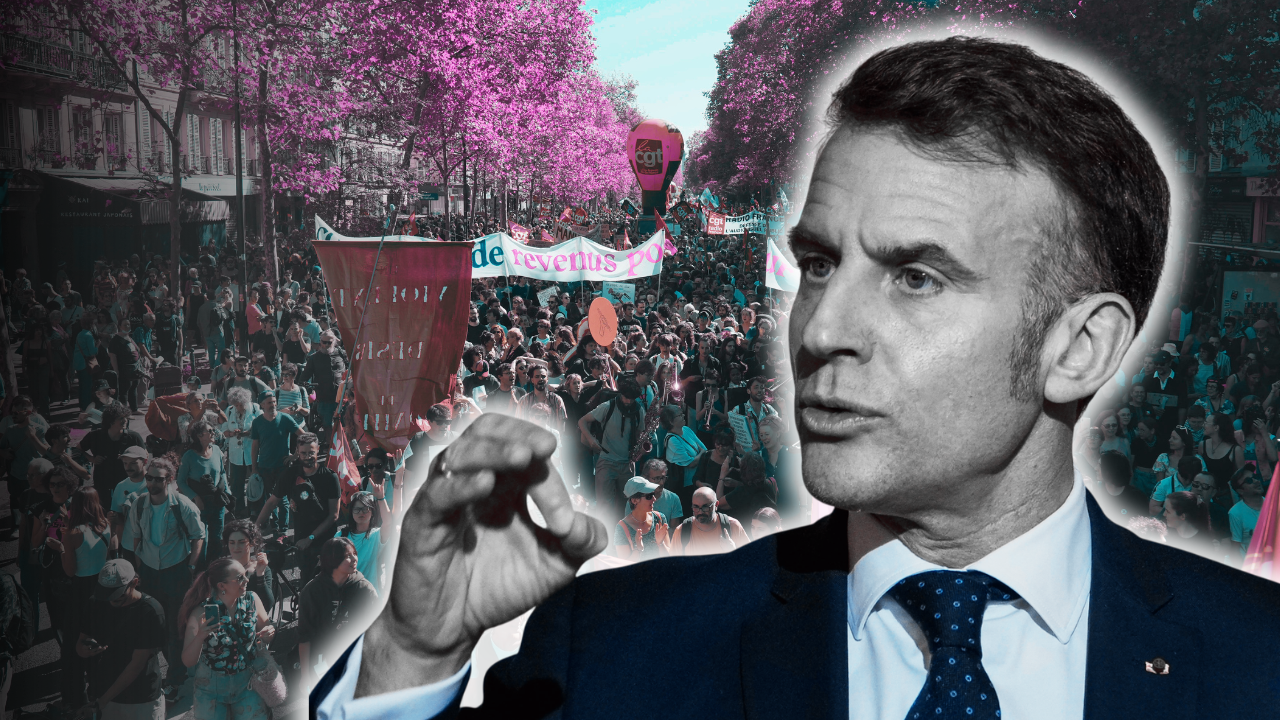
Emmanuel Macron wanted a quiet semester. He received burning barricades instead.
When the Elysée Palace rolls out emergency financial aid packages to appease angry undergraduates, the administration treats a systemic structural collapse as if it were a temporary accounting error. For months, university campuses across France have morphed into pressure cookers. Rent inflation, food insecurity, and the crushing psychological weight of precarious employment prospects have transformed lecture halls into organizing centers for discontent. Macron is offering concrete measures, but his ministers are applying twenty-first-century Band-Aids to nineteenth-century institutional rot. For another perspective, check out: this related article.
To understand why these concessions fail to quiet the quad, one must examine the fundamental disconnect between government accounting and student survival.
Higher education in France has long operated on an egalitarian myth. The promise was simple: free or near-free tuition in exchange for meritocratic upward mobility. State universities were supposed to be the great equalizers of the republic. Similar analysis on this matter has been shared by The Guardian.
The reality today resembles an overcrowded triage ward. Lecture halls designed for three hundred students routinely pack six hundred bodies. Ample numbers of young people sit on floors, straining to hear lectures through failing public address systems. Professors are stretched past exhaustion, grading hundreds of digital exams without adequate administrative support.
When a student pays three euros for a cafeteria meal, they are not experiencing a subsidized luxury. They are participating in a state-managed rationing system.
Inflation over the past three years shattered this fragile equilibrium. Energy costs skyrocketed. Private rental markets in university towns like Paris, Lyon, and Bordeaux priced students out entirely. Many young people rely on food banks organized by student unions just to get through the week.
When the state steps in with a one-off relief check or promises to freeze meal prices at university canteens, it misses the larger transformation. This generation of students views their economic precarity not as bad luck, but as structural abandonment.
The political strategy behind Macron's response relies on containment. Identify the pressure point, announce a targeted fund, stage a photo opportunity with a smiling cabinet minister, and wait for the news cycle to shift toward international diplomacy or pension reform.
It is a playbook forged in technocracy. It assumes that anger can be bought off with modest fiscal injections.
This approach ignores the fundamental psychology of modern campus activism. Today's student organizers are not merely negotiating for a larger slice of the budgetary pie. They are questioning the architecture of the pie itself. They see the gig economy waiting for them upon graduation—a landscape of unpaid internships, short-term contracts, and delayed independence.
When protesters occupy university administration buildings, they are rejecting a social contract they believe broke long before they arrived at university gates.
Look at the history of Fifth Republic protests. Movements born in the student quarters of Paris possess a volatile, unpredictable trajectory. In May 1968, a localized dispute over dormitory visitation rights detonated into a nationwide general strike that nearly toppled Charles de Gaulle. In 2006, youth mobilization forced the conservative government of Dominique de Villepin to completely scrap a controversial employment contract for young workers within weeks.
French presidents understand this history intimately. It haunts them. Every time a crowd gathers at Place de la République or blocks the entrance to a university campus in Toulouse, presidential aides immediately calculate the risk of contagion. Will the student anger bleed into the labor unions? Will the transport workers join the picket lines? Will the peripheries of the cities ignite?
That fear explains the speed of the government's financial response. It also explains its ultimate futility.
Throwing hundreds of millions of euros at university infrastructure funds does not solve the housing crisis. Subsidizing emergency grocery vouchers does not guarantee a stable entry-level job in a saturated labor market. By treating structural despair as a liquidity problem, the government ensures that the cycle of unrest will repeat itself at the next budget cycle.
The structural flaws run deeper than funding formulas. France's higher education system remains stubbornly divided into a two-tier caste structure. On one side sit the elite grandes écoles—exclusive, well-funded incubators for the country's political and corporate ruling class. On the other side languish the public universities, open to anyone with a baccalaureate, chronically underfunded, and left to manage the mass influx of a growing demographic.
When politicians speak of protecting students, they rarely address this apartheid of esteem and resources.
A student at Sciences Po or École Polytechnique enjoys networking events, career placement pipelines, and modern facilities. A student at a suburban university campus deals with broken heating systems, moldering libraries, and administrative bureaucracy that treats them like an annoyance rather than a client.
Until the state dismantles this internal hierarchy, pouring money into public universities is like pouring water into a cracked basin. The fluid disappears before it can nourish the roots.
Macron’s attempts to quell the unrest through executive announcements demonstrate the limits of top-down governance. In a centralized state like France, power flows from Paris outward. Decisions are made in gilded rooms by advisors who have rarely worried about the price of pasta or the availability of a secure lease.
When those advisors craft concrete measures, they design them for a demographic that exists on a spreadsheet, not in a drafty student apartment.
The students know this. They recognize technocratic management when they see it. They smell the calculation behind the sudden generosity. That recognition breeds a cynicism that goes far beyond partisan politics. It targets the very legitimacy of the state's administrative machinery.
As semester exams approach, the barricades may temporarily clear. Police may sweep university courtyards. The media spotlight will drift toward the next international summit or domestic controversy.
Do not mistake that silence for resolution. The structural pressures remain entirely intact. The rent remains high. The lecture halls remain full. The future remains obscured by an economic fog that no presidential decree can clear.
The unrest will return because the underlying conditions demand it. And next time, the patch will not hold.