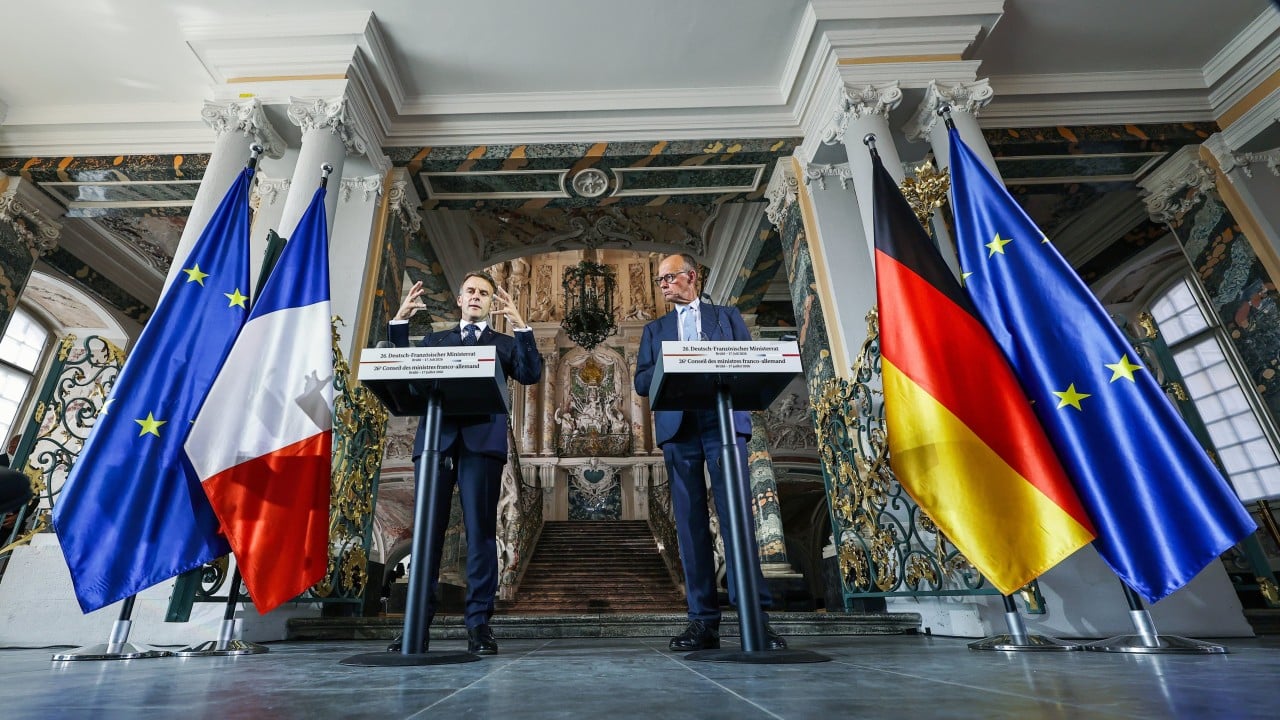
The mainstream defense press is celebrating a miracle. Brussels is buzzing about the latest diplomatic breakthrough out of Paris and Berlin. A "historic nuclear deal" to secure the continent. A unified front to build up European strategic autonomy. A grand compromise where French atomic deterrence finally shakes hands with German industrial capital to shield Europe from external aggression.
It is a beautiful narrative. It is also completely detached from reality.
What the media frames as a strategic awakening is actually a desperate, paper-thin compromise that papers over a fundamental structural failure. Paris and Berlin did not just solve their decade-long security divide; they merely agreed on a press release to hide the fact that their strategic interests are diametrically opposed. Watching analysts applaud this deal is like watching people celebrate a leaking ship because the crew bought a bucket.
The lazy consensus says Europe is finally taking its security into its own hands. The reality is that Europe is trying to build a fortress out of conflicting national egos, incompatible energy policies, and a nuclear umbrella that is legally and structurally incapable of doing what Berlin hopes it will do.
The Physics of Deterrence vs. The Politics of Berlin
To understand why this agreement is dead on arrival, you have to strip away the diplomatic pleasantries and look at the actual mechanics of nuclear strategy.
For decades, the standard European defense question has been: How do we get France to extend its nuclear umbrella over the rest of the continent?
This question is deeply flawed. It assumes that a nuclear umbrella is an object that can be moved or shared like an actual umbrella. It cannot. Nuclear deterrence relies entirely on credibility. For a deterrent to work, an adversary must believe, without a shadow of a doubt, that a nation's leader will press the button.
Under the French doctrine of strict sufficiency, the French nuclear arsenal exists for one specific purpose: to protect the "vital interests" of the French Republic.
I have spent years analyzing European defense architectures and talking to the strategists who write these doctrines. They all know the unwritten rule: no French president is going to sacrifice Paris to save Warsaw, Vilnius, or even Berlin.
Imagine a scenario where a foreign adversary launches a conventional or limited tactical strike on a German military installation near the eastern border. Do we honestly believe France would trigger a strategic nuclear exchange—inviting total annihilation upon its own population—to retaliate on behalf of a neighbor?
They would not. And more importantly, adversaries know they would not.
By pretending this new agreement bridges that gap, Germany is indulging in dangerous wishful thinking. Berlin is attempting to buy cheap reassurance so it can avoid the politically uncomfortable reality of its own defense obligations. You cannot outsource existential survival to a neighbor whose primary strategic doctrine is inherently self-interested.
The Energy Contradiction That Kills the Alliance
You cannot separate defense policy from industrial reality. The most glaring hypocrisy of this celebrated Franco-German alignment is that while both nations pretend to agree on military security, they are actively waging an economic war over the very technology that powers it: nuclear energy.
France derives the vast majority of its domestic electricity and its geopolitical leverage from its civil nuclear fleet, managed by EDF. This civilian infrastructure is the literal lifeblood of its military program. The engineers, the enrichment pipelines, the research facilities, and the industrial supply chains are completely intertwined. Without a thriving civil nuclear sector, maintaining the Force de Frappe becomes economically ruinous.
Meanwhile, Germany spent the last two decades systematically dismantling its own nuclear industry in an ideological crusade. Berlin did not just shut down its reactors; it spent years in Brussels trying to classify nuclear energy as unsafe and unsustainable under EU green finance rules, directly threatening France’s economic backbone.
Now, we are expected to believe these two nations have reached a harmonious security pact?
It is an industrial impossibility. Germany wants the protection of French nuclear capability while actively trying to bankrupt the industrial base that produces it. France wants German cash to fund its military modernization but refuses to give Germany any actual finger on the trigger or say in its deployment.
This is not a partnership. It is a transactional hostage situation.
Dismantling the Myth of Conventional "Buildups"
The other half of the current media narrative focuses heavily on the joint conventional buildup—the Next Generation Weapon System and the Main Ground Combat System. The consensus tells us that joint procurement will create a streamlined, unstoppable European fighting force.
Look at the actual track record of joint European defense procurement. It is a graveyard of cost overruns, decades-long delays, and corporate sabotage.
When you force French defense contractors like Dassault or Thales to collaborate with German giants like Rheinmetall, you do not get efficiency. You get a bitter turf war over intellectual property, jobs in specific voting districts, and manufacturing rights. Every bolt and software line becomes a diplomatic incident.
While Paris and Berlin bicker over who gets to manufacture the wings of a theoretical jet or the chassis of a future tank, the actual threat landscape evolves at hyper-speed. Bureaucrats cannot out-innovate agile adversaries. By the time these joint platforms roll off the assembly line, they will be obsolete relics of a legacy warfare model.
The downside to calling out this reality is obvious: it plays into the hands of cynics who say European defense is impossible. It forces us to admit that the European Union is not, and likely never will be, a singular military superpower. But pretending otherwise is infinitely more dangerous. It creates a false sense of security that leaves the continent exposed.
The Wrong Lesson from Washington
The underlying driver of this rushed agreement is fear—specifically, the fear that the United States is permanently pivoting away from Europe, leaving NATO a hollow shell.
But the solution to a potential American withdrawal is not to build a mini, less credible version of NATO run by a Franco-German committee. The solution is for individual European nations to stop viewing defense as a collective homework assignment they can cheat on.
True deterrence does not come from a shared committee in Brussels or a vaguely worded treaty signed in Paris. It comes from raw, undeniable national capability. If Germany wants to be secure, it needs to stop looking for a French shortcut and build its own credible, sovereign deterrent—both conventional and unconventional.
Anything less is just performance art.
The current Franco-German deal is not a blueprint for a safer Europe. It is a psychological coping mechanism for a political class that refuses to face the brutal reality of modern geopolitics. Security cannot be counterfeited with diplomatic handshakes and joint communiqués.
Stop celebrating the illusion of unity. The paper defense of Europe will hold right up until the moment someone decides to rip it apart.