The fluorescent lights in the community center basement hummed with a low, persistent vibration that you could feel in your teeth. Folding chairs scraped against linoleum. The smell of burnt coffee hung in the air, mingling with damp wool coats from an early autumn rain.
At the front of the room stood a researcher holding a stack of laminated charts. Behind her, a banner announced a federally funded study on maternal health disparities. She had spent three years building relationships in this neighborhood—attending church basements, listening to grandmothers, hiring local coordinators who knew every family on the block by first name.
Then came the email. Two paragraphs of bureaucratic prose from Washington. Funding suspended. Active trials paused. Clinical partnerships placed under immediate review.
She didn't have the heart to tell the room that the money was gone. Not yet. Because she knew what would happen the moment she said the words out loud.
They would pack up their bags, nod politely, and never come back.
The Architecture of Suspicion
To understand why a halted grant feels like a betrayal rather than a budget line item, you have to step outside the sterile corridors of academic medicine and walk down a residential street where memory runs deep.
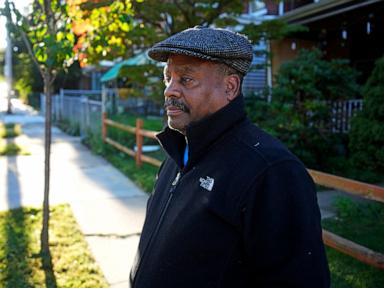
Consider a hypothetical scenario—one that mirrors thousands of real conversations happening across American cities right now. Imagine a 62-year-old retired bus driver named Arthur. He has lived in the same brick rowhouse for forty years. When his nephew, a graduate student at the local university, asks him to join a federally funded study on hypertension in Black men, Arthur laughs. Not a warm laugh. A dry, protective sound.
Arthur doesn't need a history textbook to know why he hesitates. He grew up hearing whispers about Tuskegee, where for forty years—from 1932 to 1972—federal researchers watched hundreds of Black men suffer and die from untreated syphilis while telling them they were being treated for "bad blood." He knows about Henrietta Lacks, whose cells were taken without her knowledge in 1951 and became the foundation of a multi-billion-dollar biomedical industry while her family struggled to afford health insurance. He remembers the stories of forced sterilizations in the South, routine enough to be called "Mississippi appendectomies."
When Arthur finally agrees to roll up his sleeve for that blood pressure cuff, he isn't doing it for the National Institutes of Health. He is doing it for his nephew. He is doing it because a community health worker sat at his kitchen table for two hours, drank his sweet tea, and answered every question without looking at her watch.
Now imagine what happens when that study vanishes overnight.
The university locks its doors. The community health worker gets laid off because her salary came from soft grant money. The phone number on the consent form goes straight to an automated voicemail box that nobody checks.
To a policymaker in a distant office, pausing a grant is an administrative pause button. You press it, you audit the program, and maybe six months later you press play again.
To Arthur, there is no pause button. There is only confirmation of what he suspected all along: You came in, you took our data, and the moment things got complicated, you disappeared.
When the Money Stops, the Clock Runs Backward
Science moves at the speed of trust. That isn't a poetic slogan; it is a measurable operational reality.
In clinical research, recruiting participants from historically marginalized communities requires vastly more time, money, and emotional labor than recruiting from affluent, predominantly white suburbs. According to data from the Food and Drug Administration, Black Americans make up roughly 13 percent of the U.S. population, yet for decades they have accounted for less than 5 percent of participants in clinical trials for new drugs.
That gap isn't trivial. It is lethal.
When a new cancer therapy, heart medication, or Alzheimer's treatment is tested almost exclusively on one demographic, doctors have to guess how it will behave in everyone else. Genetic variations, environmental exposures, and chronic stress—what researchers call "weathering," the physiological wear and tear of navigating systemic racism—alter how bodies metabolize medicine and fight disease.
Over the past decade, major research institutions finally began acknowledging this blind spot. Millions of federal dollars flowed into community-engaged research. Universities created offices of health equity. Principal investigators stopped treating neighborhoods like laboratories and started treating residents like partners.
They built a bridge, plank by slow, painstaking plank.
Then, abruptly, the political winds shifted. Directives aimed at dismantling diversity, equity, and inclusion initiatives swept across federal agencies. Grants containing words like "disparity," "equity," "underserved," or "Black" were flagged, frozen, or terminated outright. Court injunctions followed, creating a dizzying legal limbo where scientists sued to unfreeze funds while laboratories hemorrhaged staff and time-sensitive biological samples sat in deep freezers, waiting for clarity that refused to arrive.
Lawyers can argue over injunctions in federal courtrooms. Judges can issue stays and reversals.
You cannot issue a court order commanding a human being to trust you again.
The Invisible Casualties of a Frozen Grant
Walk through any major academic medical center today and talk to the junior researchers—especially the scientists of color who staked their careers on closing health gaps—and you will hear a quiet grief that rarely makes the evening news.
A clinical trial is like a relay race run across a tightrope. If the person holding the baton stops running, the whole sequence collapses.
Think about what actually happens inside a paused study.
First, the data rots. Longitudinal studies—research that tracks patients over years to see how a disease progresses or how a treatment holds up—depend on uninterrupted contact. Miss a six-month blood draw, and the timeline fractures. Miss a year, and the statistical power of the entire cohort begins to evaporate.
Second, the human infrastructure dissolves. Modern community health research relies on "trusted messengers"—barbers, pastors, doulas, neighborhood navigators. These aren't tenured professors with institutional safety nets. They are hourly workers and small community organizations operating on thin margins. When federal grants freeze, those contracts are the first to be severed. A barber shop that agreed to host blood pressure screenings loses its stipend. A local nonprofit that hired three maternal health advocates has to hand out pink slips on a Friday afternoon.
Third, the scientists themselves burn out or walk away. Why would a brilliant young epidemiologist spend five years building a community-based cardiovascular program if a single political directive can wipe out her funding before she publishes her first paper? Rational self-preservation pushes researchers back toward safer, traditional topics—studying diseases in populations that already show up at suburban clinics on their own.
The result is a quiet retreat back to the status quo. Nobody has to pass a law banning research on Black health. You simply make it too unstable, too risky, and too exhausting to pursue.
Why "Colorblind" Science Is a Dangerous Myth
There is a seductive argument often used to justify halting targeted health initiatives: Medicine shouldn't see race. Treat everyone the same.
It sounds fair on a bumper sticker. In an emergency room or a research lab, it is catastrophic.
Consider maternal mortality in the United States. According to the Centers for Disease Control and Prevention, Black women are roughly three times more likely to die from pregnancy-related causes than white women. That gap persists even when you control for income and education. A Black woman with a graduate degree is still statistically more likely to die in childbirth than a white woman who didn't finish high school.
Why? Not because of biology, as outdated nineteenth-century medicine once claimed, but because of how the healthcare system responds to her. Her pain is discounted more frequently. Her warning signs of preeclampsia or postpartum hemorrhage are brushed aside as anxiety.
When researchers design programs specifically tailored to Black mothers—training culturally competent doulas, implementing standardized hemorrhage protocols in safety-net hospitals, listening to women who say something feels wrong—deaths drop. Measurably. Dramatically.
Calling those programs "divisive" doesn't erase the mortality rate. Freezing the funding doesn't make the babies safer. It simply removes the flashlight in a dark room and declares that the darkness no longer exists.
The Long Shadow of Abandonment
I once sat in a clinic waiting room in Baltimore watching an elderly woman argue quietly with a receptionist. Her name had been removed from a diabetes management study after funding dried up. She wasn't angry about the twenty-five-dollar gift card she used to get for each visit. She was angry because for the first time in her life, a doctor had spent forty-five minutes explaining how insulin actually worked in her body, drawing diagrams on the back of an exam table paper sheet until she understood it completely.
Now she was back to seven-minute appointments with rotating residents who barely looked up from their laptops.
"They always leave," she told me, folding her hands tightly over her purse. "Soon as they get what they came for, they pack up their clipboards and go back across town."
Her voice wasn't raised. She wasn't bitter. She sounded tired—the specific exhaustion of someone who let her guard down against her better judgment and paid the exact price she predicted.
That is the real cost sitting beneath the legal filings and budget battles. Scientists are fighting in federal courts to restore millions of dollars in halted grants, and many of those funds may eventually be released. Lawyers will claim victory. Press releases will celebrate the resumption of vital work.
Then those researchers will have to drive back across town, walk down into those church basements, sit under the humming fluorescent lights, and ask people to roll up their sleeves once more.
And this time, when they promise they are here to stay, nobody in the room will look them in the eye.