The dust of the desert settles over the limestone streets of Jerusalem, but inside the cramped study, the air is thick with a different kind of storm. Outside, election posters flap against concrete walls, plastered in Hebrew typography promising unity, security, and salvation. Inside, a father and son sit across a wooden table littered with voting pamphlets. They share a bloodline, a history of exile, and a language of holy texts. They share almost nothing else about how to build a country.
To understand modern Israeli elections, one must step away from the polished podiums of television debates and look into rooms like this. The state was born as a secular project, forged by pioneers who dreamed of a muscular, self-reliant Hebrew republic. Yet, decades later, the ballot box is no longer just a contest between left and right. It is an arena where ancient questions of identity collide with modern governance. Religious division among Jews is not a footnote to the campaign. It is the tectonic fault line threatening to split the nation from within.
Consider the weight of a single vote when faith is the ballot. On one side stands the secular and traditional populace, driving the engines of technology, paying the heavy taxes, and filling the mandatory reserve duty ranks of the military. They look at the state through the lens of liberal democracy and civic responsibility. On the other side swells a rapidly growing, deeply devout demographic, particularly within the ultra-Orthodox communities, whose loyalties are anchored first to the interpretation of Torah, and only second to the laws of the Knesset.
The campaign trail amplifies this friction into a roar. Politicians know that mobilization depends not on persuasion, but on fear. Secular parties warn of a creeping theocracy, painting a picture of public spaces stripped of pluralism, where religious law supersedes civil rights. Meanwhile, religious factions warn of spiritual erosion, arguing that assimilation and modern secularism pose a deadlier threat to the Jewish soul than any external enemy.
(Note: The following scenario is a hypothetical composite illustrating a widespread sociological reality.)
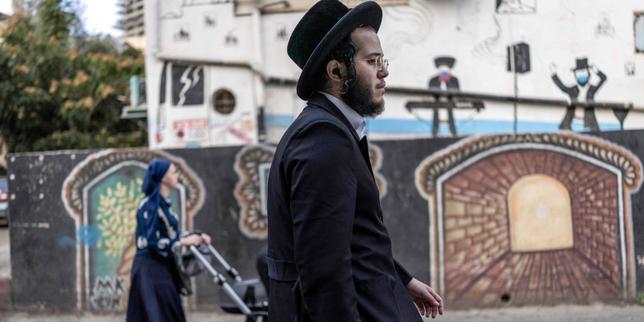
Imagine David, a software engineer living in Tel Aviv, waking up at dawn to draft code for a defense startup, knowing that in a few months his reserve unit will be called up for another grueling tour. Across town, in Bnei Brak, Avraham wakes at the exact same hour, pulling on a black wool coat, walking to the local synagogue to immerse himself in the study of ancient texts, entirely exempt from military service by virtue of his devotion. David looks at Avraham and sees a free rider, someone shirking the collective burden of national survival. Avraham looks at David and sees a stranger adrift, a man preserving a body while losing a soul.
When election day arrives, both men cast ballots. Both believe they are saving Israel. Both are entirely right from their own vantage point, and that is precisely why the compromise feels impossible.
The political system mirrors this domestic estrangement. Coalition building in Jerusalem has always resembled a high-stakes game of microscopic arithmetic, but today it is driven by demographic inevitability. The ultra-Orthodox birth rate outpaces the national average. Every election cycle shifts the demographic center of gravity a fraction of a millimeter to the right, deeper into the sphere of religious parties holding the balance of power. For secular Israelis, this arithmetic feels like an existential countdown. For religious Israelis, it feels like divine justice finally reclaiming its rightful place.
Listen to the campaign speeches. They rarely mention infrastructure, inflation, or foreign policy without immediately tethering those issues back to the identity of the public sphere. Should buses run on the Sabbath? Should state funding flow to schools that teach no mathematics or English? Should exemptions from military service remain a birthright for the devout? These are not mere policy adjustments. They are battles over the definition of home.
History whispers a warning through these debates. Ancient kingdoms fell not always to foreign swords, but to internal fracture, to the inability of factions to see the other as part of the same collective body. The modern democratic experiment in the Middle East was designed to bypass this tribalism by creating a civic roof under which all Jews could shelter. But when the roof begins to leak, the old tribal loyalties rush back in.
The sun dips below the horizon, painting the ancient stone in bruised shades of violet and gold. The father in Jerusalem closes the pamphlet, sliding it away from his son. There are no dramatic declarations, no sudden conversions of heart. Just the heavy, palpable silence of two people who love the same land, yet fear they are walking toward different futures. Outside, the election banners flutter in the night wind, waiting for the dawn.