There are certain objects we keep simply because they refuse to let us go. A rusted skeleton key from a door that no longer exists. A ticket stub from a train that stopped running in 1984. A baseball glove stiffened by decades of garage dust.
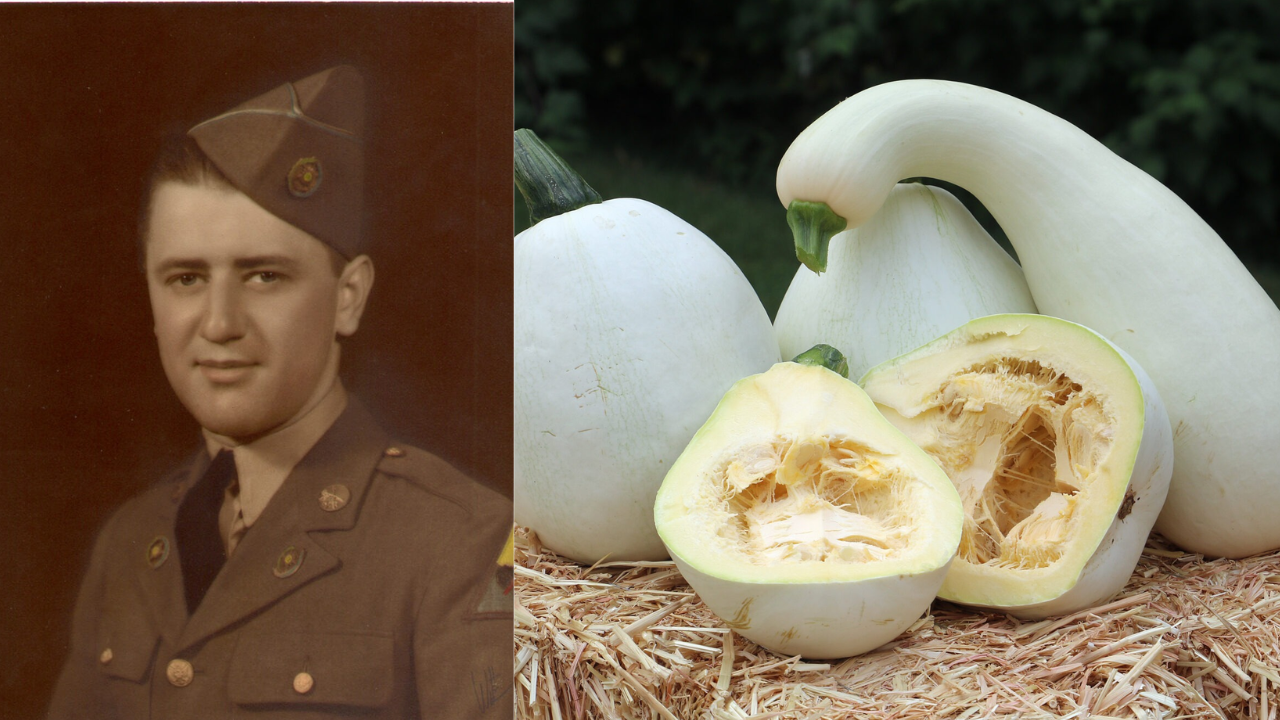
In a basement in Pennsylvania, a man kept a white pumpkin.
Not a carving, slick with mold and slumped into a sad, vinegar-scented puddle by November first. Not a decorative gourd tossed carelessly onto a porch step to rot beneath autumn leaves. This was a whole, intact, chalk-white pumpkin. It sat on a shelf, defying the basic biological contract of its own existence. Days turned into months. Months stacked into years. Years compounded into decades.
Nearly forty years passed.
Think about that duration for a moment. Four decades of shifting geopolitical borders, of changing hairstyles and musical revolutions, of children growing into weary adults and grandparents passing into memory. Through it all, the pale orb remained stubborn, drying from the inside out, turning into a hollow, rattling relic.
Why do we cling to things like this?
On the surface, it looks like mere eccentricity. A roadside oddity. But human history is written in the oddities we preserve. We are creatures terrified of erasure. We press leaves into heavy dictionaries, we record our children’s heights on kitchen doorframes, and sometimes, if we are quiet enough and strange enough, we preserve a autumn harvest until it becomes a ghost.
The man who kept it wasn't a scientist in a white coat or a cold archivist. He was just a teacher. A man used to watching generations march through his classroom doors, brilliant and fleeting, like seasonal fruit. Perhaps that is why he saved it. He understood, on some cellular level, the desperate urgency of holding onto a fleeting moment before the frost took it.
When people heard about the pumpkin, they laughed. Then they looked closer.
Because inside that desiccated, brittle husk, hidden away from the rotting tide of time, were seeds.
Time is a one-way street, or so we are told. Biology teaches us that decay is the ultimate destination. Everything returns to the soil. Yet, inside that forty-year-old artifact, tiny dormant embryos waited in the dark. They had survived through sheer, accidental stubbornness.
When those seeds were finally handed over to modern gardeners, a strange and quiet alchemy took place. These weren't genetically modified super-seeds engineered in a sterile corporate lab for maximum shelf life and uniform industrial shape. They were ghosts of the 1980s, brought back through the dirt.
Gardeners planted them with a mixture of reverence and skepticism. What could possibly grow from a corpse?
The answer arrived in green shoots.
The vines crept along the soil with a fierce, ancient energy. They climbed toward the sun, drawing water and nitrogen from the modern earth, translating the genetic code of a different era into fresh, living tissue. By autumn, the patches were dotted with pale, ghostly spheres. The white pumpkin had found a lineage.
There is a profound lesson hidden in the vines.
We live in an age that worships the instantaneous. We consume information at the speed of fiber optics, discard technology the moment a slightly sleeker model hits the market, and treat our own histories like disposable packaging. We assume that if something gets old, it is obsolete. If something breaks, it is trash.
Yet, nature operates on a vastly different ledger.
Consider the evolutionary strategy of seeds. A seed is essentially a package of hope dropped into an uncertain future. It doesn't know when the rain will come. It doesn't know if the soil will be rich or poisoned, if the season will bring drought or flood. Its entire existence is built on an act of radical faith. It buries itself in the dark and waits.
Forty years is a long time to wait in the dark.
When we look at the resurgence of heirloom gardening—people scouring old catalogs, trading rare seed packets, nursing forgotten varieties of tomatoes and squash back from the brink—we are witnessing something deeper than a trendy hobby. We are watching an insurrection against amnesia.
We are realizing that the things our grandparents grew, the flavors they tasted, and the resilience they bred into their crops matter. Modern agriculture has given us abundance, but it has traded diversity for uniformity. We have traded flavor for transportability. In doing so, we have made our food systems fragile. When a single blight sweeps through a monoculture, millions of acres collapse because every plant is identical.
Diversity is the immune system of the earth. And sometimes, that diversity is hiding in a forgotten Pennsylvania basement, rattling quietly in the dark like a dry maraca.
Imagine the gardener tending to these resurrected vines today. They kneel in the damp earth, hands stained with dark loam, looking down at a fruit that looks almost identical to the one harvested during the Reagan administration. The continuity is staggering. It is a physical bridge across generations. The person who plucked the original pumpkin in the 1980s could not have known that their strange little keepsake would bloom again in a century they would never see.
That is the true beauty of legacy. It is rarely grand or monumental. It is often quiet, mundane, and accidental.
We spend so much of our lives trying to build monuments that will pierce the clouds, skyscrapers of steel and ego designed to defy mortality. But stone crumbles. Digital files corrupt. Servers go dark.
Meanwhile, a handful of dried seeds tucked away in a dry room quietly outlive the empires of their time, waiting for the right pair of hands to press them back into the dirt.
The white pumpkin is no longer just a weird local story about an eccentric teacher. It is a reminder of our profound connection to the cycles of renewal. It tells us that nothing truly dies as long as someone cares enough to keep it, to protect it through the long, barren winters of neglect.
Next time you walk through a garden in the fading light of October, look past the bright orange hybrids lining the suburban porches. Look for the oddities. Look for the pale, the scarred, the misshapen things that carry the weight of history in their veins.
The past is not a foreign country. With the right seed, it can grow right in your backyard.
The vines are spreading. The soil is waiting. The rest is up to us.