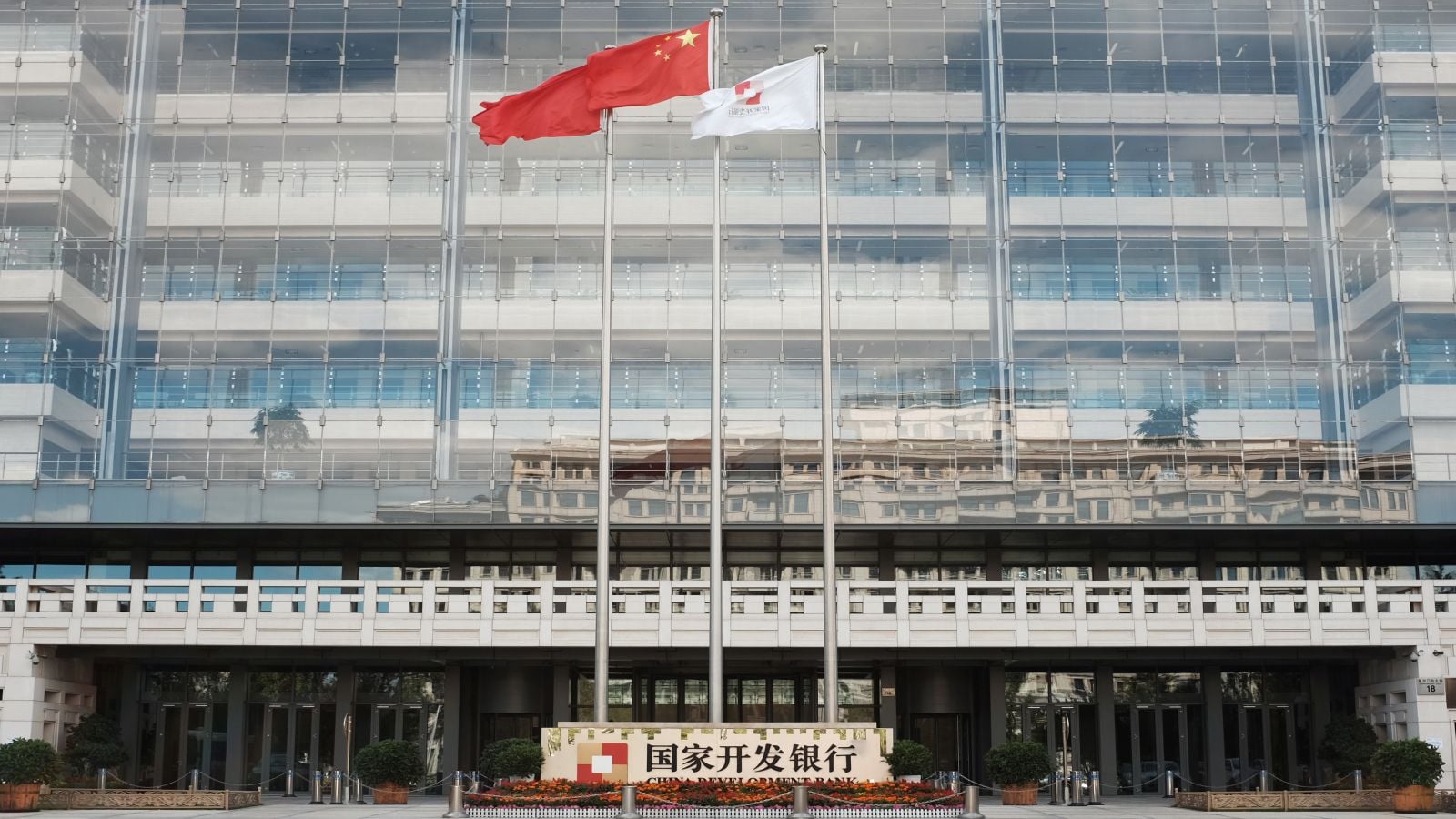
The news hit the financial markets like a sudden thunderclap on a Sunday morning. Former China Development Bank president Ouyang Weimin faces corruption investigation by the nation’s top anti-graft watchdogs. The Central Commission for Discipline Inspection and the National Commission of Supervision announced the probe in a brief, one-line statement on July 19, 2026. It didn't provide specific details about the alleged crimes. It didn't need to. When an executive of this caliber falls in Beijing, the ripples are felt across global boardrooms and commodity markets instantly. This isn't just another routine state-backed audit. It is a clear signal that the years-long financial purge in the world's second-largest economy is far from over.
You have to look at the sheer scale of the institution Ouyang led to understand why this matters. The China Development Bank isn't your average commercial lender down the street. Founded in 1994, it answers directly to the State Council. It acts as the primary financial engine driving China's massive state projects and international infrastructure goals. We're talking about trillions of yuan in assets deployed to build highways, bullet trains, and ports. If you've been tracking global finance, you know that the president of this bank wields more actual economic influence than almost any Wall Street chief executive.
The Downfall of a High Flying Financial Bureaucrat
Ouyang Weimin built an impressive resume over four decades. Born in Hunan province in January 1963, he climbed through the ranks of the Chinese Communist Party after joining in 1986. He wasn't a political outsider. He was a deeply embedded technocrat who understood the inner workings of China's regulatory machinery. He spent a significant portion of his early career at the People's Bank of China. There, he directed the China Anti-Money Laundering Monitoring and Analysis Center and led the bank's Payment and Settlement Department.
Then came his transition into regional governance. In 2011, he moved to Guangdong province, an economic powerhouse sitting right next to Hong Kong. He held powerful roles as the vice-mayor and deputy party chief of Guangzhou before stepping up to become the vice-governor of Guangdong. This combination of central bank experience and regional leadership made him the perfect candidate to take the wheel at the China Development Bank in 2019. He served as president and deputy party secretary until he stepped down in 2023.
The timeline tells a fascinating story. He stepped away from the bank three years ago, yet the investigators still knocked on his door. That's a classic hallmark of the current anti-corruption apparatus under President Xi Jinping. Retirement or stepping down offers no safety net. If you crossed lines years ago, the past will catch up to you.
Understanding the Former China Development Bank President Ouyang Weimin Faces Corruption Investigation Fallout
The China Development Bank has been under intense scrutiny for a long time. Ouyang isn't the first top leader from this specific institution to be caught in the crosshairs. Just back in 2024, a former vice president of the bank received a 12-year prison sentence for taking massive bribes. Other senior executives have met similar fates over the last five years.
This brings up a massive point that many Western analysts get wrong. People often think these financial investigations are purely political theater or simple crackdowns on political rivals. It's much deeper than that. The state cannot afford systemic instability in its policy banks. When a policy bank makes bad loans due to backroom deals or kickbacks, it threatens the entire national balance sheet.
Think about how these infrastructure projects work. A local government wants to build a mega-bridge or an industrial park. They lack the funds. They turn to the China Development Bank for policy-directed financing. If the bank's leadership approves these projects based on personal relationships or financial favors rather than economic viability, the system breaks. You end up with empty ghost cities, unfinished highways, and mountains of hidden debt. The current investigation shows that Beijing is trying to clean up the foundational plumbing of its state finance system.
Why Financial Technocrats Lose Their Footing
There's a common pattern among fallen financial officials in China. They possess deep technical knowledge. They know how to move money around without triggering compliance alarms. Ouyang's background is particularly ironic here. He literally ran the national anti-money laundering center. He knew exactly how illicit funds were tracked because he helped design the tracking systems.
When you spend decades at the intersection of state power and massive capital flows, the temptations are enormous. In places like Guangdong, billions of dollars change hands daily through real estate development, manufacturing tech upgrades, and supply chain logistics. A vice-governor overseeing financial portfolios holds the keys to the kingdom. A simple nod or an introduction can make a private developer an overnight billionaire.
The challenge for foreign investors is reading the tea leaves during these announcements. A one-line statement from the anti-graft watchdog leaves a lot of room for speculation. However, experienced China market hands know that by the time a formal announcement hits the state media, investigators have usually spent months gathering hard evidence, bank statements, and witness testimonies. A conviction is almost guaranteed once this stage is reached.
The Broader Cleanup of State-Funded Institutions
We need to talk about what this means for international business partnerships. If you're an international bank or a multinational corporation doing business with Chinese state enterprises, these investigations throw a wrench into ongoing negotiations. Deals stall. Decisions get delayed. Current executives become terrified of signing off on major projects because they don't want their signatures on documents that might look suspicious to an auditor three years from now.
It creates a culture of extreme caution. While that might reduce corruption over the long haul, it can slow down economic momentum in the short term. Lenders become hesitant to deploy capital. Project managers double-check every single receipt. It's a calculated risk that the central government seems entirely willing to take. They prefer a slower, cleaner economy over a fast, compromised one.
The numbers involved in these financial crackdowns are staggering. Over the last decade, hundreds of thousands of officials have been disciplined. The focus has aggressively shifted toward the financial sector over the past few years. Banks, insurance firms, and sovereign wealth funds have all seen high-profile arrests. The era of the freewheeling, billionaire-style Chinese banker is officially dead.
What International Observers Must Keep in Mind
Don't panic about an immediate systemic collapse of the China Development Bank. The bank itself is backed by the full faith and credit of the Chinese state. It will continue to fund key strategic projects, manage its international portfolios, and issue bonds. The removal of a former president doesn't mean the institution is insolvent. It means the leadership structure is being forcefully reset to align with the central government's strict risk-management directives.
You should view this as part of a permanent regulatory shift rather than a temporary storm. The old way of doing business through informal networks and loose credit lines is being systematically dismantled.
If you manage a portfolio with exposure to Chinese state-backed assets, your next steps require a cold, analytical approach rather than an emotional reaction to breaking headlines.
First, audit your institutional connections. Identify any joint ventures, credit agreements, or project funding lines that rely directly on the China Development Bank or its regional subsidiaries in Guangdong. Ensure your compliance teams review the approval histories of these deals to confirm everything stands on solid, documented ground.
Second, expect slower response times from your counterparts in Beijing and Guangzhou. Do not push for rushed approvals or try to use shortcuts to bypass bureaucratic delays right now. The official ecosystem is in a high-alert state, and standard procedures will be followed to the absolute letter.
Third, diversify your communication channels within state-owned enterprises. Relying on a single, powerful executive connection is a dangerous strategy in the current climate. Build relationships across multiple tiers of management to protect your projects from sudden leadership transitions.
The Ouyang Weimin case is a stark reminder that in the modern Chinese economic system, political discipline will always hold ultimate authority over financial power.