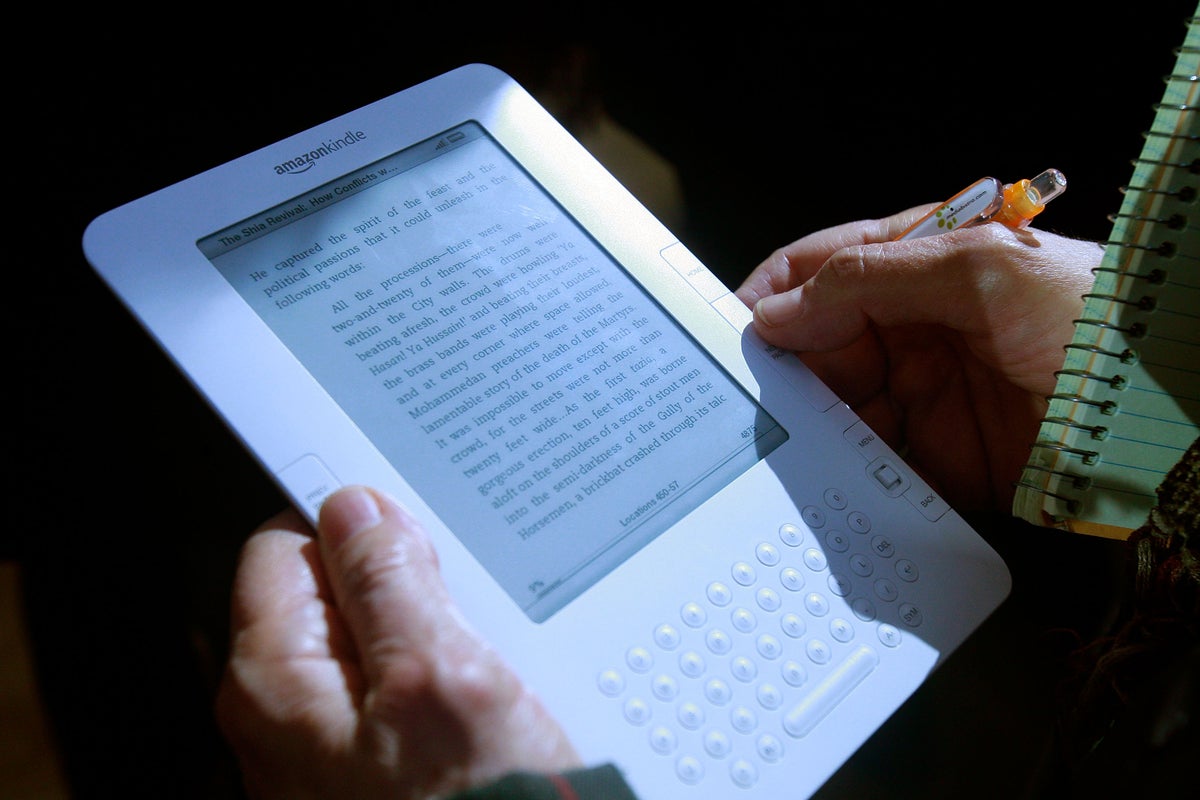
The recent decommissioning of network support for early-generation Kindle devices serves as a case study in the structural fragility of the "hardware-as-a-service" model. While consumer sentiment frames this as a betrayal of the bibliophile, a cold-eyed analysis reveals it as the inevitable collision between legacy cellular infrastructure and modern security protocols. Amazon’s decision to sunset connectivity for devices like the Kindle (1st and 2nd Generation) and the Kindle DX is not a simple software update failure; it is a calculated shedding of technical debt that highlights the ticking clock embedded in every cloud-tethered device.
The friction here stems from three distinct architectural bottlenecks: the 2G/3G network sunset, the evolution of TLS (Transport Layer Security) standards, and the physical decay of lithium-ion power cells.
The Triad of Obsolescence
To understand why a device that "still works" can no longer function, we must categorize the failure points into three distinct layers.
1. The Infrastructure Layer: Spectrum Reallocation
The primary driver for Kindle connectivity loss is the global decommissioning of 2G and 3G networks by telecommunications carriers. Mobile network operators (MNOs) are reallocating these frequencies to 4G LTE and 5G NR (New Radio) to maximize data throughput per megahertz.
- Fixed Hardware Limitations: Early Kindles were manufactured with 3G-only modems. These components are physically incapable of "tuning" to the higher frequency bands or modulation schemes used by 4G or 5G.
- The Roaming Paradox: Even if Amazon wanted to maintain the service, they cannot. They act as a Mobile Virtual Network Operator (MVNO). When the underlying infrastructure—owned by AT&T or T-Mobile—is physically dismantled, the Kindle's "Whispersync" becomes a radio receiver searching for a signal that no longer exists in the physical world.
2. The Security Layer: Cryptographic Drift
Devices that lack Wi-Fi—specifically the original 2007 Kindle—rely entirely on these defunct cellular networks. However, even devices with Wi-Fi face a "Security Wall." Modern web servers, including Amazon’s content delivery networks (CDNs), require updated security certificates and protocols (TLS 1.2 or 1.3).
Legacy hardware often lacks the processing power or the root certificate updates necessary to negotiate these secure handshakes. This creates a "Handshake Failure" where the device can technically see the internet but cannot verify that it is talking to Amazon’s servers. Without the ability to update the firmware over the air (OTA) due to the cellular shutdown, the device becomes a cryptographic island.
3. The Energy Layer: Chemical Degradation
Beyond the digital logic, the physical chemistry of these devices has reached its terminal phase. Lithium-ion batteries used in 2007-2011 era Kindles have likely exceeded their 300-500 charge cycle lifespan. As internal resistance increases, the voltage sag during high-draw operations—like powering a 3G radio—often triggers a system reset. For Amazon, supporting a user base whose hardware is physically failing at the molecular level represents a diminishing return on investment.
The Strategic Pivot from Ownership to Access
The outcry from the user base highlights a fundamental misunderstanding of the modern consumer electronics contract. We have moved from a "Product Purchase" model to an "Access License" model disguised by physical plastic.
The Content Lock-In Mechanism
The Kindle ecosystem is built on a proprietary format (AZW/KFX). Unlike a physical book, which is a standalone asset, an e-book is a data entry in a remote database. When the hardware link is severed, the user’s "library" is effectively held hostage by the inability to sync.
Amazon’s mitigation strategy—offering trade-in credits and discounts on new hardware—is a classic Customer Acquisition Cost (CAC) recovery tactic. By subsidizing the upgrade, they ensure the user remains within the walled garden rather than migrating to open-standard alternatives like Kobo or generic Android tablets.
Technical Debt and Maintenance Costs
Every legacy device supported in the fleet increases the complexity of the server-side code. To keep a 1st Gen Kindle functional, Amazon’s engineers must maintain:
- Backwards-compatible API endpoints.
- Legacy image compression algorithms (to fit 2007-era screen resolutions).
- Unique authentication flows that bypass modern multi-factor requirements.
By cutting off these devices, Amazon executes a "Sprint Cleanup," reducing their operational expenditure (OPEX) and allowing engineering resources to focus on high-margin services like Kindle Unlimited and integrated advertising.
The Environmental Externality
The decommissioning of millions of Kindles creates a massive influx of e-waste that current recycling infrastructure is ill-equipped to handle. While Amazon provides a recycling program, the net recovery of rare earth metals from a 15-year-old e-reader is negligible compared to the carbon footprint of manufacturing its replacement.
The logic of the "Nightmare" for users isn't just about losing a screen; it's about the realization that their digital library has a shelf life determined by a corporate balance sheet. The lack of an "End of Life" (EOL) standard in consumer electronics means that devices are designed for the "First User" experience, with zero consideration for long-term archival stability.
Tactical Response for the Power User
For those refusing to participate in the forced upgrade cycle, the only viable path is the decoupling of content from the hardware manufacturer. This involves a shift toward Local Library Management.
- Manual Sideloading: Most Kindle models still support USB transfers. By connecting the device to a PC, users can bypass the defunct cellular/Wi-Fi chips entirely.
- Format Conversion: Using open-source tools like Calibre, users can convert their purchased titles into DRM-free formats (EPUB/MOBI). This transforms the book back into a standalone asset that is no longer dependent on Amazon's server handshake.
- Hardware Independence: Moving toward E-Ink devices that run open Android or support standard EPUB files mitigates the risk of a single-point-of-failure in the ecosystem.
The transition from 3G to 5G is merely the first wave. As Wi-Fi standards move toward Wi-Fi 7 and encryption becomes more computationally expensive (post-quantum cryptography), the current generation of Kindle Paperwhites will eventually face the same wall. The "Nightmare" is not an anomaly; it is the rhythm of the industry.
Strategic planning for digital assets requires assuming that any hardware tethered to a proprietary cloud has a functional half-life of 10 years. To exceed this, one must move the "Source of Truth" for their data from the cloud to local, redundant storage. The era of the "forever device" ended with the introduction of the integrated battery and the non-upgradable modem. Acceptance of this reality is the only way to build a resilient personal archive.