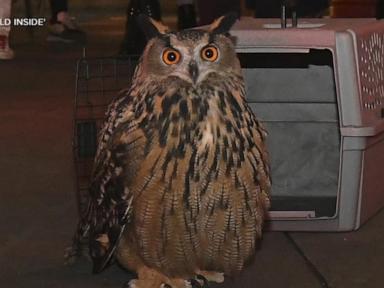
When a captive Eurasian eagle-owl named Flaco broke out of the Central Park Zoo in February 2023, skeptics figured he would last a few days. They were wrong. He spent over a year turning Manhattan into his personal hunting ground, becoming an accidental urban legend. Now, that wild journey is immortalized on screen.
The documentary Wild Inside, directed by Penny Lane and produced in partnership with HBO Documentary Films and Sandbox Films, officially debuts in theaters on July 31, 2026. The film features a clever production trick: instead of relying on traditional nature-film crews, the project crowd-sourced its footage from the everyday birders, photographers, and local residents who tracked Flaco's every move. For another perspective, read: this related article.
The Real Story Behind the Escape
Flaco's time in the concrete jungle wasn't just a quirky viral moment. Born in captivity, he had spent his entire life behind bars before an unknown person vandalized his enclosure. Experts worried he couldn't hunt or survive. But Flaco quickly proved everyone wrong. He learned to catch rats and pigeons, navigating skyscrapers and brick courtyards with surprising grace.
For neighborhoods like the East Village and the Lower East Side, he became a familiar, magical neighbor. Locals remember hearing his distinctive evening hoots echoing between buildings as he searched for a mate. Photographers and neighborhood barbers spent hours tracking his flight paths from roof to roof. That grassroots connection is precisely what the new film captures so well, shifting the focus from standard wildlife television to a community-driven urban myth. Related coverage on this matter has been published by Deadline.
Why the Documentary Hits Differently
Most wildlife films rely on glossy, remote wilderness settings. Wild Inside flips the script by dropping a massive apex predator right into the middle of the most populated city in America.
Director Penny Lane avoids a sugar-coated narrative. She leans into the genuine tensions surrounding Flaco's freedom, including the very real hazards of urban wildlife. While thousands of New Yorkers cheered his independence, conservationists and ornithologists constantly worried about risks like rat poison and building collisions. Those concerns tragically materialized when Flaco died following a collision on the Upper West Side, breaking the hearts of millions who had adopted him as a symbol of resilience.
The Lasting Impact on New York Wildlife
Flaco's legacy goes way beyond a 95-minute movie. His high-profile city adventures sparked intense conversations about urban bird safety and architectural design. Advocacy efforts inspired by his journey have pushed for safer building standards to prevent bird strikes across major cities.
He even earned the World Owl Hall of Fame's 2026 Lady Gray'l Award posthumously at the International Festival of Owls. People didn't just love Flaco because he was a magnificent bird. They loved him because he mirrored their own frantic, beautiful hustle to survive in New York against the odds.
If you want to understand why a single escaped owl mattered so much to a city of eight million people, go watch the crowdsourced footage on the big screen. Check local listings for showtimes at the IFC Center and experience how an ordinary city block became an unexpected theater of the wild.