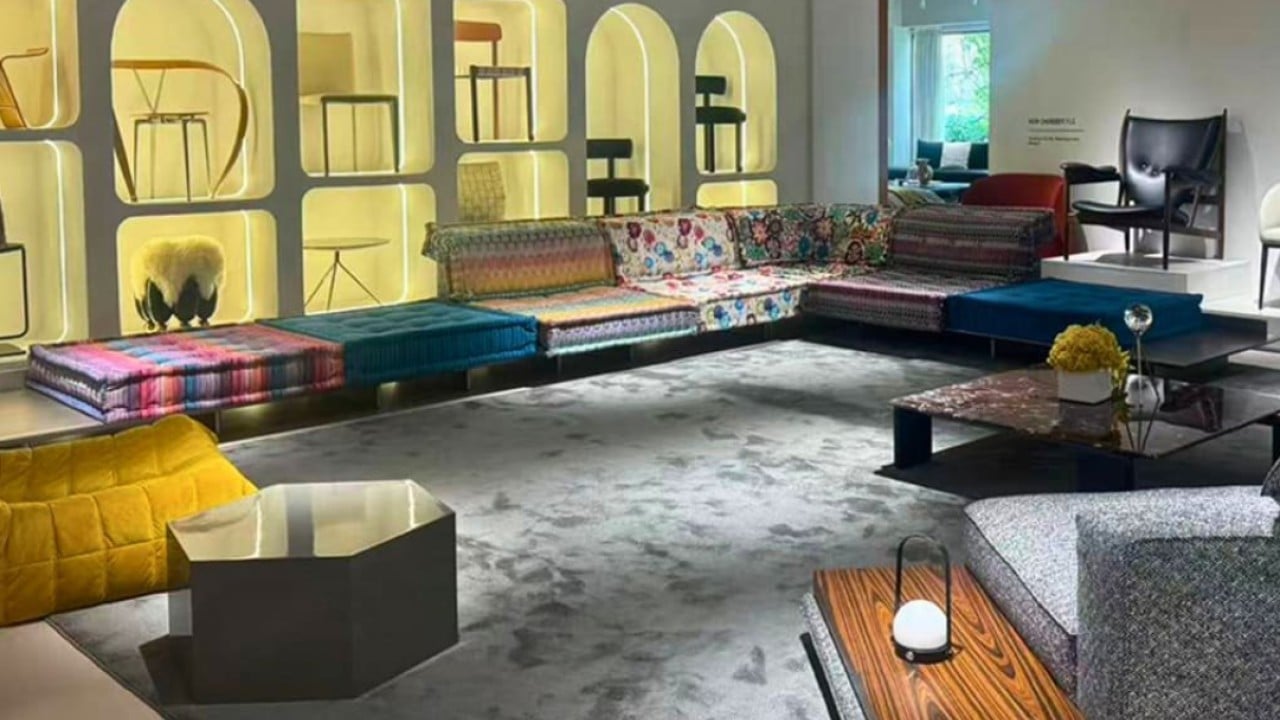
The fluorescent lights of Singapore’s retail showrooms have a way of making inflation look beautiful. You sit on a boucle minimalist sofa, run your hand over a sintered stone dining table, and look at the price tag. Five thousand dollars. Seven thousand dollars. A month or two of your life, distilled into a piece of foam and fabric designed to host your evening television viewing.
For a generation of young homeowners trying to turn a bare-walled Built-to-Order flat into something resembling a home, these numbers feel like a quiet tax on adulthood.
Then you step off a plane in Guangzhou, take a one-hour ride south into the industrial heartbeat of Guangdong province, and reality shifts.
Welcome to Foshan. Specifically, welcome to Lecong, a town that doesn't just sell furniture; it breathes it. Stretching across miles of multi-story mega-malls and sprawling warehouses, this is the furniture capital of the world. And lately, the hallways are echoing with a distinct, familiar accent.
Singlish is taking over the showrooms.
The Five-Mile Showroom
To understand why thousands of Singaporeans are spending their vacation days navigating the concrete expanses of Southern China, you have to understand the sheer, crushing scale of the place.
Imagine walking into an exhibition hall. Now imagine that hall stretching for five miles. The Louvre Furniture Mall rises out of the cityscape like a surrealist palace, its glass facades gleaming under the gray Guangdong sky. Inside, marble floors reflect rows of European-style chaise lounges, ultra-modern Italian wardrobes, and smart beds that adjust their firmness based on your breathing patterns. Next door, Sunlink and Tuanyi markets offer endless corridors of raw timber, custom metalwork, and leather sourced from Italian tanneries.
Consider the typical journey of a couple we will call Cheryl and Marcus. They are real in every sense that matters, representing dozens of homeowners filling up WhatsApp group chats and Telegram channels dedicated to this exact pilgrimage. Back home in Ang Mo Kio, their four-room flat was a blank canvas of concrete screed. The quotes they received from local interior design boutiques for loose furniture totaled nearly twenty-five thousand Singapore dollars.
"We realized we could buy the exact same designs, sometimes from the exact same factories, if we just skipped the middleman," Marcus said, standing outside a showroom that specialized in custom walnut cabinetry. "Even with the flights, the hotels, and the cost of hiring a shipping container, the math wasn't just better. It was ridiculous."
The financial equation changes completely once you cross the South China Sea. A premium, top-grain leather sectional sofa that commands eight thousand dollars in an upscale orchard Road boutique can often be found in Foshan for less than two thousand dollars. A solid oak dining table, complete with custom-milled legs, goes for a fraction of its Southeast Asian retail price.
But walking into these markets unprepared is like stepping onto a trading floor without knowing the currency.
The Invisible Machinery of Trust
The glitter of the showrooms hides a complex, sometimes terrifying logistical dance. For a tourist turned importer, the stakes are remarkably high. You are handing over thousands of dollars in cash or digital bank transfers to a supplier you met forty minutes ago, in a city you might never visit again, for furniture that will not arrive at your doorstep for another six weeks.
The anxiety is palpable in the air. You see it when a buyer leans over a glass desk, vigorously tapping on a calculator while a sales representative offers them cups of local oolong tea.
The transaction is only the first step. The real magic—and the real risk—lies in the shipping.
Because a single sofa does not float across the ocean by itself, an entire ecosystem of consolidation agents has materialized to service this new wave of retail tourists. These agents act as the human bridge between the chaotic factory floors of Foshan and the neat, orderly loading bays of Singaporean housing estates.
Here is how the machinery works in practice:
- The Sourcing: Homeowners spend three to four days walking the floors, collecting business cards, and placing deposits. Every purchase is assigned a specific shipping mark.
- The Consolidation: Instead of shipping items individually, everything is sent to a central warehouse in Guangzhou or Foshan. A single agent collects the dining chairs from factory A, the bed frame from factory B, and the delicate glass lighting fixtures from factory C.
- The Container Fit: The items are packed into a standard twenty-foot or forty-foot shipping container. This is a three-dimensional puzzle where empty spaces are filled with cushions and smaller items to maximize the volume.
- The Sea Voyage: The container is sealed, driven to Nansha or Shenzhen port, and loaded onto a container ship bound for the Singapore Strait.
The cost of this entire logistical feat? Often less than fifteen hundred dollars for a massive volume of goods. When the savings on the furniture itself scale into the tens of thousands, the shipping fee becomes a minor line item.
The Cost of the Margin
It is easy to look at this trend as a triumph of consumer savvy, a clever hack discovered by internet-era buyers who refuse to pay the traditional retail markup. But the journey is not without its casualties.
There is a vulnerability that every traveler carries into these markets. Language barriers can lead to catastrophic misunderstandings about dimensions or material specifications. A centimeter of miscalculation on a built-in wardrobe means an expensive piece of lacquered wood arrives in Singapore completely unusable, destined for a local landfill because returning it across the ocean is economically impossible.
Quality control is another gamble. While many factories produce goods for high-end international brands, others use cheaper fillers, low-grade foam, or unseasoned wood that warps when introduced to Singapore’s relentless humidity.
"You have to touch everything," Cheryl explained, her fingers tracing the stitching on an armchair. "You have to smell the leather. You have to ask them to open the back zippers so you can see the frame. If you just buy the cheapest thing on the floor, you are going to regret it the moment the container door opens in Singapore."
The local retail sector back home is watching this exodus with a mixture of concern and adaptation. Singaporean furniture showrooms are no longer just competing with the shop down the street; they are competing with a direct-to-consumer pipeline that bypasses them entirely. Some have responded by offering extended warranties, immediate delivery, and white-glove assembly services that an overseas factory simply cannot replicate.
They are selling peace of mind. For many, that peace of mind is worth the premium. For an increasing number of others, the adventure is part of the appeal.
The Modern Pilgrimage
There is something profoundly modern about this travel pattern. It blurs the line between a vacation and a commercial procurement trip. Tourism boards traditionally track museum visits and culinary tours, but the defining souvenir of this specific travel boom cannot fit into an overhead compartment.
Instead, the trip concludes with a quiet return flight, an empty wallet, and a handful of shipping receipts.
Weeks later, a flatbed truck rumbles down an avenue in Singapore. Workers wheel giant wooden crates into a passenger lift, the smell of fresh timber and packing foam filling the communal corridor.
As the crates are pried open with crowbars, the abstract gamble taken in a faraway, rain-slicked city in Guangdong finally materializes in the tropical afternoon light. The sofa fits. The stone table is intact. The journey is complete, written into the very fabric of the room where life will unfold.