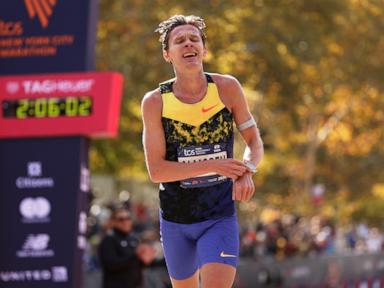
Every November, running media falls to its knees to worship at the altar of the New York City Marathon’s five-borough course. They call it a love letter to the city. They call it the beating heart of the race. They wax poetic about the bridges, the roar of First Avenue, and the unifying magic of connecting Staten Island, Brooklyn, Queens, the Bronx, and Manhattan in a single 26.2-mile ribbon.
It is pure, unadulterated romanticism. And from a pure sporting perspective, it is completely backwards. Meanwhile, you can read related stories here: Inside the Dakar 2026 Reckoning Nobody Is Talking About.
The lazy consensus says that moving the race out of Central Park in 1976 saved the event and created the greatest marathon on earth. That half-truth obscures a massive reality: the five-borough route was never designed to be a great footrace. It was designed as a municipal PR stunt to rescue a bankrupt city, and in doing so, it permanently sacrificed athletic integrity on the altar of civic theater.
The 1976 Mirage of Civic Unity
To understand why the current route is fundamentally flawed, you have to strip away the nostalgia and look at the cold, hard history of 1976. To see the full picture, check out the detailed report by Yahoo Sports.
New York City was teetering on the edge of bankruptcy. Crime was surging, neighborhoods were burning, and the city’s global reputation was in the gutter. When George Spitz pitched Fred Lebow and Manhattan Borough President Percy Sutton on taking the marathon out of the four-loop Central Park purgatory and stringing it through all five boroughs, the goal was not to build a championship-caliber running course. The goal was to create a five-hour commercial for a dying metropolis during the American Bicentennial.
It worked brilliantly for television. It worked brilliantly for city tourism.
What it did not do was create a fast, fair, or biomechanically sound marathon course.
When runners and commentators praise the five-borough layout as the soul of the race, they confuse emotional spectacle with athletic excellence. I have watched thousands of runners spend four months training at peak physiological capacity, dialing in their lactate thresholds and glycogen-loading protocols, only to have their seasons dismantled by a course architecture that actively punishes disciplined pacing.
The Bridge Tax and Biomechanical Sabotage
Let’s talk about the actual physics of running across New York City.
Most major marathons—Berlin, Chicago, London, Tokyo—are built to showcase human speed. They feature flat profiles, sweeping turns, and predictable surfaces that allow elite athletes and everyday grinders alike to find a rhythm and hold it. New York does the exact opposite. It forces runners over five major bridges, accumulating roughly 810 to 890 feet of elevation gain depending on how tightly you run the tangents.
That does not sound like much compared to a mountain trail race, until you examine where and how that elevation occurs.
- The Verrazzano-Narrows Bridge: You start the race climbing a massive suspension bridge in the cold harbor wind, immediately spiking your heart rate before your muscles are warm, followed by a steep, quad-shredding descent into Brooklyn.
- The Pulaski Bridge: Positioned right at the halfway mark, it breaks your stride just as you are trying to settle into marathon race pace.
- The Queensboro Bridge: At Mile 15, completely devoid of spectators, you climb a dreary, steel-grated incline that acts as a silent assassin for your aerobic base.
- The Willis Avenue and Madison Avenue Bridges: After the screaming adrenaline dump of First Avenue, you are hit with two late-stage climbs into and out of the Bronx when your glycogen stores are critically depleted.
This is not a rhythm course. It is an obstacle course.
When you run downhill on steep bridge approaches—especially on the cambered, concrete surfaces of New York’s infrastructure—your quadriceps undergo intense eccentric muscle contractions. Every footstrike acts like a tiny brake, tearing muscle fibers far earlier in the race than flat ground ever would. By the time runners hit Fifth Avenue at Mile 23, they aren't just tired; their muscular elasticity is structurally compromised.
If you want to understand why the world record has never been threatened in New York, stop blaming the November weather. Blame the concrete suspension spans.
Is the NYC Marathon the Hardest Major Marathon?
If you search online for marathon advice, you will inevitably stumble across runners asking if New York is the hardest of the World Marathon Majors. The standard answer from running blogs is a cheerful, "Yes, it’s tough, but the crowds carry you!"
Let’s dismantle that premise immediately. Crowds do not carry you. Crowds trick your central nervous system into overriding your pacing discipline, which makes the race objectively harder.
When you exit the eerie silence of the Queensboro Bridge and turn onto First Avenue, the wall of sound is so deafening that your brain floods your bloodstream with adrenaline and catecholamines. I have seen seasoned sub-2:40 marathoners—people who know better—drop their pace by 15 seconds per mile on First Avenue simply because the noise makes effortless speed feel sustainable.
It is an illusion. You cannot bank time in a marathon; you can only borrow it at predatory interest rates.
First Avenue is a physiological trap. By the time you cross the Willis Avenue Bridge into the Bronx at Mile 20, the adrenaline wears off, the bill comes due, and you are left crawling up the gradual, soul-crushing false flat of Fifth Avenue into Central Park. The very feature that makes the five-borough route famous—the roaring, block-party atmosphere—is the exact mechanism that ruins the race execution of 80 percent of the field.
The Logistics Nightmare Nobody Mentions
Beyond the physiology, the five-borough fetish creates a logistical nightmare that degrades the actual runner experience.
Because the race insists on starting on Staten Island—a borough with no direct subway connection to the rest of the city—runners are subjected to a pre-race routine that resembles a military deployment rather than an athletic competition.
To run a race that starts at 9:10 AM or 11:00 AM, you have to wake up at 4:00 AM, board a ferry or a bus in the freezing dark, pass through airport-style security, and sit on asphalt in Fort Wadsworth for up to four hours before firing a single muscle fiber.
Imagine a scenario where you are a recreational runner who paid over $300 for a bib, spent $1,500 on a Manhattan hotel, and trained for 16 weeks. Before you even cross the starting line, you are sleep-deprived, dehydrated from sitting in a staging corral with limited water, and stiff from sitting on cold concrete for three hours.
No other sport treats its participants like cattle in a holding pen for half a morning just to justify a scenic opening shot for a television helicopter.
The Fallacy of the "Equalizer" Course
Defenders of the five-borough route—including race directors and traditionalists—always fall back on the same argument: because there are no pacemakers (rabbits) and because the course is hilly, New York is a "true racer's race." They point to legends like Grete Waitz, Alberto Salazar, Meb Keflezighi, and Shalane Flanagan as proof that the five-borough gauntlet crowns the purest champions.
There is truth here, and I will give the traditionalists their due. Without pacemakers and flat-track time-trial conditions, the elite races in New York often turn into gripping tactical chess matches. Watching Shalane Flanagan break away in 2017 or Tamirat Tola smash the course record in 2:04:58 in 2023 proves that tactical brilliance thrives on this terrain.
However, using the elite 0.01 percent to justify the layout for 50,000 amateur runners is a classic survivorship bias.
Elites start at the front with zero congestion. They don't spend four hours shivering on Staten Island. They don't have to weave around thousands of runners on the narrow bottleneck of Lafayette Avenue in Brooklyn, where the course abruptly narrows and forces runners to burn precious lateral energy dodging elbows and dropped water cups.
For the masses, the five-borough route isn't a tactical chess match. It is a traffic jam punctuated by steep hills.
The Bronx Afterthought
Let’s also address the elephant in the room regarding the "five-borough unity" narrative.
The competitor's love letter to the route claims that the course weaves all five boroughs together into a single, cohesive heartbeat. Look at the actual map.
- Staten Island: You are on the bridge ramp for less than two miles. You never touch a neighborhood street.
- Brooklyn: You get roughly 11 miles of rich, vibrant community support.
- Queens: You get barely two and a half miles through Long Island City.
- The Bronx: You cross the river, run a tiny, 1.5-mile loop past industrial warehouses and a few blocks of residential streets, and immediately cross back into Manhattan.
- Manhattan: You spend the rest of the race grinding through the Upper East Side, Harlem, and Central Park.
Calling this a tour of the five boroughs is generous marketing. It is a Brooklyn-and-Manhattan race that briefly grazes the edges of the other three boroughs so the organizers can legally use the slogan. Residents in the Bronx and Queens get a fleeting glimpse of the pack before the barricades come down, while Staten Island is treated purely as a parking lot for staging buses.
How to Actually Survive the Five-Borough Trap
If you are going to run the New York City Marathon, you have to stop buying into the romantic mythology and start treating the course like the hostile environment it actually is. Forget everything standard marathon training plans tell you about even splits. Even splits in New York are a suicide mission.
Here is the contrarian blueprint that actually works on this course:
- Throw Away Your Goal Pace Until Mile 16: If you look at your GPS watch in Brooklyn, you will panic because the tall buildings and metal bridges scramble satellite signals anyway. Run strictly by perceived effort. Hold back on the Verrazzano descent. Let people pass you on Fourth Avenue. If you feel like you are jogging at Mile 10, you are doing it right.
- Train Your Quads, Not Just Your Lungs: Standard marathon prep obsesses over VO2 max intervals and long tempo runs on flat bike paths. If you want to survive New York, you need to spend six weeks doing downhill eccentric loading—running hard down steep grades to build the muscular armor required to absorb the bridge descents without cramping at Mile 22.
- Wear Noise-Canceling Discipline on First Avenue: When you hit Manhattan off the Queensboro Bridge, do not surge. Keep your shoulders dropped, shorten your stride, and lock into a rhythm that feels almost boring. Let the crowd roar for the fools who are about to blow up in the Bronx.
- Treat the Bronx as the Real Starting Line: The race does not start on Staten Island. It starts when you cross the Madison Avenue Bridge back into Manhattan at Mile 20.4. Everything before that is just an expensive, loud warm-up.
The Price of Spectacle
The New York City Marathon is the greatest block party in sports. Nobody denies the goosebumps of running through Hasidic Williamsburg in dead silence, only to erupt into the deafening chaos of Bedford Avenue three blocks later. Nobody denies the electric charge of seeing two million people line the streets to scream for strangers.
But let’s stop pretending the five-borough route is the beating heart of marathon athleticism.
It is the beating heart of New York City's tourism board. It is a brilliant, chaotic, wildly inefficient piece of urban theater that prioritizes visual drama over running mechanics. You do not go to New York to run a fast marathon, you do not go there for a seamless athlete experience, and you certainly do not go there to test your pure physiological ceiling.
You go to New York to survive an ambush disguised as a parade. Stop romanticizing the hills, respect the concrete, and leave your ego on the ferry.