For decades, rumors circulated quietly through defense circles about what Riyadh kept hidden in its underground bunkers. Most experts assumed those assets were purely symbolic insurance policies bought decades ago. They were wrong. When physical debris bearing the clear stamp of a Chinese DF missile turned up in northern Yemen, it shattered years of assumptions. A Chinese-built ballistic missile had finally been fired in an active Middle Eastern conflict zone.
You cannot overstate how much this alters the strategic calculus. For years, observers tracked Saudi Arabia's heavy reliance on Western military equipment, primarily from the United States and Europe. Fighter jets, Patriot batteries, and sophisticated radar systems dominated public parades. Yet, beneath the surface, a parallel military relationship with Beijing quietly persisted. That relationship has now broken into the open, carrying massive implications for regional security, arms proliferation, and the shifting loyalties of Gulf states.
Unearthing the Evidence in Marib
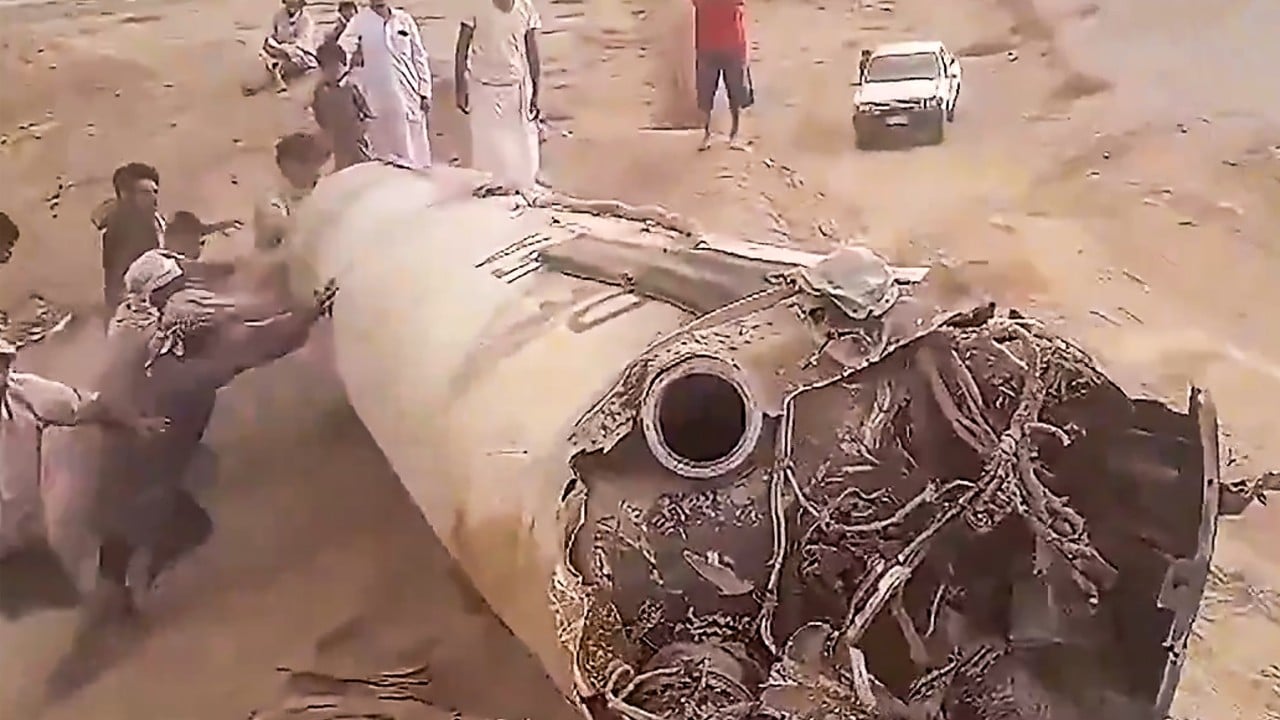
The breakthrough moment happened when open-source intelligence researchers and regional monitors spotted photographs of wreckage scattered across the Raghwan district in Yemen's Marib governorate. Among the mangled metal and propulsion components lay a distinct booster stage. Stamped clearly on the side was the designation for a Chinese DF-15A short-range ballistic missile.
The physical find wasn't just a random piece of junk falling from the sky. It pointed directly to a combat launch originating from Saudi territory aimed at Houthi positions. Analysts quickly scrambled to verify the serial markings and cross-reference them with known export variants. The markings matched.
What makes this discovery fascinating is the total radio silence from official channels. Both Riyadh and Beijing opted for strategic quiet. Neither government rushed to confirm or deny the deployment. Yet, the physical evidence left very little room for doubt. For the first time, a Chinese tactical ballistic missile system, long whispered to be part of the Royal Saudi Strategic Missile Force inventory, had crossed the line from a parade-ground deterrent into actual combat execution.
A History of Riyadhs Hidden Chinese Arsenal
To understand why this launch matters, you have to look backward. Saudi Arabia's military procurement history with China dates all the way back to the late 1980s. During the height of the Iran-Iraq War, Riyadh sought ballistic missile capabilities that Western suppliers simply refused to sell. They turned to Beijing.
The initial deal brought massive, liquid-fueled DF-3A intermediate-range ballistic missiles into the kingdom. These systems were massive, imprecise, and notoriously difficult to deploy quickly because they required lengthy fueling procedures before launch. They served as a blunt political message aimed squarely at regional rivals, especially Iran.
Decades later, the kingdom upgraded its inventory. Reports surfaced around 2007 indicating that Saudi Arabia quietly acquired the DF-21, a far more advanced, solid-fueled medium-range missile. Solid fuel changed everything. It meant the weapons could be stored ready-to-launch, moved easily on road-mobile launchers, and hidden effectively inside mountain tunnels.
Despite these acquisitions, defense analysts spent decades arguing over whether the kingdom possessed smaller, shorter-range solid-fuel weapons like the DF-15. The wreckage in Marib answered that question definitively. The arsenal was broader, deeper, and far more operational than public assessments estimated.
Why This Tactical Shift Matters
We need to talk about why Riyadh decided to pull the trigger on a Chinese system now. Military strategy in the Gulf has evolved past simple defense. When Houthi drones and missiles began pounding Saudi energy infrastructure, airports, and urban centers with alarming frequency, traditional defense spending wasn't enough. Intercepting incoming threats with high-end surface-to-air missiles costs a fortune, and it drains stockpiles fast.
Striking back required a different tool. Sending expensive fighter jets across the border risks pilots and multi-million-dollar aircraft, especially if opposing forces possess upgraded surface-to-air defenses. Ballistic missiles solve that equation differently. They strike fast, they bypass traditional air patrols, and they offer a brutal cost-per-strike efficiency.
Using a Chinese-built system allows Saudi planners to preserve Western-supplied aircraft for other missions while keeping their most sensitive US-made platforms out of the crosshairs. It diversifies the toolkit. More importantly, it signals to Washington that the kingdom isn't bound to a single supplier anymore. If one partner hesitates or places restrictions on weapon usage, alternatives exist.
Decoding Beijing and the Gulf
China plays a delicate game in the Middle East, and this missile launch highlights how successful that strategy has become. Beijing routinely maintains a diplomatic stance of neutrality. Officials in Beijing claim they adhere to strict arms control norms and do not fuel active conflicts. Yet, the proliferation of Chinese missile technology and dual-use components across the region tells a different story.
China's approach relies on economic ties, energy security, and pragmatic defense sales. While Western nations tie weapon sales to human rights assessments, political conditions, and endless bureaucratic oversight, Beijing offers hardware with fewer strings attached. For Gulf nations striving for strategic autonomy, that transactional simplicity is deeply attractive.
When debris bearing Chinese markings lands in a combat zone, it exposes the limits of Western containment. It proves that Beijing's defense footprint in the Middle East is no longer limited to diplomatic outreach or commercial investments. Chinese hardware is actively shaping the outcome of regional wars.
The New Reality of Regional Warfare
The implications stretch far beyond the immediate Saudi-Houthi conflict. Other regional actors are watching closely. If middle powers can successfully integrate Chinese ballistic technology into their active operational routines without facing catastrophic diplomatic fallout, the floodgates open wider.
We are witnessing a fracturing of the old security monopolies. For decades, American and European defense contractors held an absolute grip on advanced weaponry in the Gulf. That monopoly is cracking. Local militaries are realizing they can mix and match suppliers to build resilient, diversified war machines that resist external pressure.
The physical proof found in Marib isn't just an isolated anomaly. It is a signpost pointing toward a multipolar military future. In that future, boundaries blur, old alliances bend, and hardware from unexpected origins dictates the balance of power on the ground. The missile flew from a launchpad in the desert, but its impact reaches straight into the core of global geopolitics.