The Arsonist in the Mirror
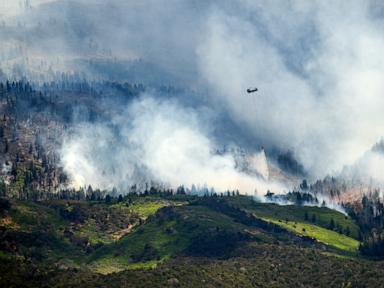
Every summer, the media repeats the same tired script. Dry conditions. High winds. "Explosive wildfire growth." The narrative framing is always identical: nature is an unpredictable, hostile enemy, and human infrastructure is the helpless victim. We watch live feeds of air tankers dropping red retardant and politicians promising more funding for suppression, convinced that if we just fight harder, we can win.
It is a comforting lie. Learn more on a related subject: this related article.
The current crisis across the western United States is not a natural disaster. It is an intentional, bureaucratic creation. For over a century, federal agencies operated under a delusion called the "10 p.m. policy"—the mandate to extinguish every single wildfire by 10 a.m. the morning after it was reported. By treating fire as a variable to eliminate rather than a foundational ecological process, we converted the American West into a ticking time bomb.
We do not have a wildfire problem because it is dry and windy. It has been dry and windy in California, Oregon, and Colorado for millennia. We have a wildfire problem because we spent a hundred years systematically removing the one element that keeps these ecosystems healthy: low-intensity fire. Additional reporting by The New York Times highlights similar views on this issue.
The Illusion of "Fuel"
When an article blames "explosive growth" on dry grass and wind, it ignores basic physics and ecology.
Ecosystems in the West are adapted to frequent, low-intensity burns. These historic fires, often ignited by lightning or carefully managed by Indigenous communities, acted as a natural janitorial service. They cleared out the underbrush, consumed dead wood, and thinned out overcrowded forests.
When you eliminate those small fires, the forest does not stop growing; it chokes itself.
The Biomass Accumulation Trap
- The Overcrowded Forest: A healthy ponderosa pine forest historically held roughly 20 to 50 trees per acre. Today, because of aggressive suppression, those same acres frequently pack in over 500 trees.
- The Ladder Fuel Phenomenon: Small shrubs and young trees fill the gap between the forest floor and the canopy. When a spark hits this dense understory, fire climbs these "ladders" and reaches the treetops, transforming a manageable surface fire into a catastrophic crown fire.
- The Moisture Vaporizer: More trees mean more competition for scarce water. Millions of stressed, desiccated trees become highly flammable tinder long before the summer heat hits its peak.
The media freks out over a 90-degree day with 15 mph winds. But a forest with a natural fuel load handles those conditions easily. The disaster occurs because we have packed our wilderness with thousands of percent more combustible biomass than it was ever meant to hold. The wind is just the trigger; our land management policy is the fuel.
Smashing the "People Also Ask" Myth
Look at any search engine during fire season and you see variations of the same anxious questions. The answers provided by mainstream outlets are fundamentally flawed because they validate a broken premise.
"How can we stop wildfires from spreading?"
You cannot. More importantly, you should not want to. The premise that we can permanently freeze an ecosystem in time is a corporate forestry fantasy. Fire is inevitable. The only choice we get to make is the intensity of that fire. Do we want a cool, creeping ground fire that regenerates the soil, or do we want a 2,000-degree inferno that melts the soil into sterile glass? By trying to stop every fire, we guarantee the latter.
"Are extreme weather events the sole driver of current fire sizes?"
No. I have analyzed land management data and spoken with foresters who have spent forty years in the Sierras. They will tell you privately what they cannot say publicly: weather merely unlocks the door; the fuel load kicks it open. A historic drought in a properly thinned forest results in minor scorch marks. The same drought in an unmanaged, suppressed forest results in the destruction of entire towns. Blaming weather alone is a convenient way for government agencies to dodge accountability for a century of catastrophic land mismanagement.
The Industrial Suppression Complex
Why do we keep doing this? Follow the money. Fire suppression is a multi-billion-dollar industry.
When a massive fire breaks out, the response is a logistical marvel. Private defense contractors, aviation firms, and heavy equipment operators pull in massive government checks. There is intense political pressure on local officials to "do something" when smoke fills the air, and "doing something" translates to visible, high-tech aggression—dropping water from jets, bulldozing massive fire lines, and deploying thousands of ground troops.
This is theater.
Data from researchers at institutions like the University of Montana and Oregon State University consistently shows that under extreme weather conditions, active suppression has a negligible impact on the final perimeter of a massive crown fire. The fire stops when the wind dies down or it runs out of fuel. Yet, we pour billions into tactical suppression while allocating pennies to the unglamorous, proactive work of mechanical thinning and prescribed burning.
We are funding the symptom and subsidizing the cause.
The Reality of the Counter-Strategy
If the solution is to let it burn, we must acknowledge the brutal trade-offs. The contrarian path is not a bloodless utopia. It requires a level of political courage and public tolerance that currently does not exist.
The True Cost of Prescribed Fire
- The Smoke Problem: Prescribed burns create smoke. If we scale up managed burns to the level required to fix the West, western cities will experience weeks of moderate smoke during the spring and fall. The public currently loses its mind over this, preferring the roulette wheel of clean air for three years followed by toxic, apocalyptic ash for two months.
- The Liability Nightmare: If a federal agency conducts a prescribed burn and the wind shifts, burning down three homes, it dominates the news cycle and ruins careers. If that same agency suppresses a fire for thirty years until it inevitably explodes into an uncontrollable monster that burns down three thousand homes, it is labeled a "natural disaster" and the agency gets a budget increase. The incentives are completely inverted.
Dismantling the Urban-Wildland Interface
The final piece of the lazy consensus is the idea that we can build suburban developments deep into highly flammable ecosystems without consequence.
[Image diagram of the Wildland-Urban Interface showing high risk home placement]
We treat housing losses in the Wildland-Urban Interface (WUI) as tragedies of fate. They are actually tragedies of zoning. If you build a wood-framed house with a cedar shake roof in a forest that requires fire to survive, you haven't bought a home; you have built a bonfire and are waiting for someone to light it.
Stop building there. Or, if you do build there, clear every piece of vegetation within a hundred feet, mandate metal roofs, and accept that local fire departments should not risk human lives to protect an uninsurable asset choice.
We must stop treating nature as an entity that can be litigated, policed, or engineered into submission. The dry, windy conditions of the West are a constant. The explosive growth is our fault. Until we replace the panic-fueled suppression model with aggressive, deliberate, and smoky prescribed fire programs, the West will continue to burn, and we will deserve it.