The sound hits you first. It is not an explosion, not the sharp crack of dynamite that the movies lead you to expect. It is a low, guttural growl that begins deep within the soles of your feet before migrating up your spine. It vibrates in your molars. If you leave a glass of water on the nightstand in the village of Zafferana Etnea, the surface will ripple in perfect, rhythmic concentric circles, hours before you see a single spark.
Then comes the light. Don't miss our previous coverage on this related article.
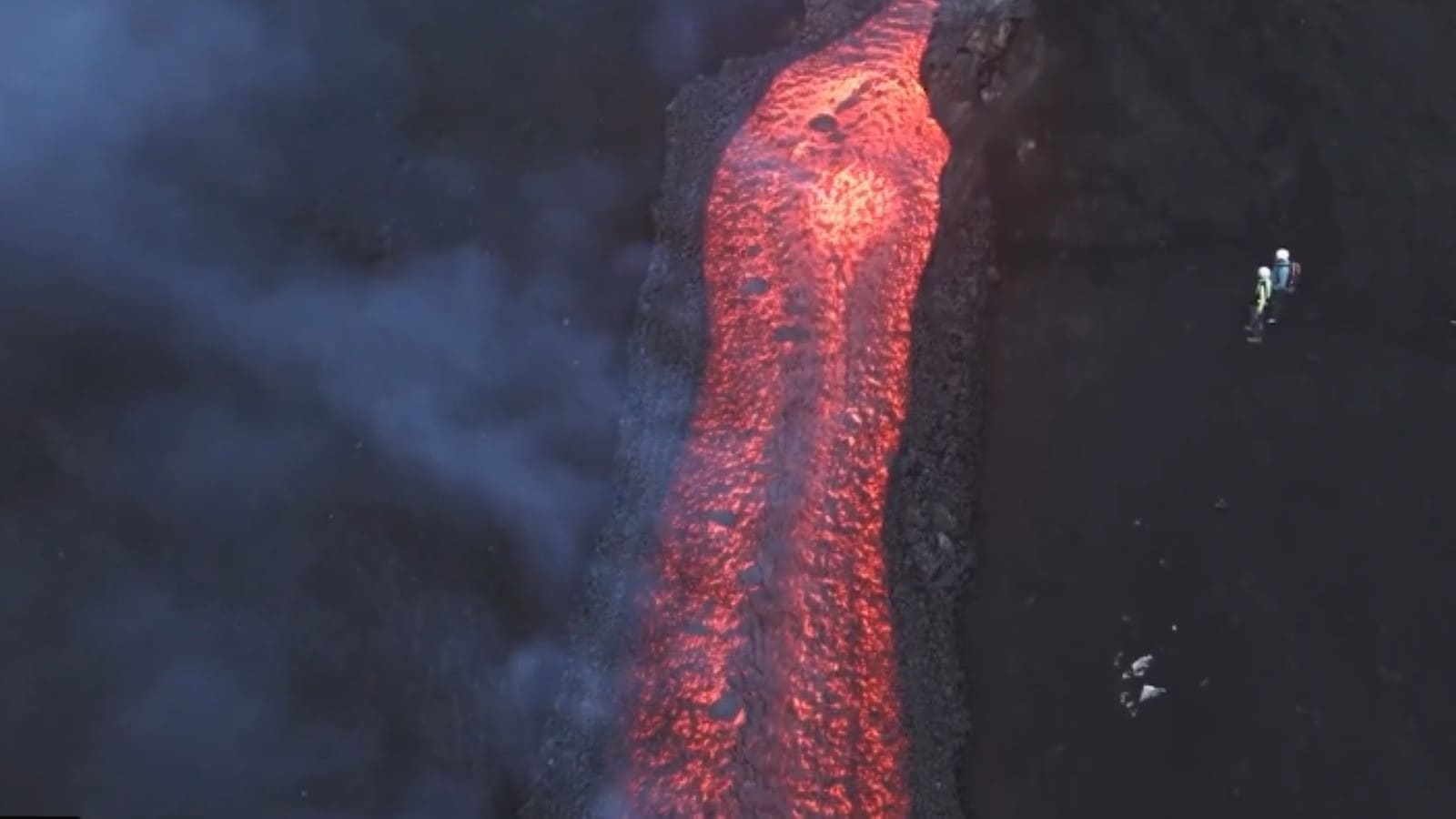
When Mount Etna wakes up in the dead of night, the Sicilian sky undergoes a terrifying, magnificent transformation. The darkness does not merely lift; it is torn apart by ribbons of liquid neon. A brilliant, blinding orange, so saturated it looks almost synthetic, bleeds down the dark basalt slopes of Europe’s largest active volcano. To the outside world, clicking on breaking news videos from the safety of distant, flat cities, it looks like the end of days. It looks like a crisis.
But for those who sleep on her flanks, it is simply Tuesday. To read more about the context here, Travel + Leisure offers an excellent breakdown.
The Ritual of the Broom
Consider a man named Salvatore. He is seventy-two years old, with hands the color and texture of the roasted chestnuts he sells in the autumn, and he has spent his entire life in the shadow of the mountain. To Salvatore, and to the hundreds of thousands of people tucked into the valleys and ridges of Sicily’s eastern coast, Etna is not an "it." She is a "she." Locally, they call her Idda, which translates simply to She.
When the news networks broadcast aerial footage of fountains of fire shooting hundreds of meters into the stratosphere, Salvatore does not pack a suitcase. He does not flee to Palermo. Instead, he walks out onto his terrace with a stiff-bristled broom.
The sky is raining lapilli—small, porous volcanic pebbles—and a fine, black ash that resembles coarse gunpowder. It settles on the hoods of Fiats, blankets the corrugated tin roofs of olive mills, and turns the vibrant green of lemon orchards into a ghostly monochrome gray.
"The mountain is sweeping her kitchen," Salvatore says, his voice a gravelly whisper that mimics the terrain. "So we must sweep ours."
There is a quiet, rhythmic labor to living here. The ash is heavy. It smells faintly of struck matches and ancient, roasted earth. If you leave it on your roof, the next rain will turn it into a substance resembling wet concrete, heavy enough to collapse a structure. So, while the orange rivers of lava crawl down the uninhabited desert zones of the upper craters, the people below engage in a communal ballet. Thousands of brooms scraping against stone, a dry, raspy chorus echoing through the streets of Catania and the hill towns.
It is an exhausting, relentless tax paid for the privilege of living in the presence of greatness.
The Great Bargain
Why stay? It is the question every traveler asks when they see the smoke pluming from the summit, a permanent white flag waved by the earth. The answer lies in a paradox that science explains but only the locals truly feel.
The very entity that threatens to consume these towns is the sole reason they thrive.
Volcanic soil is a miracle of chemistry. When lava cools, it decomposes over centuries into a dark, nutrient-rich dirt packed with phosphorus, potassium, and magnesium. Etna's lower slopes are a paradise of fertility. Blood oranges grow here with a deep, crimson hue found nowhere else on earth, their sweetness sharpened by the dramatic swing between scorching Mediterranean days and chilly mountain nights.
Higher up, clinging to terraces built from old black lava stone, are the vineyards. Nerello Mascalese and Carricante grapes dig their roots deep into the fractured basalt.
Let us look at the reality of a winemaker working this soil. The vines are old, some over a century, surviving because the lava flows of 1928 or 1981 chose to pivot a hundred meters to the left. The wine they produce does not taste of fruit; it tastes of smoke, crushed rocks, and salt. It tastes of survival. When you drink a glass of wine grown on Etna, you are drinking a liquid timeline of the earth's internal anger.
The stakes are invisible until they aren't. Every farmer knows that the line between wealth and ruin is entirely arbitrary. The mountain decides. A flow can stall in a barren valley, creating a tourist attraction for the next decade, or it can swallow a generational vineyard in an afternoon, leaving nothing but a smooth, black monument where a family's livelihood used to be.
The Architecture of Impermanence
To walk through the cities at the base of the volcano is to understand a different relationship with time. Catania, the sprawling historic port city down on the coast, is built out of the mountain itself.
In 1669, a catastrophic eruption breached the city walls, poured into the sea, and buried entire neighborhoods. The citizens did not abandon the coast. They took the very stone that had destroyed their homes, cut it into blocks, and built a baroque masterpiece. The churches, the palazzos, the grand squares—they are all crafted from dark, brooding lava stone, offset by white limestone.
It is a city built from the weapon of its own destruction.
This creates a psychology that is entirely unique to the region. There is no room for the illusion of permanence here. In Western culture, we build towers designed to last forever, we insure everything, we plan decades in advance. On the slopes of Etna, that mindset feels laughably naive.
The mountain changes shape constantly. A summit crater that existed three years ago might collapse tomorrow, replaced by a new vent that opens up like a fresh wound on a completely different ridge. The maps are always wrong because the geography is a living document, still being written by a molten pen.
When tourists gather at the Rifugio Sapienza, the highest point accessible by road, they look up at the smoking cones with a sense of thrill. They take selfies against the backdrop of yellow sulfur stains and cooling crusts. They see a spectacle.
But if you turn around and look down, toward the glittering blue of the Ionian Sea, you see the true story. You see towns packed tightly against one another, their church spires pointing like needles toward the volatile sky. You see highways cutting through ancient, petrified black rivers. You see a million people choosing, every single morning, to co-exist with a giant.
The Night the Mountain Spoke
A few years ago, during a particularly violent phase known as a paroxysm, the mountain put on a display that few who witnessed it will ever forget. It wasn't the slow, oozing crawl of lava that attracts casual onlookers. This was a continuous, high-velocity fountain of fire that lasted for six hours.
The heat could be felt kilometers away, a dry, baking warmth that pushed against the cool night air. The column of ash rose ten kilometers into the atmosphere, catching the lightning generated by its own friction. It was a private thunderstorm born from the center of the island.
From a distance, the lava streams looked like glowing capillaries on an anatomical drawing, feeding the dark body of the land. In the villages below, people stood on their balconies. They did not scream. They did not panic.
A young mother held her child up to the window, pointing at the glowing summit. "Look," she whispered, her voice recorded by a neighbor's phone, "she is beautiful tonight."
There was no hatred in her voice. No terror. There was only a profound, reverent awe. To grow up here is to understand that humans are merely tenants on this island. The mountain is the landlord, and she has a habit of remodeling without warning.
The Cold Stone
Eventually, the pressure subsides. The subterranean chambers empty, the tremors fade into a faint heartbeat, and the bright, liquid orange turns back into a dull, crusty red, then finally into a matte, unforgiving black.
The news crews pack up their tripods. The dramatic drone footage disappears from the front pages of international websites. The world moves on to the next flashpoint, satisfied that the danger has passed.
But on the mountain, the real work begins.
The lava takes months, sometimes years, to cool completely beneath the surface. If you poke a stick into a crevice of a flow that happened a year ago, the wood will catch fire within seconds. The earth holds onto its heat the way a heart holds onto a grudge.
Salvatore is back on his terrace. The air is clear now, the sky that deep, impossible Sicilian blue that looks like it has been scrubbed clean. His broom is shorter now, its bristles worn down by days of scraping the abrasive black grit from his stones. His vineyard is safe, at least for this season. The grapes are beginning to flower, tiny green clusters against the backdrop of the dark terraced walls.
He looks up at the summit. A thin, lazy wisp of white steam drifts from the main crater, casting a long, slow shadow over the valley.
The mountain is quiet. For now.
Tomorrow, the tourists will return, riding the cable cars up to the edge of the old craters, walking over ground that is still warm to the touch. They will buy small souvenirs carved from black volcanic rock—little elephants, tiny replicas of the mountain—and they will take them home to sit on bookshelves in London, Munich, and New York. They will tell their friends about the day they stood on Europe's largest volcano.
They will think they saw it. But to truly understand Etna, you cannot just look at the fire. You have to look at the people who sweep the ash, who plant the vines, and who sleep peacefully while the earth burns bright above their heads. You have to understand that here, life is not lived in spite of the volcano, but because of it.
The orange streams will come again. The ground will shake. And the brooms will be waiting.