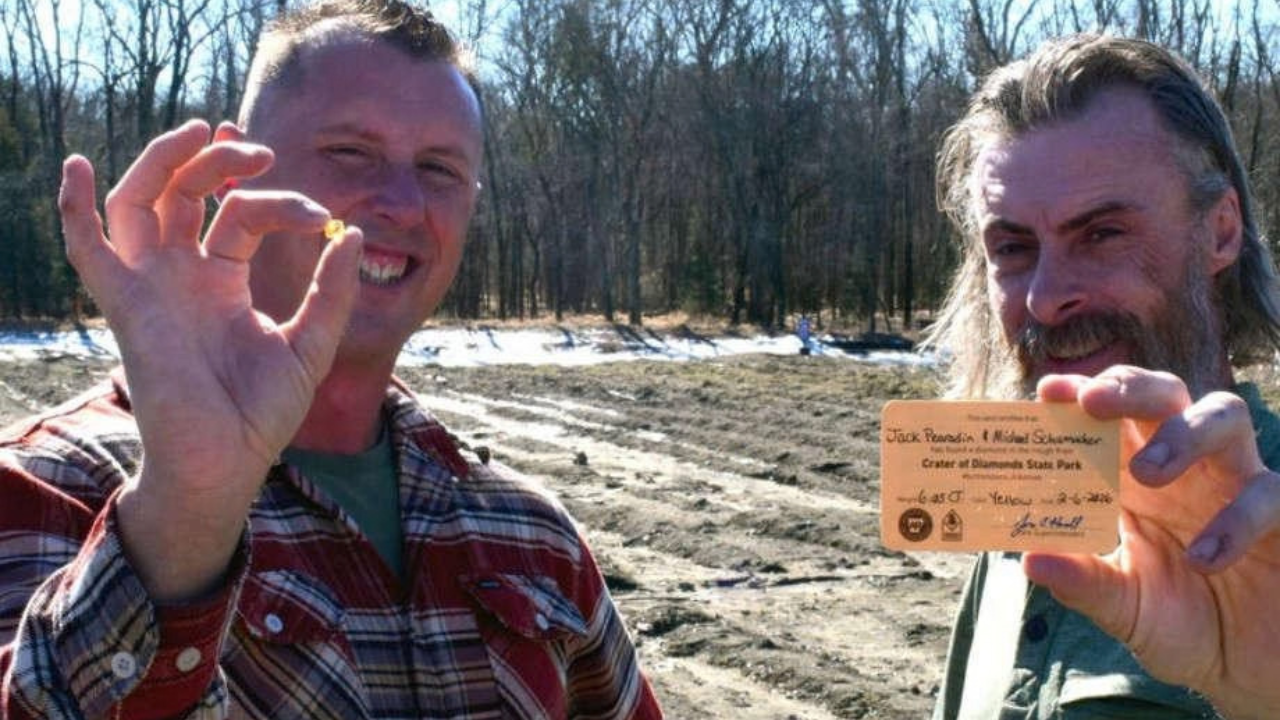
Every few years, the media wheels grind into motion to push the exact same tired fairy tale. A guy spends over a decade sifting through dirt at a public park in Arkansas, finally unearths a six-carat rock, and the headlines breathlessly crown him a genius. Millions of readers nod along, picturing themselves striking it rich with a shovel and a stroke of blind luck.
It is the lottery ticket narrative wrapped in mud and marketed as grit.
And it is economic poison.
Let us look past the feel-good fluff. The lazy consensus of mainstream reporting wants you to believe that persistence in low-yield random extraction is a valid wealth strategy. They romanticize the thirteen-year grind at Crater of Diamonds State Park as a masterclass in dedication. I call it a masterclass in opportunity cost.
If you spent thirteen years applying that level of focused tenacity to almost any scalable enterprise, compounding index funds, or acquiring cash-flowing real estate, you would not be celebrating a single lump of crystallized carbon that you now have to pay capital gains tax on just to liquidate. You would be financially independent. Instead, society cheers for the guy who traded thousands of hours of his life for a one-time payout that wouldn't even buy a modest suburban home outright after fees, valuation friction, and dealer markdowns.
We need to dismantle the romance of the random windfall.
The Economics Of The Mirage
Let us define what actually happened in Arkansas. A tourist paid a nominal entrance fee, rented basic tools, and spent a cumulative eternity turning over soil. When the stone was found, the valuation machine kicked in. The media slapped a massive price tag on the 6.03-carat diamond because retail luxury pricing bears zero resemblance to liquidation reality.
Here is the dirty secret the diamond industry hides behind velvet curtains: gemstones are not liquid assets. Try walking into a grocery store, a bank, or a commodities exchange to trade that rock for goods, services, or debt relief. You cannot. You are forced to deal with middlemen, appraisers who take a cut, and auction houses that charge listing fees. By the time you convert that dirt-scratching trophy into actual spendable fiat, the spread has eaten your lunch.
Compare this to actual asset accumulation. Real wealth is built through predictable cash flows and asset appreciation backed by utility. A diamond sits in a safe or on a finger. It produces nothing. It pays no dividends. It does not innovate, rent out apartments, or solve human problems. It is a dead-end store of value kept afloat by aggressive marketing and artificial supply constraints managed by corporate cartels.
When an amateur goes out into a state park and beats astronomical odds to find a big stone, the media uses it to validate the lottery mindset. They want you to focus on the survivor bias. They never talk about the thousands of other saps standing shoulder-to-shoulder in the hot sun, breathing silica dust, walking away empty-handed year after year.
The Fallacy Of The Grind
People love to conflate stubbornness with strategy.
I have watched founders throw millions of dollars and half a decade into failing business models because they fell in love with the struggle rather than the market feedback. It is the exact same psychological trap as the diamond hunter. You put in ten years, so quitting feels like admitting defeat. Sunk cost fallacy dressed up as perseverance.
True expertise means knowing when an arena is rigged against you. The house always wins at the state park because the house sells tickets and keeps the land rights, while the individual trades scarce time for a microscopic statistical probability.
If you want to play a game where your input correlates to your output, stop looking at the dirt. Look at systems.
Imagine a scenario where you take the exact same number of hours invested by our Arkansas treasure hunter—let us conservatively estimate two thousand hours over thirteen years—and apply them to learning a high-leverage digital skill, building a software-as-a-service micro-tool, or mastering fractional real estate syndication.
Hour one of digging in a public park has the exact same expected value as hour two thousand. The ground does not care how hard you try. It does not reward experience, skill acquisition, or strategic pivoting. It is pure probability. Contrast that with skill-based compounding, where your execution gets sharper, your network expands, and your return on time scales exponentially.
Dismantling The Popular Questions
Whenever a story like this blows up, the comment sections fill up with predictable anxieties and fantasies. Let us address the common inquiries with zero sugar-coating.
Is it actually possible to get rich finding diamonds in public parks?
Technically yes, practically no. The expected value of an hour spent at Crater of Diamonds State Park is likely lower than minimum wage when factored across all visitors. You are competing against professional stone hunters, erosion, and raw math. Treating recreation as an investment strategy is a financial disaster.
Why do people keep falling for the lottery narrative?
Because human brains are wired for narrative shortcuts rather than statistical analysis. A single dramatic success story triggers a dopamine hit that overrides cold, hard math. Media outlets know this. Stories about boring, disciplined index fund investing do not get clicks. Stories about finding hidden treasure in the mud do.
Should I invest in diamonds as a hedge against inflation?
Absolutely not. Physical diamonds suffer from enormous retail markups, a lack of standardized grading that protects buyers, and a secondary market that is notoriously illiquid. If you want a hard asset hedge, buy commodities with industrial utility or decentralized stores of value with transparent order books.
The Uncomfortable Truth About Risk
I admit my perspective has a downside. It is unromantic.
There is no magical movie montage where you wipe sweat from your brow, hold up a sparkly rock, and instantly change your social standing. There is no external validation from a morning talk show host. Building wealth through disciplined execution, margin control, and boring asset allocation is quiet, lonely work. It lacks the theatrical thrill of the gamble.
Society rewards the spectacle, but math rewards the discipline.
Stop looking for the needle in the planetary haystack. Stop waiting for the cosmic lottery to tap you on the shoulder because you endured a decade of tedious labor in the wrong vehicle.
Drop the shovel. Build a machine that prints its own value.