A standard-issue police lens sees the world in cold, unblinking fractions of a second. It captures the sudden glare of brake lights on a dark highway, the nervous twitch of a driver’s hand on a steering wheel, and the exact moment a routine traffic stop transforms into a fatal split-second decision. But when there is no lens, the truth evaporates into the hot asphalt, leaving behind only grief, conflicting stories, and an aching emptiness.
Consider what happened on a sweltering Tuesday afternoon in Houston. Lorenzo Salgado Araujo, a Mexican national who had built a quiet life in the United States over decades, was driving his construction crew to a job site. He was not the target of the federal investigation. Yet, within moments, a pursuit materialized, a vehicle was allegedly "weaponized," and gunfire cut through the air. Six days later, the exact same tragedy repeated itself nearly two thousand miles away in the coastal town of Biddeford, Maine, where an Immigration and Customs Enforcement officer shot and killed a Colombian driver named Joan Sebastián Durán Guerrero.
Two men. Two traffic stops. Two fatalities. And not a single inch of federal body-camera footage to explain why.
Instead of clear, definitive digital evidence, the public was left with a vacuum. On one side stood grieving families disputing the official narratives; on the other stood federal agencies citing immediate threats to public safety. In the middle lay a neighborhood gathering around makeshift memorials of candles and flowers, asking a devastatingly simple question: why are we still fighting in the dark?
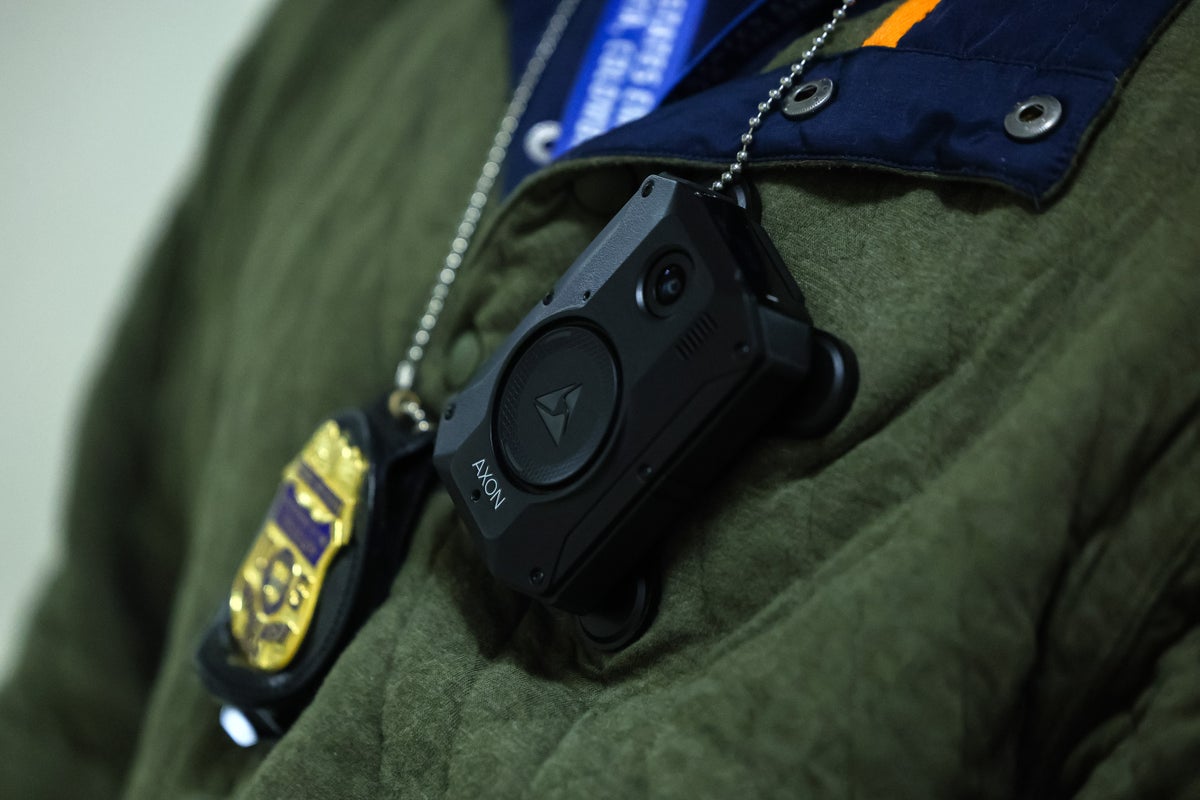
The answer arrived on a Sunday morning broadcast. White House border czar Tom Homan took to the airwaves to announce a sweeping, definitive shift in operational protocol. Moving forward, ICE will require its officers to record vehicle stops using at least one body-worn camera whenever possible.
"I want the American people to see what that officer sees when he makes the decision and takes an action," Homan stated, noting that video evidence ultimately protects the integrity of the badge just as much as it protects the public. "They exonerate more law enforcement than they convict."
But the real problem lies elsewhere, buried under months of political paralysis and bureaucratic gridlock.
To understand why these officers were unequipped in the first place is to look at the messy machinery of governance. According to federal officials, the rollout of nationwide body cameras was severely crippled by a 76-day partial government shutdown earlier this year. A fierce legislative tug-of-war over immigration funding left the Department of Homeland Security operating in a state of financial limbo. While a $20 million appropriation for body cameras was eventually greenlit in April, administrative delays and supply-chain logistics meant that more than half of ICE's field offices were still waiting for their equipment when the July shootings occurred.
Critics and lawmakers have pushed back heavily against this narrative, arguing that a multi-billion-dollar enforcement agency shouldn't require an act of Congress to ensure its frontline personnel carry basic accountability tools. It is a terrifying realization for those living within these communities: the gap between a policy being signed in Washington and a camera being clipped onto an officer's vest in Texas is measured in human lives.
The tension reached a boiling point just days before the mandate. Following the Maine shooting, ICE high command briefly ordered a complete pause on most vehicle stops nationwide to review safety procedures. The freeze lasted less than twenty-four hours before the Oval Office intervened, swiftly reversing the order and declaring traffic stops an indispensable tool in fighting crime.
The message was clear: the machinery of mass deportation would not grind to a halt. If the operations must continue at full throttle, then the only alternative is to force transparency into the equation.
The agency is now under a strict 60-day countdown to distribute the remaining purchased cameras and complete "train-the-trainer" programs across every outstanding field office. The goal is an absolute blanket of digital accountability, ensuring that the next time a federal agent signals a driver to pull over to the side of the road, a recording light is pulsing red.
It is a policy forged too late for the families in Houston and Biddeford. A small plastic lens cannot reverse gunfire, nor can it mend the fractured trust between an immigrant neighborhood and the federal government. But as these new directives take effect on the streets, the absolute authority of an officer's unverified word is drawing to a close, replaced by the cold, impartial testimony of the lens.