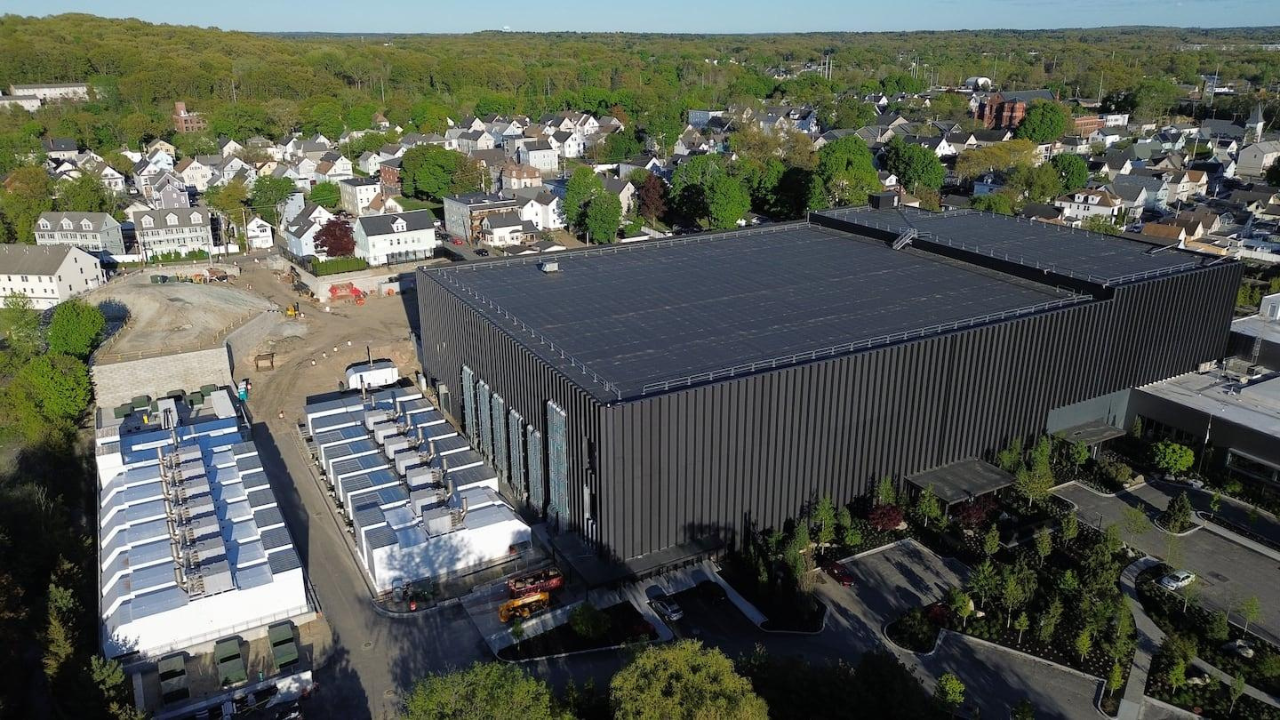
Residents in Massachusetts are currently losing their minds over a local data center deploying twenty-seven diesel generators perilously close to residential zones. The headlines write themselves. Corporate greed, toxic fumes rolling toward suburban backyards, and the terrifying specter of industrial backup power humming away while innocent citizens breathe particulate matter. Local lawsuits are flying. Activists are chaining themselves to metaphorical gates.
Everyone agrees on the lazy consensus: big tech is poisoning neighborhoods, noise pollution is ruining quality of life, and backup power is an environmental crime.
Except the entire premise is backwards.
I have spent two decades inside the infrastructure grid. I have watched municipal zoning boards panic over emergency generators while greenlighting strip malls that draw three times the constant load with zero battery redundancy. Let me state the hard truth right out of the gate: those twenty-seven diesel generators sitting outside that data center are not a sign of environmental negligence. They are an admission of failure by the local utility, and removing them will make your power grid exponentially more fragile.
Stop fighting the backup generators. You are aiming your weapons at the wrong target.
The Electrical Reality Nobody Wants to Talk About
To understand why screaming about backup diesel engines is a rookie mistake, you first need to define what these machines actually do. They do not run every day. They are not belching black soot into the atmosphere twenty-four hours a day to power your cloud storage. They sit dormant. They are dead weight rusting in the rain for 99 percent of their operational lifespan.
When a data center installs twenty-seven massive backup units, it means one thing: the local power grid is a house of cards.
Imagine a scenario where a utility company tells a multi-million-dollar technology facility, "We cannot guarantee your uptime." What happens? The facility builds its own insurance policy. Those generators are an emergency shock absorber for a grid buckling under the weight of residential electric heating, aging transmission lines, and zero capacity for baseload expansion.
The activists suing this facility are angry at the symptom while completely ignoring the disease. The disease is a brittle, underfunded municipal power grid that cannot handle a localized brownout without threatening hospitals, emergency services, and millions of digital transactions. If you ban diesel generators from data centers, you do not stop the data centers from coming. You just guarantee that when the grid trips, entire regional networks go dark, taking critical municipal infrastructure down with them.
I have seen companies blow millions on legal fees trying to block backup power permits, only to watch those same neighborhoods suffer rolling blackouts the following summer because the local substation caught fire under peak air conditioning loads. The irony is staggering.
The Hypocrisy of Silent Power
Let us address the aesthetic objection. People hate the noise. People hate the industrial aesthetic of twenty-seven metal boxes lined up near a property line.
Fair enough. Industrial assets are ugly. Nobody wants to look at an engine block while drinking morning coffee on the patio. But let us look at the alternative energy transition narrative that keeps getting shoved down our throats. We are told to electrify everything. Heat pumps in every home. Electric vehicles in every driveway. Total reliance on the grid.
Then, when the grid inevitably stumbles because we added millions of electric vehicles without upgrading transmission capacity, the same public screams when a facility installs the only proven, instantaneous bridge between grid failure and total blackout.
What do you want? Do you want your smart home devices, your hospital records, your banking systems, and your remote work tools to function when lightning hits a transformer, or do you want pristine silence until the whole digital economy flatlines?
Batteries are the trendy counter-argument here. The green tech lobby loves to claim that lithium-ion battery banks can replace diesel generators entirely. This sounds wonderful in a press release. It is complete nonsense in practice.
Let us look at the technical limitations of battery storage at hyperscale. A massive data center requires tens or hundreds of megawatts of instantaneous load. If the grid drops, you need power immediately, cleanly, and reliably for hours—sometimes days—until main lines are repaired. Lithium-ion batteries at that scale present catastrophic thermal runaway risks, require massive physical footprints, degrade rapidly under high-draw discharge cycles, and rely on supply chains that have their own severe environmental and humanitarian costs.
Diesel fuel is dense. You pump it into a tank, it sits there stable for years, and when you flip the switch, it turns chemical energy into kinetic energy with ruthless, mechanical reliability. It is primitive. It is loud. And it works every single time.
The Uncomfortable Downsides of the Contrarian View
I am not here to paint diesel fuel as a perfumed breeze. Let us be entirely candid about the downsides.
Diesel generators emit nitrogen oxides and particulate matter when they run. Even during monthly testing cycles, they generate local emissions. If a data center mismanages its maintenance schedule, those engines can leak, create localized noise pollution that exceeds municipal sound ordinances, and drop particulate counts in the immediate vicinity.
Furthermore, corporations frequently exploit local zoning loopholes, dropping these facilities into lower-income or less politically connected neighborhoods where residents lack the war chest to fight back effectively. That is a legitimate injustice. The site selection process for industrial infrastructure is often predatory.
Conceding this point does not mean the solution is banning the generators. The solution is demanding strict operational transparency, mandated sound-mitigation enclosures, and strict limits on testing hours. It means forcing the facility to offset its occasional emissions through localized green infrastructure investments—like funding community solar arrays or upgrading local school HVAC systems to drastically lower neighborhood baseline pollution.
Fighting the backup generator is a placebo. It makes activists feel like David fighting Goliath, but it leaves Goliath fully operational and secretly laughing at your lack of system-level understanding.
The Real Culprit: Zoning and Utility Monopolies
If you want to fix the problem in Massachusetts or anywhere else, stop suing the data center for trying to keep the lights on. Start subpoenaing the local utility executives.
Ask them why their transmission infrastructure hasn't been significantly upgraded since the Reagan administration. Ask them why they are simultaneously courting high-density commercial tech hubs for tax revenue while quietly admitting to the state regulatory commission that their grid cannot handle peak summer loads without massive industrial hedging.
Data centers are symptoms of our collective addiction to instant, always-on connectivity. You cannot demand lightning-fast streaming, frictionless digital banking, instant cloud access, and remote work infrastructure while throwing tantrums when the physical hardware required to sustain that lifestyle needs a 5,000-gallon diesel tank to survive a grid collapse.
The residents suing that facility are fighting a noble battle with the wrong weapons, fueled by a fundamental misunderstanding of electrical engineering and grid physics.
Take down the utility monopoly. Force the grid to modernize. Demand true infrastructural investment instead of regulatory theater. Until you fix the grid, those twenty-seven diesel generators aren't the enemy. They are the only thing keeping you from the dark.