Dawn arrives slowly in East Anglia, lifting the mist from the flat fields to reveal the perimeter fence of Royal Air Force Lakenheath. To the casual eye, it is a routine military installation, a sprawling expanse of concrete, hangars, and heavily fortified tarmac where the gray shapes of American fighter jets wait in the damp morning air. For decades, the local rhythm has been dictated by the roar of afterburners overhead—a familiar, disruptive thunder that residents long ago learned to tune out while watching television or tending their gardens.
Then came the sirens.
Security alerts at military bases are designed to be invisible until they are absolute. They ripple through chains of command with quiet urgency, guarded by heavily armed personnel, perimeter sensors, and the sterile protocols of modern defense. But when an incident breaches the razor wire, when the word arrest enters the police log alongside the words air base and explosives, the invisible shield drops. Suddenly, the routine thunder of the jets feels different. It carries a heavy, unspoken question: How close did the threat actually get?
British counterterrorism police are currently untangling that exact question. The investigation centers around a series of arrests following an incident near the Suffolk air base—an installation currently utilized by the United States Air Force. Details are measured, carefully weighed, and filtered through the cautious language of law enforcement and national security. Yet, beneath the official statements lies a stark reality that touches every military community across Europe: the perimeter is vast, the modern threat is asymmetric, and the line between global geopolitical tension and a quiet country lane in rural England has grown dangerously thin.
To understand why an arrest involving explosives near an air base sends shockwaves from Suffolk to Washington, we must first look at how these installations operate.
An air base is not merely a parking lot for expensive machinery; it is an integrated ecosystem of power projection. Lakenheath has historically hosted United States tactical aircraft, serving as a critical strategic node for NATO operations. When an aircraft takes off from its runway, it carries the weight of international alliances, deterrence strategies, and decades of diplomatic posture.
Consider the perspective of a security guard standing watch at 3:00 AM. The air is biting. The perimeter stretches for miles through darkness, punctuated by infrared cameras, motion sensors, and the sterile hum of electrical grids. It is an environment engineered to deter conventional incursions. But modern security vulnerabilities rarely arrive with a marching band. They arrive as shadows. They hide in the mundane details of rural life—the parked car on a lonely B-road, the individual loitering near an access gate, the digital probes searching for vulnerabilities in local infrastructure.
When UK counterterrorism officers stepped in to lead the probe, it signaled a fundamental shift in how the incident was classified. This was no longer treated as a simple case of trespassing or petty mischief near a restricted zone. The involvement of counterterrorism command means the investigative threshold crossed into intent, capability, and ideology.
Why explosives?
The word itself carries a visceral weight. It changes the geometry of an investigation. A trespasser with a pair of wire cutters is a security breach. A suspect linked to explosive materials near a foreign military installation is an entirely different category of hazard—one that forces intelligence agencies to look backward at timelines, communications networks, and potential accomplices, while looking forward to anticipate what might have been planned.
We often imagine security threats through the lens of cinematic drama—masked figures scaling walls under the cover of a dramatic orchestral score. Reality is infinitely more mundane, and therefore more terrifying. It looks like an ordinary afternoon in a nearby village. It looks like neighbors nodding to one another at the local post office, completely unaware that a few miles away, investigators are unravelling a plot that could have rewritten the headlines of every newspaper in the world.
The local community in Suffolk is accustomed to living in the shadow of global
The Shadow Over the Runway
news
category
The perimeter fence of a military installation does not merely separate land; it divides two distinct realities. On one side lies the hum of routine, the bureaucratic march of military logistics, the distant roar of jet engines cutting through an overcast sky. On the other side lies the quiet, nervous hum of ordinary life, where families hang laundry and cars idle at red lights, largely unthinking of the massive strategic machinery operating just a few fields away.
Until something breaks that illusion.
Consider what happens on a Tuesday morning when the sirens do not sound for a drill, but for an arrest.
British counterterrorism police descending upon a location near an air base used by the United States military is not a routine local police matter. It is a collision between global anxieties and local geography. When headlines flash regarding explosive-related arrests near these sensitive tarmac stripes, the initial reaction is usually a spike of adrenaline followed by a numbing statistical wash. Names, charges, jurisdictions—they blur into the background noise of modern insecurity.
Yet, behind those dry police bulletins are very human dimensions. Picture a duty officer staring at a glowing monitor in the small hours of the morning, watching a thermal signature near a restricted zone. Picture the sudden shift in posture, the urgent whispered transmissions, the heavy steel doors sliding shut. This is where abstract international defense strategies crash into the mud and rain of an English countryside lane.
The core of the matter rests on an uncomfortable truth. Modern infrastructure is sprawling, porous, and inherently vulnerable. Air bases utilized by global superpowers are not isolated castles surrounded by moats; they are complex nodes embedded within civilian populations. They rely on local roads, local labor, local utility lines, and the quiet vigilance of communities that live in their shadow.
When an explosive-related investigation begins in such a locale, the shockwaves ripple outward instantly. Neighbors look at each other differently across garden hedges. Local shopkeepers wonder who bought fertilizer or hardware last Tuesday. The anxiety is not just about the potential of a physical blast; it is the psychological shock of realizing how thin the margin is between ordinary routine and catastrophic disruption.
For years, security experts have warned about the vulnerabilities of dual-use or allied military facilities. These locations represent concentrated symbols of geopolitical power. To someone harboring malicious intent, the proximity of a foreign power's operational hub is an irresistible target, a stage upon which to project a grievance or spark a crisis.
But counterterrorism operations are rarely simple stories of heroes catching villains in the nick of time. They are grueling, methodical marathons of digital forensics, wiretaps, and endless hours of surveillance. They involve analysts staring at grainy CCTV footage, tracing the provenance of precursors, and weighing the terrible burden of intervention: strike too early and you lack the evidence to hold a suspect; strike too late and the worst occurs.
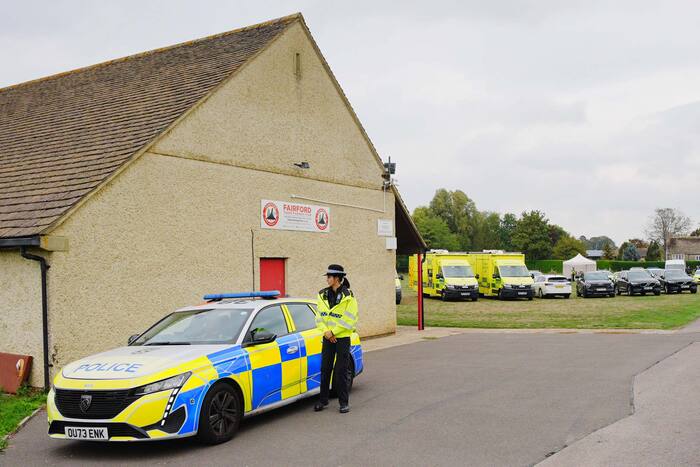
The public rarely sees this agonizing calculus. They see the yellow police tape. They see the heavily armed officers standing silently behind riot shields. They read the sparse press releases that offer maximum gravity and minimum detail.
This information vacuum breeds a very specific kind of fear. Rumors fill the empty spaces. Social media amplifies every minor siren into a major siege. In these moments, the narrative slips away from the facts and drifts into speculation.
Grounding ourselves in what is actually known is the only antidote to that collective vertigo. Explosive-related arrests near these facilities indicate both a functional threat and a functioning defense mechanism. The system detected an anomaly. The agencies moved. The threat was intercepted or contained before it could materialize into tragedy. That is the quiet victory of counterterrorism—it succeeds in silence, and we only notice it when the veil slips and the machinery is exposed to the harsh light of public scrutiny.
Yet, an interception is not a resolution. It is a symptom. It forces a difficult conversation about how we protect the invisible seams where military necessity meets civilian life. Can we truly secure every mile of perimeter fence without turning open societies into garrison states? Where is the balance between community trust and absolute security?
These questions do not have clean answers, neatly wrapped in policy documents. They are lived out by the people who walk past those fences every day, listening to the jets take off, wondering quietly if today is the day the world outside breaks violently through the wire.
The runway lights flicker on as dusk settles over the airfield, casting long, geometric shadows across the concrete. Out in the quiet neighborhoods beyond the gates, porch lights turn on one by one. Life resumes its rhythm, fragile and resilient all at once, shadowed by the quiet vigilance of those whose job it is to watch the dark.



