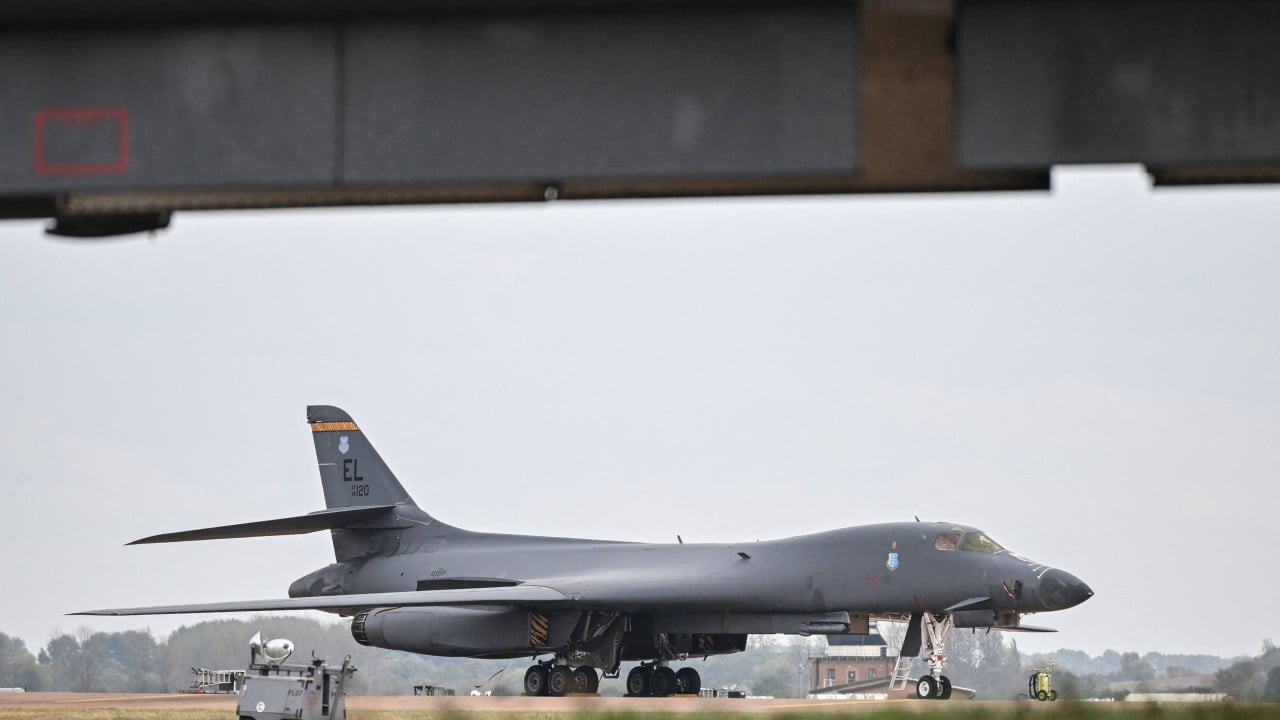
The perimeter wire does not care about geopolitics. It cares about wind, rust, and the sudden weight of a bird landing on its barbs. For decades, the double-fenced boundary of the Royal Air Force station in Suffolk has hummed with a quiet, persistent electricity—a low-frequency background noise to the sleepy rural villages that flank it. To the people who walk their dogs along the damp bridleways of East Anglia, the base is simply part of the geography. A concrete monolith where gray skies meet gray tarmac. A place where distant thunder comes not from rainclouds, but from heavy transport engines lifting off toward horizons most locals will never see.
Then the world shifts. It always shifts quietly at first. For a different look, consider: this related article.
A headline breaks through the morning fog: five individuals arrested. Not on the other side of the planet, where proxy wars and drone strikes dominate international broadcasts, but here. Just outside the wire. Terrorism charges.
Let us be entirely clear about the mechanics of modern paranoia. When a military installation—particularly one utilized by United States forces during escalating tensions involving Iran—becomes a focal point for security operations, the perimeter changes character. It stops being a boundary and starts becoming a tripwire. Similar coverage regarding this has been provided by TIME.
Consider what happens inside the control room when an alert is flagged. This is a hypothetical reconstruction based on standard counter-terrorism protocols, but the human pulse remains identical. Screens do not just display maps; they display lives reduced to thermal signatures. A vehicle idling too long in a layby. A burner phone pinging a tower near the service entrance. A pattern of behavior that deviates by two degrees from the baseline of ordinary civilian movement. To an intelligence officer watching from a windowless bunker, everyone outside the fence is either invisible or a threat. There is rarely an in-between.
The five arrested men did not detonate a device. They did not breach the hangars. According to the statements released by counter-terrorism policing units following coordinated raids across London and the East of England, the allegations hinge on preparation, surveillance, and suspected plotting. In the language of the Crown Prosecution Service, they were gathering information that could be useful to a person committing or preparing an act of terrorism.
Information. That is the currency of the modern age. Not just heavy explosives or assault rifles, but digital footprints, shift schedules, drone reconnaissance footage, and the names of contractors who service the fuel lines.
When you live near an installation that acts as a staging ground for long-range operations in the Middle East, you learn to read the silence. When the big gray planes are parked, the air is heavy with a different kind of waiting. When they roar into the night, rattling the double-paned windows of eighteenth-century cottages three miles away, you know the chessboard is moving.
We talk about war as if it happens somewhere else. We consume it via high-definition video clips on pocket-sized screens, mediated by analysts in suits who speak of strategic deterrence and regional stability. But war has roots. Those roots tangle themselves around rural British parishes, suburban industrial estates, and anonymous safe houses in outer London.
The raids happened in the pre-dawn hours. That is when operational security matters most. Darkness hides the movement of vans, the heavy boots on wet tarmac, the shouted commands that pierce a sleeping neighborhood. For the families living next door to the suspects—the ones who watched television through drawn curtains or waved good morning across a shared driveway—the shock is physical.
"We thought they were just quiet," a neighbor might say, staring at the yellow police tape fluttering against a wheelie bin.
That is the chilling symmetry of modern radicalization and threat detection. The people planning disruption often look remarkably ordinary. They shop at the same discount supermarkets, pay their water bills via direct debit, and blend seamlessly into the tapestry of multicultural Britain. And the officers tracking them operate in the same shadows, piecing together encrypted messaging apps, financial transfers, and grainy CCTV footage until the threshold for intervention is crossed.
What brings someone in a London flat to fix their gaze on a runway in rural Suffolk?
To answer that, you have to look past the statutory charge sheets and understand the global ideological currents pulling at young minds. In an era of hyper-connectivity, local geography is an illusion. A teenager sitting in a bedroom in Ilford can feel a deeper allegiance to a faction in Tehran or Sanaa than to the city council that collects their rubbish. The digital domain erases distance. It transforms a global conflict into a personal crusade, complete with online mentors, ideological echo chambers, and step-by-step instructions on how to conduct hostile reconnaissance.
The police operation—spearheaded by the Metropolitan Police’s Counter Terrorism Command, working in tandem with regional units—was designed to intercept that pipeline before it materialized into tragedy. Five men, ranging in age from their twenties to their forties. Arrested under Section 5 of the Terrorism Act 2006.
The legal terminology is dry, administrative, and clinical. Preparation of terrorist acts.
Yet behind those five words lie countless hours of digital forensics. Analysts parsing terabytes of server logs. Surveillance teams enduring thirty-hour shifts in unmarked cars eating cold sandwiches out of foil wrappers. The quiet terror of a nation trying to stay two steps ahead of an enemy whose primary weapon is invisibility.
The base itself remains operational. The planes still fly. The security forces on the gates still check IDs with practiced, expressionless efficiency.
Walk down the lane outside the perimeter today and the wind still rustles the dry autumn leaves caught in the chain-link mesh. A tractor crawls along the horizon, kicking up a plume of golden dust. A Cessna from a local flying club banks lazily overhead, indifferent to the military weight beneath it.
Everything looks normal. Everything is normal.
Except for the yellow signs bolted to the posts, warning of statutory powers under the Terrorism Act. Except for the lingering memory of sirens cutting through the dark at 4:00 AM. Except for the nagging, quiet realization that the distance between a quiet English country lane and the fires of a distant international war is measured not in miles, but in the fragile, invisible vigilance of people we will never meet, guarding doors we will never walk through.


