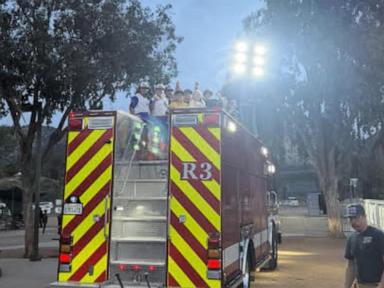
The feel-good local news engine loves a quick victory. A local Little League game gets interrupted by a sudden power outage, plunging the diamond into darkness. The crowd groans. Parents brace for tantrums. Then, like clockwork, the local fire department rolls up in a multi-million dollar ladder truck, flips on the emergency floodlights, and saves the game. The crowd cheers. The local news runs a 90-second clip with a uplifting soundtrack. Everyone goes home happy.
Except it is a complete illusion.
We are trained to applaud these moments of community heroics. We treat them as evidence of small-town resilience and public service dedication. But if you strip away the sentimentality, you are looking at a glaring symptom of a failing system. Using emergency response apparatus as a makeshift utility generator is not a heartwarming community story. It is a stark indictment of our decaying power grid and a dangerous misallocation of critical emergency resources.
The media loves the lazy consensus of the "heartwarming rescue." Let us look at the nuance they willfully ignore.
The True Cost of Your Feel Good Photo Op
When a fire engine idles at a baseball field to illuminate third base, that vehicle is effectively out of service for real, life-or-death emergencies.
Municipal fire trucks are not oversized flashlights. They are highly specialized, mobile tactical units. A standard Type 1 structural fire engine costs tax payers anywhere from $800,000 to well over $1.5 million. The specialized aerial ladder trucks often used for high-angle lighting easily clear the $2 million mark.
When you run those massive diesel engines for hours just to save an evening strike zone, you are burning through more than just fuel. You are expending the operational lifespan of critical equipment. More importantly, you are gambling with response times.
Fire deployment physics rely on strict coverage zones. If a severe vehicle accident or a structural fire breaks out three miles away, the crew at the ball field has to kill the lights, pack up their gear, secure the truck, and navigate through local traffic from a standstill. In emergency medicine, we talk about the "Golden Hour." In firefighting, we talk about flashover timelines—the point where a room transitions from a localized fire to total thermal engulfment. That takes less than five minutes.
Is saving a youth baseball game worth adding two minutes of gear-stowage time to a cardiac arrest call down the street? Absolutely not.
The Grid is Dying and We are Applauding the Band-Aid
The deeper issue here is not just fire department logistics. It is the normalization of utility failure.
We have reached a bizarre point in civic life where the total collapse of basic infrastructure is treated as a backdrop for human interest stories. A power outage during a scheduled community event should trigger anger, not applause. It means the local utility provider—whether a private monopoly or a municipal cooperative—has failed to maintain grid resilience.
The North American Electric Reliability Corporation (NERC) has repeatedly warned that vast swaths of the continent face elevated risks of energy shortfalls during peak demand periods. Our transformers are aging out, our transmission lines are overtaxed, and the distribution network is increasingly fragile.
Yet, when the lights go out, the public narrative completely bypasses the utility provider's failure. Instead of asking why the grid died on a clear evening, the coverage pivots to celebrating the fire department's improvisation. This is the structural equivalent of praising a hospital for using duct tape on a leaking surgical line. It completely distracts from the systemic rot.
The Flawed Premise of Public Resource Flexibility
Go to any local town council meeting and ask why emergency services are performing utility backups, and you will hear a familiar line of flawed logic: "The crews were on duty anyway, so it didn't cost the taxpayers anything extra."
This is a classic economic fallacy. It ignores opportunity cost and accelerated depreciation.
- Mechanical Wear: Fire apparatus engines are designed for high-intensity, episodic deployment. Continuous low-load idling to run external scene lights causes severe carbon buildup in diesel particulate filters, leading to premature engine wear and costly maintenance cycles.
- Personnel Fatigue: Emergency responders face extreme chronic stress. Forcing crews to act as event staff under the guise of public relations degrades their operational readiness for actual crises.
- Liability Exposure: Deploying heavy emergency machinery for non-emergency public gatherings introduces massive liability vectors. If a civilian trips over a high-voltage supply line connected to an engine's generator, the city is liable for millions.
I have spent years analyzing municipal budgets and operational workflows. I have seen cities blow hundreds of thousands of dollars in hidden maintenance costs because they treated their emergency fleet like a pool of Swiss Army knives for community events. It is a strategy that works perfectly right up until the moment it fails catastrophically.
Dismantling the "Community Relations" Defense
The standard pushback from fire chiefs and city managers is that these events build vital trust between the community and first responders. They argue that public relations are a core part of the job.
Let us be brutally honest: public trust is built on operational excellence, not circus acts.
You do not trust a doctor because they showed up at your barbecue and flipped burgers; you trust them because they can execute a flawless appendectomy when you are bleeding out. True community trust in emergency services is forged when a crew arrives at a burning home in under four minutes and executes a textbook search and rescue operation.
Using emergency crews as a public relations safety net is a crutch. It is often used by departments to justify bloated apparatus budgets or to distract from poor response metrics. If a department has enough surplus capacity to spend hours lighting up a Little League diamond, they are either over-staffed, under-utilized, or mismanaging their regional coverage map.
The Actionable Alternative: Microgrids and Reality
If communities actually want to safeguard local sports and events from power failures, the answer is not calling 911. The answer is localized energy resilience.
We need to stop relying on centralized, fragile distribution networks and start installing localized battery storage and microgrid infrastructure at public parks. Modern lithium-iron-phosphate (LFP) commercial battery storage units combined with modest solar arrays can easily power field lights during a standard grid drop. They are quiet, emission-free, and do not require a team of trained medics to operate them.
Yes, upgrading park infrastructure costs money upfront. It requires capital expenditure approval and real engineering planning. It is far more difficult than just calling the local fire station and asking a favor. But it is the only real solution to a real problem.
The next time you see a viral video of an emergency vehicle saving an event with its floodlights, stop cheering. Start asking tough questions. Call your local utility commission and demand to know why the power failed. Call your city council and ask why a $2 million emergency asset was sitting idle at a ball field instead of guarding its response zone.
Stop accepting the heartwarming narrative. Demand an infrastructure that actually works.


_Biopsy.png?branch=uat_release_3)
