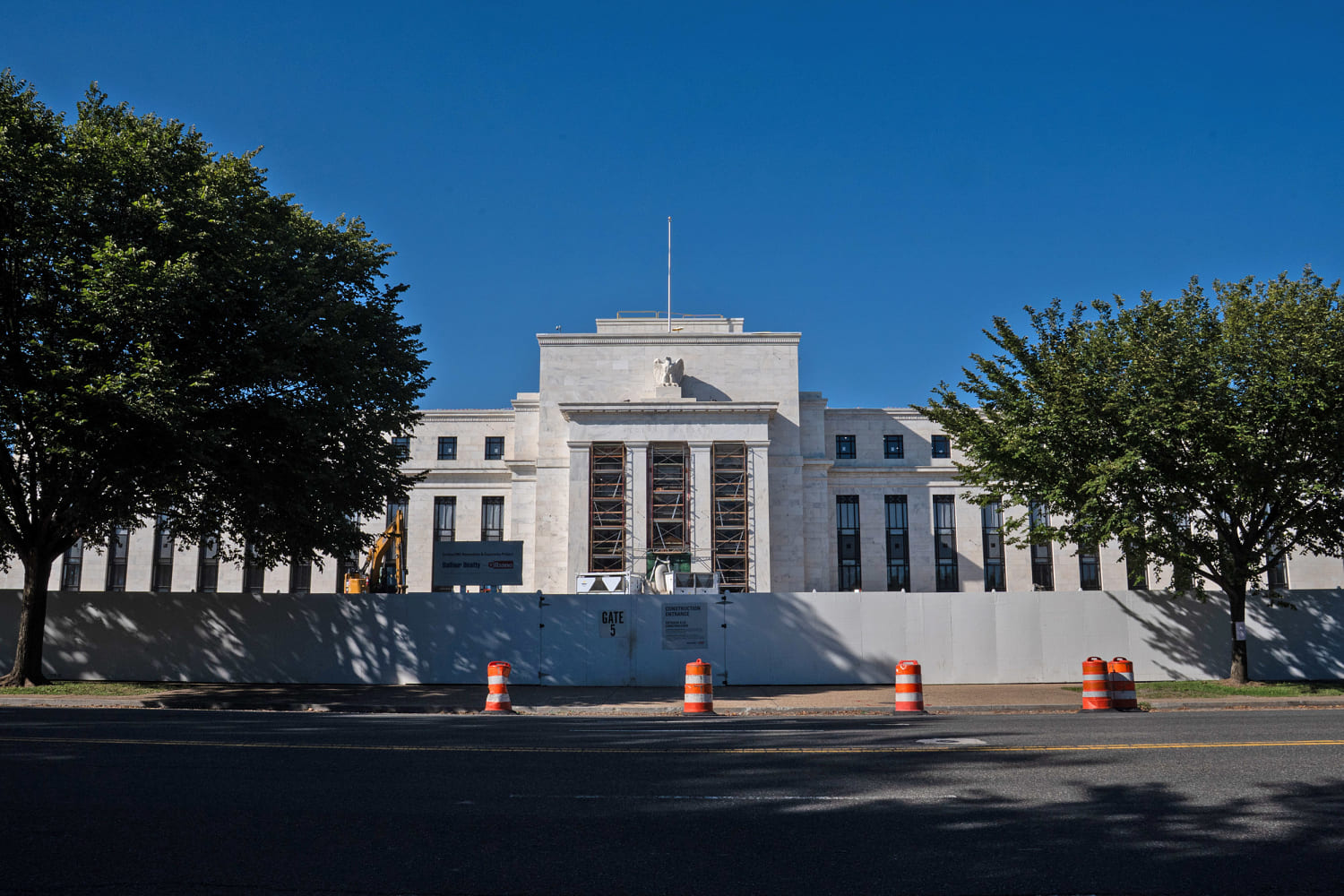
Capital allocation within public sector infrastructure projects is governed by institutional friction, federal procurement statutes, and political oversight mechanisms. When the modernization of the Federal Reserve’s Marriner S. Eccles Building drew intense scrutiny from the executive branch, it triggered a multi-tiered investigation by federal watchdogs. The resulting conclusion of no criminality provides a window into the structural separation between financial mismanagement, procedural friction, and actual statutory violations. Public oversight bodies do not evaluate projects based on fiscal efficiency alone; they operate within strict legal boundaries that separate waste from criminal intent.
Understanding why a high-profile public dispute over rising renovation costs failed to result in criminal findings requires examining the structural mechanics of federal construction auditing. The investigation conducted by the Office of Inspector General evaluated several critical dimensions of the project, including contract awards, change order frequencies, scope creep, and administrative transparency. To evaluate public sector capital expenditure without the fog of political rhetoric, we must deconstruct the financial anatomy of government infrastructure updates into three distinct operational vectors: procurement governance, contingency accounting, and oversight mandates.
The Procurement Governance Framework
Federal construction projects operate under strict statutory frameworks designed to ensure fair competition and fiscal accountability. Unlike private sector entities that can pivot capital allocation rapidly based on market conditions or board discretion, federal agencies must navigate the Federal Acquisition Regulation alongside agency-specific guidelines.
When a project experiences budget inflation, the structural cause is rarely overt malfeasance. Instead, it typically stems from the compounding effects of long-horizon capital planning. The Eccles Building renovation involved modernizing critical building systems—HVAC, electrical grids, and structural reinforcement—that had not undergone comprehensive overhaul since the mid-twentieth century.
Procurement governance breaks down when structural dependencies are discovered mid-project. In historic preservation and institutional modernization, discovery risk is exceptionally high. When contractors open walls or access subterranean infrastructure, unforeseen environmental hazards, structural degradation, or outdated engineering standards emerge. These discoveries force continuous change orders. A change order is not inherently evidence of mismanagement; it represents a legal adjustment to the contract scope driven by physical realities.
The watchdog review established that while the project suffered from poor initial cost estimation and inadequate budget contingency planning, these failures remained administrative and managerial in nature. Criminal fraud statutes require proof of intentional deception, kickbacks, self-dealing, or willful misappropriation of public funds. Inefficient project management and optimistic initial budgeting do not cross the threshold into criminal liability.
The Cost Function of Aging Institutional Infrastructure
The economic reality of renovating monumental government architecture introduces a distinct cost function that diverges sharply from commercial real estate development. The Eccles Building is a protected federal asset. Consequently, the labor and material inputs are subject to statutory wage requirements, specialized historic preservation standards, and heightened security protocols.
Cost overruns in such environments are governed by a compounding variable structure:
- Discovery Variance: The delta between estimated baseline conditions and actual physical degradation discovered post-demolition.
- Regulatory Compliance Overhead: Mandatory adherence to evolving federal energy efficiency mandates, seismic safety codes, and historic preservation guidelines.
- Operational Continuity Constraints: Performing massive structural overhauls while the facility maintains partial operational capacity for critical national functions.
When political actors scrutinize these projects, the evaluation often treats capital expenditure as a fixed-price consumer good rather than a complex, multi-year engineering campaign. The watchdog's findings illustrate that the financial escalation was driven by structural friction rather than fraudulent extraction. The institutional failure was one of forecasting precision and risk allocation, not criminal conspiracy.
The Mandate and Limitations of Federal Watchdogs
To interpret the inspector general's conclusion accurately, one must understand the jurisdictional boundary of administrative watchdogs. Inspectors general are mandated to detect waste, fraud, and abuse. However, these three categories occupy entirely different legal and operational tiers.
Waste involves the thoughtless or careless expenditure of government funds, often resulting from poor planning or bureaucratic inertia. It is legally permissible, provided the underlying transactions comply with procurement statutes.
Fraud involves intentional deception designed to secure an unfair or unlawful gain. It requires an active perpetrator, a fraudulent misrepresentation, and a resulting financial injury to the government.
Abuse involves the extravagant, careless, or malicious conduct inconsistent with prudent business practice.
The scrutiny directed at the Federal Reserve renovation conflated high-cost waste and managerial missteps with actionable fraud. Because the contracts were competitively bid, the labor was documented, and the materials were acquired through standard procurement channels, the legal elements of criminality were entirely absent. The oversight body's role was to audit the fidelity of the process, not to substitute its judgment for the business decisions of agency administrators.
Capital Allocation Reform for Public Infrastructure
The structural vulnerabilities exposed by the Eccles Building audit point toward necessary reforms in how federal agencies budget for major infrastructure overhauls. Relying on initial estimates that fail to account for the true contingency requirements of historic structures creates predictable political friction.
Future capital governance models must implement probabilistic cost-modeling rather than deterministic single-point budgeting. By treating infrastructure modernization as a portfolio of high-variance engineering risks, agencies can establish realistic capital reserves before legislative approval is granted. This approach insulates long-term public assets from the volatility of political cycles and aligns fiscal reporting with physical reality.