The match was struck in the middle of a mundane Tuesday morning, right outside the Department of Passports in Kathmandu's Tripureshwar neighborhood.
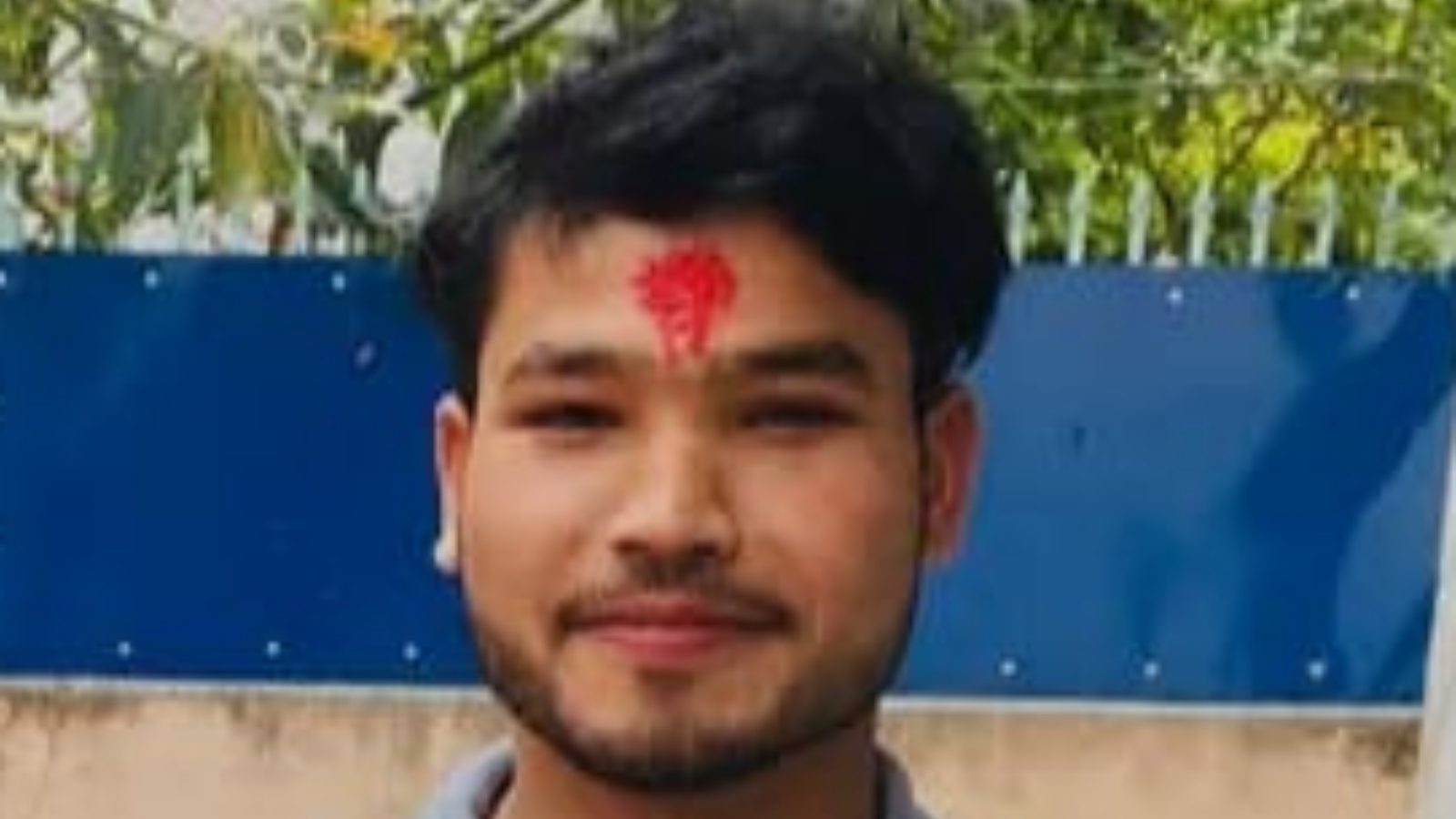
Ganesh Nepali was twenty-five years old. He survived by navigating the chaotic, potholed streets of Nepal's capital as a gig-economy ride-share driver. On July 10, 2026, metropolitan police officers clamped a heavy wheel lock on his motorcycle, accusing him of parking in a restricted zone. A heated argument broke out. Nepali, who had already been fined a heavy sum the week before, argued that the officers had no right to lock the wheels while he was still sitting on the seat.
The municipal police remained indifferent. As a tow truck arrived to haul away his only source of livelihood, Nepali walked to his fuel tank, siphoned petrol into a container, doused himself, and set his own body on fire. Bystanders screamed as flames engulfed him. He died less than twenty-four hours later at Bir Hospital.
The death of Ganesh Nepali did not occur in a political vacuum. It has detonated a massive wave of public anger across Nepal, directed squarely at Prime Minister Balendra "Balen" Shah. The irony is heavy, almost suffocating. Only months ago, it was Nepal's Generation Z that fought the old political establishment to elevate Shah—a charismatic structural engineer and hip-hop artist—to the highest office in the country.
Today, those same young citizens are back on the streets, demanding his resignation.
The Myth of the Savior Prime Minister
Balen Shah’s political ascent was a phenomenon that captured the attention of observers across South Asia. Emerging first as the independent mayor of Kathmandu, he built a massive following by utilizing social media and bypassing traditional party machinery. When the historic September 2025 youth-led protests forced the resignation of former Prime Minister K. P. Sharma Oli, Shah became the vessel for a nation’s hopes. Running under the Rastriya Swatantra Party banner in early 2026, he secured a sweeping victory, promising a complete break from the corrupt, stagnant politics of the past.
He promised a revolution. Instead, many young voters feel they got a highly polished marketing campaign masking the same old authoritarian impulses.
Shah came to power with a bold 100-point reform agenda designed to clean up Kathmandu, create domestic jobs, and streamline bureaucracy within his first hundred days. But as the weeks passed, the gap between theatrical gestures and material progress grew wider. The government prioritized superficial aesthetics. They repainted public buses and cleared street vendors, but failed to address the systemic economic distress that drives young Nepalis to seek low-paying work in the Gulf states.
Now, the very generation that defended Shah’s aggressive tactics when they were aimed at corrupt elite politicians is turning against him. They see that his administration's efficiency is being weaponized against the poorest citizens.
The Cruelty of Clean Streets
The anger currently boiling over in Maitighar Mandala is not just about a single motorcycle fine. It is a reaction to a months-long campaign of displacement that critics describe as heartless and legally dubious.
Since April 2026, the Balen Shah administration has conducted a relentless eviction drive targeting landless squatters living along the banks of Kathmandu’s rivers. Municipal bulldozers have demolished the temporary shelters of over 2,600 families, leaving an estimated 15,000 people homeless without any viable resettlement plan.
About three hundred of these families were moved into temporary, cramped holding centers. Then, nature intervened to expose the neglect.
Torrential monsoon rains recently flooded a holding center in Kirtipur, leaving displaced families standing in knee-deep water. When a group of Gen Z activists and students visited the site to assess the conditions and help the residents, the police response was swift and violent. Officers used bamboo batons to disperse the group, leaving several activists with severe facial and head injuries. Among those arrested were prominent youth organizers Majid Ansari and Sarishma Thapa, sparking outrage across college campuses.
The administration’s defense is that it is simply enforcing the law and restoring order. But legal experts point out that the municipal police are wildly exceeding their constitutional mandates. Under Nepali law, local authorities are tasked with managing sanitation, basic public services, and local events. Instead, they have been deployed as a paramilitary force to clear the poor from the view of wealthy suburbanites, using tactics that bypass judicial oversight and human rights protections.
The Double Standard of Self-Immolation
To understand why Ganesh Nepali’s death has shattered Balen Shah’s credibility, one must look back to 2023.
In January of that year, a young entrepreneur named Prem Prasad Acharya set himself on fire outside the parliament building in Kathmandu, leaving behind a detailed suicide note that blamed government corruption, high interest rates, and corporate cartels for his financial ruin. At the time, Balen Shah was the newly elected mayor of Kathmandu. Shah seized on the tragedy, publicizing a scathing critique in which he called Acharya’s death the "ultimate failure of the state". He promised that under his watch, the system would change so that no young citizen would ever feel forced to make such a desperate sacrifice.
Three years later, Shah sits in the Prime Minister's office. And yet, young men are still burning themselves alive on the streets of the capital.
Even more alarming is the fear of copycat incidents. Within days of Ganesh Nepali’s death, two more self-immolation attempts were reported. Ashwin Raut, a forty-five-year-old man, set himself on fire in Buddhanagar and died of his injuries. In Sarlahi, another young man named Vivek Mandal attempted the same.
The systemic pressures have not eased; they have intensified under a leader who promised to dismantle them. The metropolitan police under Shah’s command have introduced stricter regulations and much higher fines for minor traffic and parking violations. For a ride-share worker or a delivery driver operating on razor-thin margins, a single 1,000-rupee fine is not just an inconvenience. It represents two days of food for a family. The fact that two separate agencies—the municipal police and the national traffic police—are enforcing different fines for the same offenses shows that bureaucratic confusion is still being funded by the wallets of the working poor.
Old Wolves in New Skins
The political establishment, which was thoroughly humiliated by Balen Shah’s rise, is wasting no time in capitalizing on his current vulnerability.
In Parliament, representatives from the traditional parties have launched furious attacks on the prime minister. Gagan Kumar Thapa, the president of the Nepali Congress, openly condemned the police violence against youth activists and demanded the immediate release of those detained. Lawmakers have mocked the Prime Minister’s trademark aesthetic, with one telling Shah in a legislative session that it is time to finally "take off the dark glasses" and look at the misery of the people he governs.
The government’s response has been defensive and clumsy. Home Minister Sudhan Gurung initially accused the opposition of politicizing a tragedy. But as protests grew larger and threatened to paralyze the capital, the government was forced to negotiate with Ganesh Nepali’s grieving family, who had traveled seven hundred kilometers from the impoverished district of Mugu for his funeral.
In a desperate bid to quiet the streets, the administration signed a nine-point agreement. They promised an independent investigation led by a former judge, suspended the police officers involved in the confrontation, offered a public sector job to Nepali’s pregnant widow, and pledged to fund his young daughter’s education. There is even talk of declaring Nepali a "martyr"—a designation historically reserved for those who fell in the country's civil conflict.
But these concessions feel like damage control rather than structural reform. They do not change the fundamental reality that the economic system in Nepal remains hostile to its youth.
The Fragile Alliance of the Discontented
Generation Z is a highly volatile political demographic. They are connected, deeply skeptical of authority, and possess a low threshold for political betrayal.
Balen Shah’s rise was fueled by this digital-native energy. He was the candidate of TikTok videos, Discord coordination, and hip-hop political rallies. But the very tools that built his movement are now being used to tear it down. Short videos of police beatings at the Kirtipur holding center and footage of Ganesh Nepali’s final moments are spreading rapidly, eroding the prime minister’s carefully curated image of a modern, efficient technocrat.
The core issue is that Shah’s brand of technocratic populism prioritized order over justice. He wanted clean streets, modern bus stops, and digital permits. These are worthy goals, but they are meaningless to a population that cannot afford basic food and shelter. When a government prioritizing aesthetics begins to treat its poorest citizens as visual clutter to be swept away, it ceases to be a reformist project. It becomes just another regime protecting the interests of the affluent.
Nepal’s young people did not risk their lives in the 2025 protests merely to replace old, corrupt politicians with a younger, better-dressed administrator who uses the same heavy-handed police tactics. They wanted a state that values human life over regulatory compliance.
If Balen Shah cannot understand that a clean city built on the displacement of the poor is not a utopia but a gilded cage, his time at the top of Nepal’s turbulent political system will be brief. The fire that consumed Ganesh Nepali has illuminated the limits of superficial reform, and the generation that built the prime minister's throne is fully prepared to dismantle it.