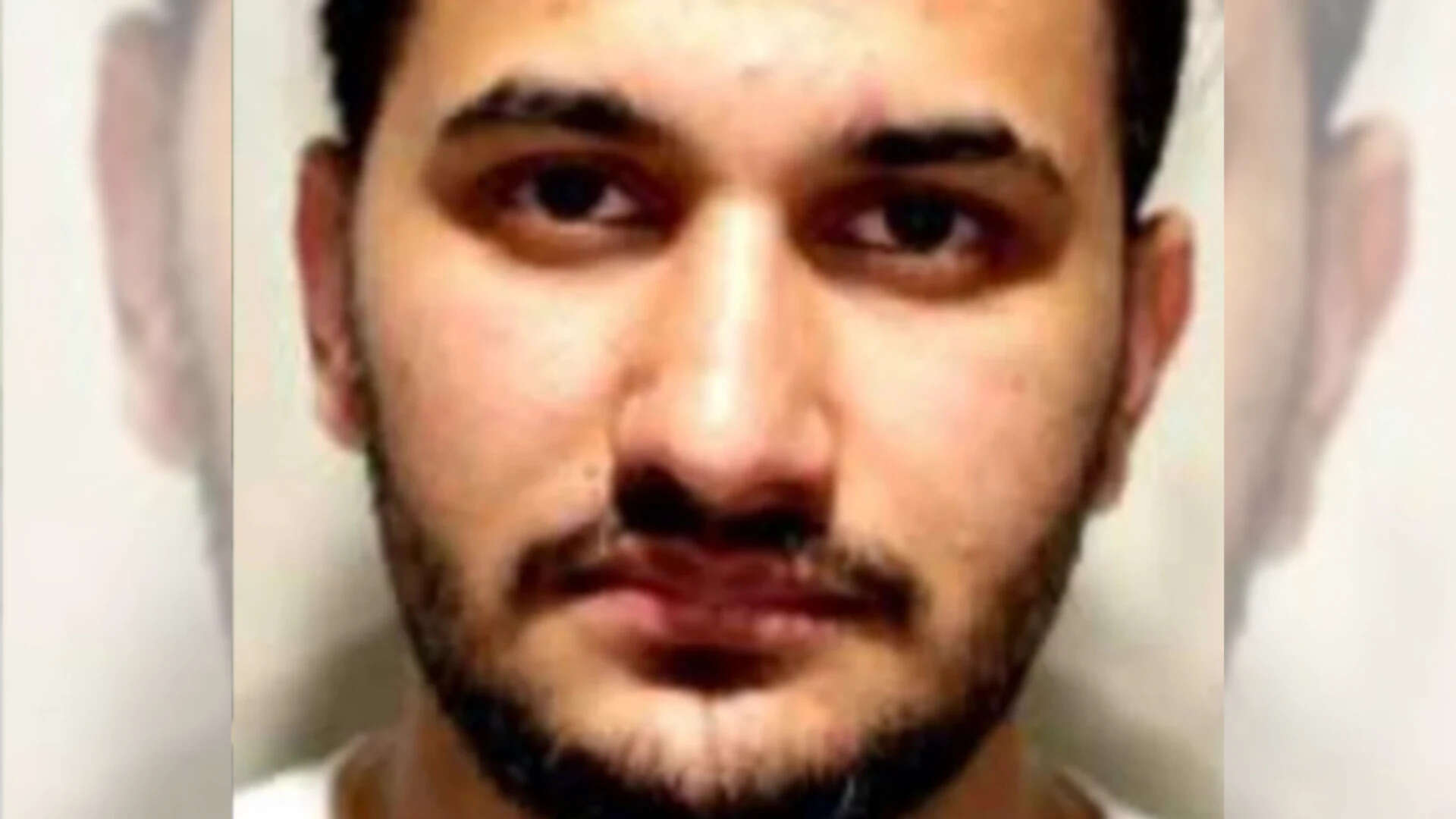
Baljeet Singh stood before a court and admitted to a series of choices that ended the lives of two people on a New South Wales highway. This was not a mechanical failure. It was not an act of God or a sudden patch of black ice. It was a professional driver, tasked with maneuvering a multi-ton heavy vehicle, who decided that a mobile game was more important than the road ahead. Singh’s guilty plea to two counts of dangerous driving occasioning death serves as a grim marker of a growing epidemic in the transport industry where digital addiction meets massive kinetic force.
The incident occurred on the Hume Highway, a critical artery for Australian commerce. While the vehicle surged forward, Singh was engaged with a gaming app on his phone. This specific type of negligence represents the absolute breakdown of the "professional" in professional driving. When a driver of a heavy rigid vehicle or an articulated hauler takes their eyes off the tarmac for even three seconds at highway speeds, they travel the length of a football field essentially blind.
The Illusion of the Empty Road
The core of this tragedy lies in the psychological trap of long-haul transit. Drivers spend hundreds of hours in a state of monotonous flow. The road becomes a blur, and the cab becomes a private living room. This leads to a dangerous sense of complacency. Singh was not a novice, yet he succumbed to the dopamine hit of a mobile interface.
Investigations into the crash revealed that the distraction was not a momentary glance at a notification. It was sustained engagement. This highlights a shift in the nature of distracted driving. We are moving past the era of the quick text message into an era of continuous digital consumption. Whether it is streaming video, scrolling social media, or playing interactive games, the mental load required to participate in these activities completely overrides the situational awareness necessary to operate a truck.
The physics are unforgiving. A fully loaded semi-trailer can weigh up to 42.5 tonnes under standard regulations. The energy such a mass carries at 100 kilometers per hour is astronomical. When Singh’s attention was diverted to his screen, he effectively turned a transport tool into a blind projectile. By the time he realized a collision was imminent, the laws of motion had already dictated the outcome. No amount of braking could compensate for the seconds lost to a digital fantasy.
Beyond the Driver and into the Boardroom
While the legal system focuses on Singh’s personal culpability, an investigative look at the industry suggests a wider systemic failure. One man held the steering wheel, but a complex web of corporate culture and regulatory oversight sits behind every driver. We have to ask how a driver feels emboldened enough to play games while on duty.
Modern trucks are often equipped with telematics and driver-facing cameras. These systems are designed to detect fatigue, lane deviation, and even "distraction events." If Singh’s vehicle was equipped with this tech, why was there no intervention? If it wasn't equipped, why are we still allowing high-mass vehicles to operate on public roads without active monitoring in an age where such technology is readily available?
Fleet management often prioritizes the "ETA" above all else. When margins are thin, the pressure to stay on the road for maximum hours can lead to a mental fatigue that drivers try to mask with stimulation. This is not an excuse for Singh’s actions, but it is a necessary context for preventing the next crash. A bored, tired driver is a driver looking for a distraction.
The Technological Paradox
We are currently in a strange middle ground of automotive evolution. We have vehicles that can almost drive themselves, which encourages drivers to "check out," yet these systems are not robust enough to actually handle emergency situations without human intervention. This is the automation irony. The better the driver-assist features become, the more likely a driver like Singh is to feel they can safely open an app.
Industry analysts have noted that "active monitoring" is often treated as a privacy intrusion rather than a safety necessity. Unions and drivers often push back against in-cab cameras, citing the discomfort of being watched for twelve hours a day. However, when the alternative is a distracted driver killing families on the highway, the privacy argument loses its weight. The data from the Singh case proves that self-regulation is a myth.
The Digital Tether and the Psychology of the App
Mobile games are designed by behavioral psychologists to be "sticky." They use variable rewards and constant notifications to keep the user engaged. When these design principles are brought into the cockpit of a heavy vehicle, they become lethal. Singh wasn't just "looking at his phone"; he was likely caught in a loop of digital engagement that high-jacked his brain's executive function.
This brings up the responsibility of software developers and device manufacturers. While a phone cannot know it is being held by a truck driver, GPS data clearly indicates when a device is moving at 100 km/h. "Do Not Disturb While Driving" features exist, but they are easily bypassed. There is a growing call for "hard-locks" on mobile devices that trigger when high-speed movement is detected, disabling everything except navigation and emergency calls.
A Failure of Safety Culture
A guilty plea brings closure to a courtroom, but it does little to change the culture of the highway. The transport industry has long struggled with a "cowboy" image—the lone operator against the elements. This image is outdated and dangerous. Safety culture in aviation is rigorous because the stakes are high. The stakes on the Hume Highway are equally high, yet the rigor is inconsistent.
Training programs often focus on the mechanics of driving: how to turn, how to reverse, how to check oil. They spend very little time on the neurobiology of distraction. Drivers need to understand that their brains are physically incapable of multi-tasking at the level required for highway safety. You cannot "win" at a game and safely navigate a heavy vehicle simultaneously. The brain simply switches between tasks, creating "micro-blindnesses" during the transitions.
The Cost of Silence
The families of the victims are left with a void that no jail sentence can fill. The economic cost of such accidents runs into the millions, involving emergency response, road closures, insurance payouts, and legal fees. But the human cost is the true metric of this failure.
We see a pattern where the individual driver is demonized—rightly so in cases of gross negligence—while the industry continues to operate with the same blind spots. If the only takeaway from Baljeet Singh’s conviction is that one driver was "bad," we have failed. The takeaway must be that the presence of an unmonitored, connected mobile device in a heavy vehicle cab is a ticking time bomb.
Legislation needs to move faster than the apps. We need mandatory, integrated cabin monitoring for all heavy vehicle licenses. We need strict liability for companies that fail to audit their drivers' telematics data. If a company sees a driver consistently drifting or showing signs of distraction and does nothing, they share the blood on the asphalt.
The era of trusting a driver's "good word" is over. The digital world is too loud, too tempting, and too integrated into our identities to be left at the door of the truck cab voluntarily. We are seeing the results of this integration in the form of twisted metal and funeral processions.
The heavy vehicle industry must decide if it is a professional transport sector or a collection of individuals distracted by the screens in their pockets. Until the phone is treated with the same gravity as a blood-alcohol level of 0.05, the deaths will continue. Singh’s plea is a confession, but it should also be heard as a warning siren for every fleet manager and legislator in the country.
The road requires 100 percent of a human being. Anything less is a gamble with someone else's life.