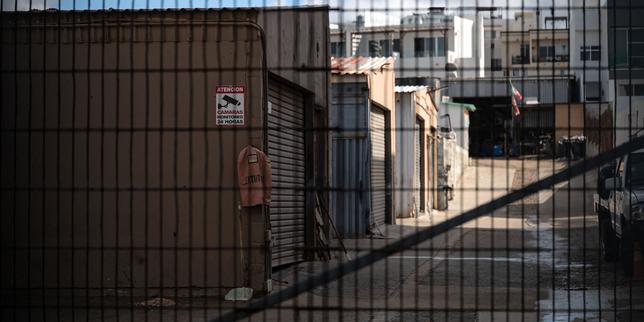
Silence.
It settles over a quiet street in a way that feels heavier than normal morning fog, especially when unmarked sedans park along the curb before dawn and the air smells faintly of damp asphalt and cold coffee.
I have stood outside enough federal buildings and courthouses over the years to recognize that specific kind of hush. Not the ordinary murmur of a busy city waking up, nor the routine clatter of delivery trucks, but the tight, held breath of people waiting to see who walks out in handcuffs and what headline will burn through the afternoon news cycle. When a headline attaches a familiar family name—like Thomas Markle, the father of Meghan—to an allegation involving child sexual abuse material investigated by the FBI, the public reaction splits almost instantly into shock, disbelief, gossip, and anger.
Yet headlines are blunt instruments. They compress months or years of digital forensics, grand jury subpoenas, and human tragedy into a single breathless sentence.
To understand what actually happens when federal agents step into a case involving child sexual abuse material—and why a recognizable surname turns a grim legal process into a cultural earthquake—we have to look past the noise. We have to trace the invisible architecture of online exploitation, the mechanics of federal investigations, and the real people whose lives sit at the center of the storm, whether they are victims waiting for justice, suspects facing the weight of the law, or relatives caught in the blast radius of public scrutiny.
The Anatomy of a Knock at Dawn
Most people picture federal law enforcement as a cinematic blur of flashing lights and dramatic shootouts. Reality is much quieter. And far more methodical.
When the FBI investigates offenses tied to child sexual abuse material, the groundwork rarely begins with a random hunch. Often, it starts thousands of miles away from the front door where agents eventually knock. Electronic service providers are required by federal law to monitor for and report apparent instances of child exploitation to the National Center for Missing and Exploited Children, commonly known as NCMEC. That organization reviews reports, identifies geographic clues such as IP addresses or account activity, and routes actionable leads to law enforcement agencies.
Think of a digital footprint like salt scattered across wet concrete. Even after someone tries to sweep it away, traces remain embedded in the surface—server logs, cached data, timestamps, metadata, and financial trails. Forensic examiners do not rely on guesswork. They match digital artifacts across devices, cloud accounts, and networks until the evidence forms a chain tight enough for a magistrate judge or federal grand jury to sign off on a warrant or criminal complaint.
Let me offer a hypothetical scenario to make this clearer. Suppose an investigator in a field office receives a cyber-tip linked to a residential connection in Southern California. On paper, that connection points to a house, not necessarily a person. Households have routers, tablets, laptops, guests, and aging hardware. Before an arrest ever occurs, agents must corroborate identity, preserve volatile digital evidence, and ensure that executing a warrant will not result in remote wiping of drives or destruction of files.
When agents finally arrive, their goal is twofold: secure physical and electronic evidence safely, and take the subject into custody without escalating danger to anyone on site. For the person at the center of that moment, the ground gives out all at once. One second they are living a private routine behind closed curtains; the next, their devices are cataloged in evidence bags and their name is entered into the machinery of the federal court system.
A single knock can shatter decades of ordinary life.
Why a Familiar Surname Changes the Air in the Room
If an ordinary citizen with no public profile is arrested on a federal charge involving child sexual abuse material, the story usually stays confined to local court dockets, regional wire reports, and specialized legal filings. Tragic as it is for the victims and families involved, the broader public rarely pauses over it for long.
Attach a celebrity-adjacent name to the story, and every dynamic shifts.
Thomas Markle has lived in the orbit of intense media fascination for years, largely because of his daughter Meghan and her marriage into the British royal family. Even when he is not actively granting interviews or appearing on television, his name carries built-in curiosity, polarized opinions, and instant click value across tabloid desks and social media feeds.
Here is where the danger lies for anyone trying to make sense of the news: familiarity breeds two opposite, equally flawed instincts. One group rushes to judgment on the assumption that where there is a federal arrest, guilt is already settled in full. Another group reacts with reflexive skepticism, wondering whether fame, family estrangement, or media sensationalism is distorting what is happening.
Neither instinct helps us see clearly. In the American justice system, an arrest is an accusation backed by probable cause, not a verdict. A person is presumed innocent unless and until guilt is proven beyond a reasonable doubt in court, or resolved through a formal plea. At the same time, federal prosecutors do not bring charges in this area lightly; the evidentiary standards, investigative protocols, and statutory penalties are severe.
I have sat in press rooms where reporters checked their phones every ten seconds, desperate to be first with a line that sounded definitive, even when the indictment itself was still being parsed line by line. Speed rewards certainty, even premature certainty. Truth demands patience.
The Invisible Stakes Behind Every File
It is easy for outsiders to treat a sensational headline like a drama unfolding on a screen. We argue in comment sections. We speculate about family dynamics. We trade theories about motives and timing.
Meanwhile, the actual stakes of offenses involving child sexual abuse material are anything but abstract.
Every image or video file in these cases represents a real child who suffered real abuse—often at a young age, often without power to stop it, and often forced to relive the violation over and over as material circulates online. Law enforcement officials and victim advocates have emphasized for years that this is not a "victimless" cybercrime or a harmless digital vice. Each share, download, or collection perpetuates harm against a human being whose trauma does not expire when a browser tab closes.
Consider what happens next: even after a case is investigated or prosecuted, the ripples spread outward. If a suspect has family members, neighbors, or estranged relatives, those people suddenly find their own histories picked apart by strangers online. Some are blindsided. Some feel grief, anger, or shame they never asked to carry. Others have already been distanced from the person in question for years, yet still find their names linked in search results and broadcast segments.
Let us use a metaphor to capture how public attention behaves in moments like this. Imagine dropping a heavy stone into a still pond. The stone sinks out of sight, but the ripples keep expanding outward, hitting reeds and banks far from where it entered the water. The headline is the splash; the human wreckage is what moves outward long after the camera crews pack up their tripods.
Separating Rumor From the Legal Record
When a high-profile name intersects with a grave criminal allegation, misinformation spreads almost as fast as the initial report. Rumors fill every quiet gap between official updates.
To read coverage of an FBI arrest intelligently, it helps to know what actually matters in the record:
- The charging document matters most. A criminal complaint, indictment, or detention filing outlines the specific statutory counts, alleged conduct, and jurisdictional basis. Everything else—social media speculation, anonymous tips, or secondhand commentary—ranks far below official court filings.
- Arrest is the beginning of the formal case, not the end. After an arrest, defendants typically face an initial appearance, decisions regarding detention or bond, discovery exchanges, pretrial motions, and potential trial or plea proceedings.
- Language precision is vital. Terms used in casual conversation often blur distinct legal categories under federal law, such as possession, receipt, distribution, or production. Careful readers pay attention to the exact wording used by prosecutors and courts.
Admitting uncertainty is not a weakness when following a developing legal story. Honestly, anyone who claims to know every twist of a case from the first wave of breaking news is selling confidence they do not have. Federal cases unfold through paper trails, evidentiary hearings, and time—not instant gratification.
Power, Scrutiny, and the Burden of Watching
There is a deeper cultural tension running beneath stories like this one, one that has grown sharper in the age of twenty-four-hour feeds and algorithmic outrage.
We live in a culture hungry for spectacles involving famous families. When someone connected to royal or celebrity culture falls from whatever fragile perch of public attention they occupied, the contrast feels sharp. People lean in closer. The emotional temperature rises.
Yet crimes involving child exploitation are not a celebrity phenomenon. They cut across socioeconomic lines, zip codes, family structures, and levels of visibility. Focusing solely on a famous surname can trick us into treating a systemic human rights problem like a novelty story—something to gawk at on a Tuesday and forget by Friday.
Think about the responsibility that comes with watching. We do not have to be judges or investigators to choose how we engage with grave news. We can refuse to treat human suffering as entertainment. We can check primary facts instead of amplifying unverified claims. We can remember that behind every court docket number is a reality that deserves seriousness rather than noise.
The morning air outside a courthouse or federal building eventually warms up. Traffic resumes. Coffee cups empty into bins along the sidewalk, and the crowd thins out piece by piece.
What remains is the quiet, unforgiving work of the law, the enduring weight of real harm done to real children, and the sobering reminder that fame never shields anyone from the darkest realities of the world—nor does it make looking away any easier.