The targeted airstrike by U.S. Southern Command that killed Héctor Rusthenford Guerrero Flores, widely known as Niño Guerrero, marks the violent end of a transnational criminal trajectory. Guerrero, the undisputed leader of the Venezuela-based megagang Tren de Aragua, was eliminated in a rural sector of Venezuela's Bolívar state. The operation, executed in coordination with Venezuelan security forces, concludes a decade-long run where a high-school dropout transformed a local prison syndicate into a multi-continental cartel capable of altering regional migration dynamics and sparking high-level geopolitical interventions.
While political leaders celebrate the kinetic strike as a definitive victory against transnational organized crime, the reality on the ground remains far more complicated. Dismantling the upper echelon of a syndicate rarely obliterates its horizontal network. Meanwhile, you can explore other events here: The Friction Model of State Survival: Deconstructing Iran’s Twelve-Day War Claims.
The Mechanics of Transnational Expansion
To understand how Guerrero built an empire that eventually triggered a joint military response from Washington and Caracas, one must look past the sensationalist headlines of a criminal rise. Tren de Aragua did not achieve its massive reach through standard drug trafficking alone. Guerrero developed a specialized business model that capitalized entirely on human displacement.
As millions of Venezuelans fled economic collapse over the past decade, Tren de Aragua followed the migrant trails. They did not merely move contraband; they monopolized the informal infrastructure of survival along the Andean corridor. To see the complete picture, check out the excellent analysis by Al Jazeera.
[Tocorón Prison Base] ──> [Border Crossings (Trochas)] ──> [Destination Hubs]
         │                              │                             │
         ▼                              ▼                             ▼
Command & Control               Human Smuggling                Local Extortion
Taxing Inmates                  Micro-extortion                Retail Theft
The organization established footholds in Colombia, Peru, Chile, Ecuador, Brazil, and Panama by implementing a strict three-tier strategy:
- Corridor Control: Seizing informal border crossings, known as trochas, and taxing every individual attempting to cross.
- Subjugation of Local Markets: Forcing informal workers, sex workers, and small business owners in migrant neighborhoods into predatory daily extortion schemes.
- Franchise Monopolization: Allowing local cells to operate under the Tren de Aragua brand name in exchange for a percentage of profits funneled back to the leadership core.
This structure allowed the gang to maintain low overhead costs while generating millions of dollars weekly. It was a decentralized approach that made the syndicate uniquely resilient to traditional law enforcement tactics.
From Tocoron Prison to Global Fugitive
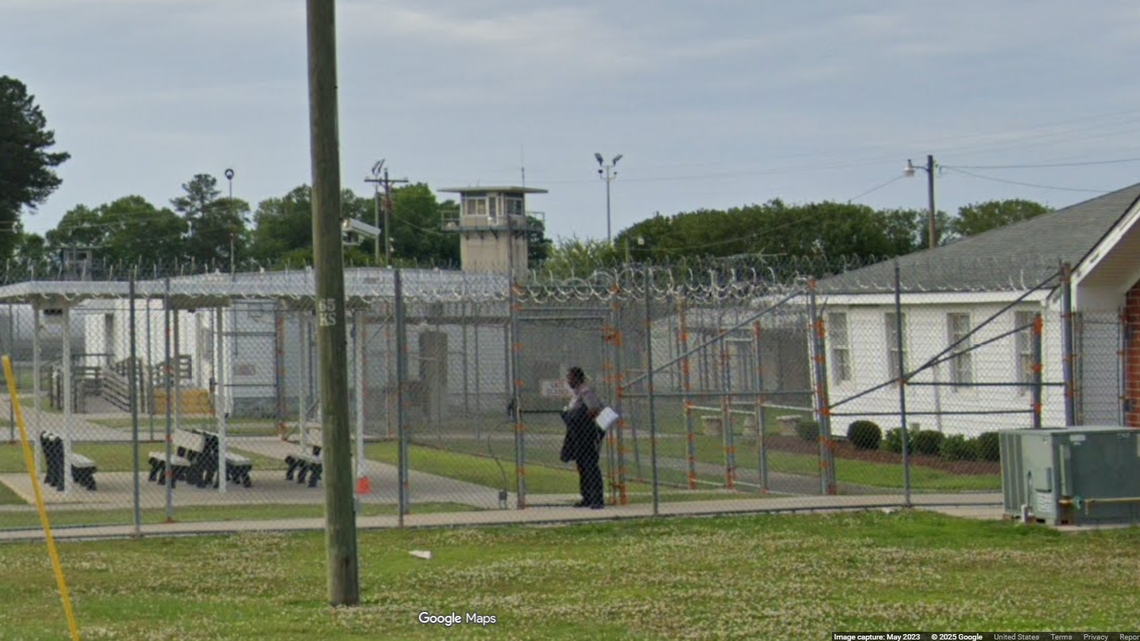
The foundational myth of Niño Guerrero is tethered to the Aragua Penitentiary Center, better known as the Tocorón prison. Incarcerated for murder and drug trafficking, Guerrero did not suffer the deprivation typical of Latin American penitentiaries. Instead, he took absolute control of the facility, transforming it into a luxurious command center.
Under his governance as the chief pran—the prison kingpin—Tocorón became a sovereign enclave. The facility featured a concrete-framed underground bunker system with ventilation and lighting, a swimming pool, a nightclub, a zoo, and a network of restaurants.
Guerrero ran a shadow economy inside the walls, charging inmates a weekly tax called la causa. Those who failed to pay faced severe violence, while those who complied enjoyed access to amenities that rivaled upscale resorts.
From this secure base, Guerrero used smartphones and satellite internet to direct international operations. The prison was not his cage; it was his fortress.
When Venezuelan authorities finally moved to raid Tocorón in late 2023 with 11,000 heavily armed troops, Guerrero was already gone. Intelligence leaks had allowed him and his immediate circle to slip through tunnels days before the perimeter was breached. He retreated to the mining regions of Bolívar state, hiding under the protection of deeply entrenched local cells until the joint U.S.-Venezuelan operation located his compound.
The Paradox of Geopolitical Cooperation
The strike that neutralized Guerrero reveals a stark, pragmatic shift in international diplomacy. For years, the criminal network operated with near impunity because of the deep political fragmentation between Caracas and Washington. Transnational syndicates thrive in the friction between hostile nations that refuse to share law enforcement intelligence.
That friction dissolved under the pressure of shared domestic crises. The expansion of Tren de Aragua into retail theft, extortion, and violent crime within major American cities turned the gang into a critical domestic liability for Washington. Meanwhile, the absolute autonomy of the gang inside Venezuela posed a direct challenge to state sovereignty in Caracas.
The resulting operation involved sophisticated technological support and real-time intelligence sharing. It demonstrates that when transnational criminal syndicates grow large enough to destabilize state interests across borders, even ideological adversaries will coordinate to eliminate the threat.
The Vacuum Dilemma
The elimination of a charismatic, central leader creates an immediate power vacuum. History shows that when a top-tier criminal figure is removed, the underlying apparatus rarely dissolves neatly. Instead, the organization tends to fracture into smaller, more aggressive components.
Without Guerrero’s centralized command to enforce internal discipline, regional commanders in Peru, Chile, and Colombia may choose to operate completely independently. These localized factions often engage in violent turf wars to secure their market share of extortion and smuggling routes.
       [Central Command: Niño Guerrero] (ELIMINATED)
                     │
         ┌───────────┼───────────┐
         ▼           ▼           ▼
     [Peru Cell] [Chile Cell] [Colombia Cell]
         │           │           │
         ▼           ▼           ▼
    (Autonomous Fragmented Expansion & Turf Wars)
The network structure built by Guerrero was specifically designed to survive individual losses. The horizontal nature of the syndicate means that while the core leadership has been broken, the illicit revenue streams—the border choke points, the human trafficking rings, and the protection rackets—remain operational. Local cells still possess the weapons, the local knowledge, and the financial incentives to continue their activities.
Targeting the leadership is a necessary step, but it does not address the institutional weaknesses, border vulnerabilities, and displaced populations that allowed Tren de Aragua to flourish in the first place. The market for illicit migration management and local extortion remains highly lucrative. As long as those economic incentives exist, new actors will emerge to exploit them.