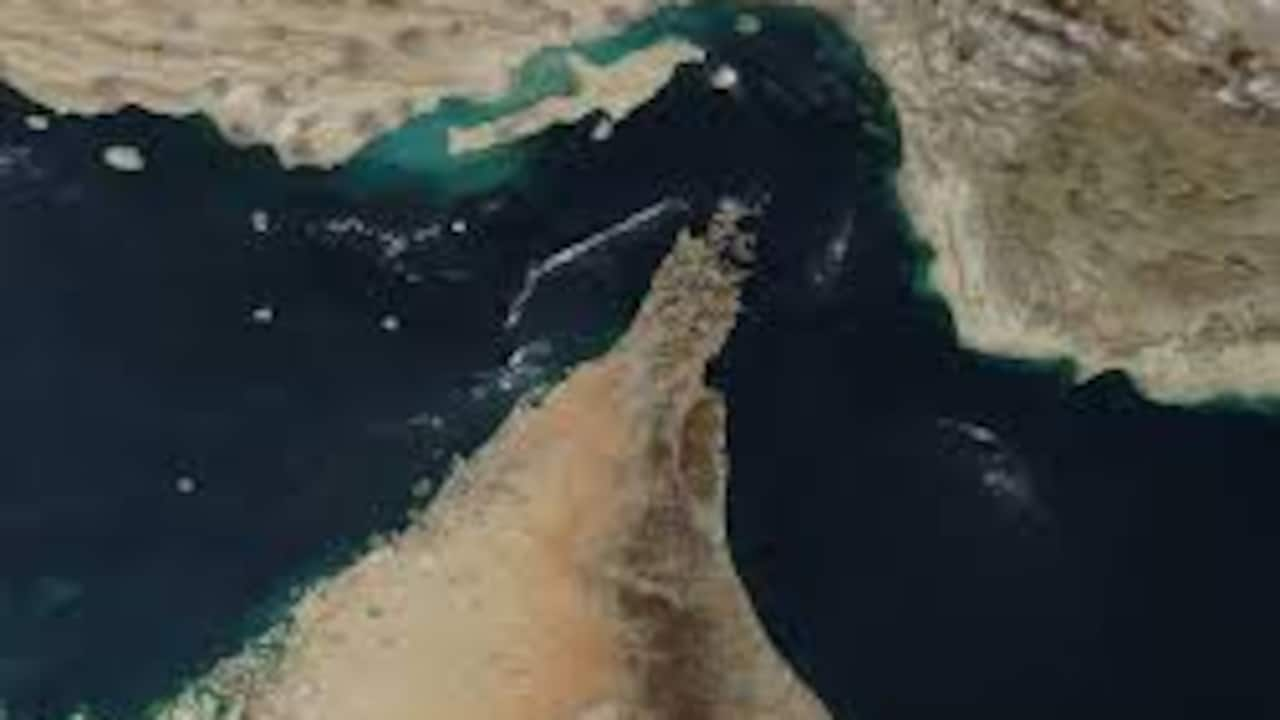
When an oil tanker is struck by explosive devices in the Strait of Hormuz and the crew walks away unharmed, standard news wires treat the story as a minor maritime incident. They file a brief dispatch noting the vessel's flag, confirm no casualties occurred, and move on to the next headline. That surface-level reporting misses the entire point. The real story behind a tanker attacked with explosive devices in the Strait of Hormuz is not the immediate physical damage to a steel hull, which modern double-hulled vessels are engineered to absorb, but the calculated economic warfare playing out in the world's most critical energy chokepoint.
A non-lethal strike in these waters is rarely an accident or a botched operation. It is a deliberate signal. By targeting commercial shipping with calibrated force—enough to puncture outer plating, trigger an automated distress beacon, and rattle maritime insurers, yet restrained enough to avoid an environmental catastrophe or mass casualties that would force an immediate military retaliation—state and non-state actors exert maximum geopolitical pressure at minimal cost.
The Anatomy of a Calibrated Maritime Strike
To understand why a tanker can absorb an explosive blast without sinking or killing its crew, you have to look at how modern crude and chemical carriers are built, as well as the specific munitions used in asymmetric naval warfare.
Following the Exxon Valdez disaster in 1989 and the subsequent passage of the Oil Pollution Act, international maritime regulations phased out single-hulled tankers. Today, virtually every commercial tanker transiting the Persian Gulf features a double-hull design. Between the outer shell of the ship and the inner tanks holding millions of barrels of volatile hydrocarbons sits a void space—typically two to three meters wide—often used for ballast water.
When attackers use limpet mines, explosive-laden unmanned surface vessels (USVs), or low-yield aerial drones, the detonation occurs against that outer hull, usually just above or slightly below the waterline. The blast tears through the exterior steel and vents into the ballast tank. Because the inner cargo hold remains intact, the oil does not ignite, and the ship retains its buoyancy. The crew, usually stationed high in the aft superstructure far away from the midship cargo manifolds, feels a heavy shudder and hears a muffled boom, giving them ample time to muster at lifeboat stations and broadcast a Mayday on VHF Channel 16.
As a hypothetical example to illustrate the tactical math, consider a 300,000-deadweight-ton Very Large Crude Carrier (VLCC) moving at 12 knots through the inbound traffic separation scheme. Sinking such a vessel requires massive subsurface ordnance, like a heavyweight torpedo capable of breaking the ship's keel. In contrast, attaching a 50-kilogram shaped charge to the hull requires only a fast fiberglass skiff operating at night, low radar cross-section, and a few minutes of cover. The operational cost is negligible. The strategic return is immense.
Geography Makes the Strait of Hormuz Impossible to Police
The physical dimensions of the Strait of Hormuz dictate the rules of engagement. While the strait measures roughly 21 nautical miles (39 kilometers) wide at its narrowest point between Oman's Musandam Peninsula and the Iranian coast, deep-draft supertankers cannot simply navigate anywhere they please.
Because of shallow shoals, reefs, and shifting sandbars, massive commercial vessels are legally and physically restricted to a strict Traffic Separation Scheme (TSS). This maritime highway consists of two lanes—one for inbound traffic, one for outbound traffic—each just two miles wide, separated by a two-mile buffer zone.
Every day, roughly one-fifth of the world's total petroleum consumption passes through these two narrow strips of water. That translates to around 20 million barrels of crude oil, condensate, and refined products moving through a corridor narrower than the length of Manhattan.
Naval task forces, including the U.S. Navy's Fifth Fleet based in Bahrain and the multi-nation International Maritime Security Construct, maintain constant patrols in the region. They deploy destroyers, coastal patrol craft, and P-8 Poseidon maritime reconnaissance aircraft. Yet continuous surveillance over hundreds of square miles of congested water is a logistical impossibility. Thousands of traditional wooden dhows, fishing boats, and coastal traders crisscross the TSS daily. Distinguishing a legitimate fisherman from an operative transporting explosives or piloting a remote-controlled drone boat amidst heavy radar clutter requires real-time intelligence that no fleet possesses around the clock.
The Invisible Weapon War Risk Insurance
The true target of an explosive device in the Strait of Hormuz is not the tanker's hull. It is the underwriting desk in London.
Global shipping runs on credit and insurance, and few markets are as sensitive to geopolitical tremors as Lloyd's of London and the Joint War Committee (JWC). The JWC, comprising syndicate members from the Lloyd's Market Association and the International Underwriting Association, maintains a list of high-risk global waters. Whenever an incident occurs—even one where the crew is completely safe and the ship limps to port under its own power—the JWC reassesses the threat level.
When the Persian Gulf and the Gulf of Oman are designated as listed areas, shipowners must purchase Additional War Risk Premiums (AWRP) before their vessels can legally enter the zone. Under normal peacetime conditions, war risk insurance costs a tiny fraction of a percent of a vessel's hull and machinery value. Within hours of an explosive attack, underwriters can spike those rates tenfold or more.
For a modern VLCC valued at $100 million or more, a sudden surge in war risk premiums adds hundreds of thousands of dollars to the cost of a single seven-day transit. Those costs do not stay on the balance sheets of shipping magnates in Athens, Oslo, or Singapore. They are immediately passed down the supply chain through charter-party clauses, inflating the landed cost of crude oil in Rotterdam, Houston, and Yokohama. Even if not a single drop of oil is spilled into the sea, the global economy pays an immediate tax.
The Shadow Fleet Complicates Attribution and Accountability
Investigating maritime attacks in the Strait of Hormuz has become vastly more difficult due to the proliferation of the so-called shadow fleet. Over the last several years, Western sanctions on major oil producers have birthed a parallel shipping ecosystem consisting of aging tankers operating under opaque ownership structures, obscure flags of convenience, and disabled Automatic Identification System (AIS) transponders.
When an incident occurs in these waters, naval investigators and maritime intelligence firms face an immediate fog of conflicting narratives. Vessels frequently spoof their GPS coordinates or turn off their AIS transponders—a practice known as "going dark"—to conceal sanctions-busting ship-to-ship transfers. When an explosion rocks a tanker in a zone packed with dark vessels, establishing a clean chain of custody for forensic evidence becomes a geopolitical minefield.
Furthermore, shipowners and flag states are often reluctant to cooperate fully with international investigators. Allowing military forensic teams aboard a damaged vessel means delaying the ship's schedule, losing tens of thousands of dollars per day in charter revenue, and potentially exposing messy ownership records or compliance violations to Western regulators. As a result, crews are frequently instructed by their management companies to keep public statements minimal, patch the hull at the nearest anchorage in Fujairah or Khor Fakkan, and get back to work.
Crew Welfare and the Myth of the Unscathed Sailor
Headlines celebrating that the "crew is safe" reflect a purely physical metric. In the maritime industry, surviving an explosive attack without broken bones or burns is considered a best-case scenario, yet the psychological and operational toll on seafarers is routinely ignored.
Commercial tankers are crewed by roughly 20 to 25 seafarers, predominantly drawn from the Philippines, India, Eastern Europe, and Russia. These men and women sign contracts lasting six to nine months, working grueling shifts in extreme heat to keep global supply chains moving. They are civilians, not naval combatants. They have no deck guns, no missile defense systems, and no armor.
When an explosive device detonates against the hull of a tanker carrying 2 million barrels of flammable crude, the crew operates under the immediate assumption that the entire ship could turn into a floating fireball within seconds. Even after fire teams verify that the cargo tanks are intact and the vessel is stable, the crew must still sail the damaged ship through the same contested waters to reach a safe port, all while knowing another attack could follow.
Maritime unions, including the International Transport Workers' Federation (ITF), have repeatedly designated the Strait of Hormuz and surrounding waters as high-risk zones, granting seafarers the right to refuse to sail into the area or to demand double basic wages during transit. Yet economic reality forces most crews to stay aboard. Refusing a transit can lead to blacklisting by unscrupulous manning agencies, leaving workers with few options other than enduring the anxiety of sailing through a minefield.
Why Naval Deterrence Hits a Wall
Whenever a tanker is hit in the Strait of Hormuz, political commentators inevitably call for stronger naval escorts. During the "Tanker War" of the 1980s—when Iraq and Iran attacked hundreds of commercial vessels—the U.S. Navy launched Operation Earnest Will, reflagging Kuwaiti tankers and escorting them directly through the strait with warships.
Replicating that model today is operationally unfeasible on a broad scale. The sheer volume of global maritime trade has expanded exponentially over the past four decades. Hundreds of vessels transit the Gulf every week. Assigning a billion-dollar guided-missile destroyer to babysit individual commercial tankers is an unsustainable drain on naval readiness, especially when global fleets are simultaneously stretched across the Red Sea, the Eastern Mediterranean, and the Indo-Pacific.
Modern navies rely instead on deterrence by detection—using overhead satellites, high-altitude drones, and unmanned surface patrols to monitor the strait and attribute blame quickly. However, attribution only works as a deterrent if the perpetrator fears the consequences. In the gray zone of maritime conflict, attackers deliberately calibrate their explosive payloads to stay below the threshold of conventional war. They know that no major power will launch a full-scale regional conflict over a dented ballast tank and zero fatalities.
The Structural Vulnerability of Global Energy
The recurring cycle of explosive attacks in the Strait of Hormuz exposes a stubborn structural reality that decades of energy policy have failed to resolve. Despite massive investments in renewable energy, liquefied natural gas (LNG) terminals, and overland pipelines, the global economy remains tethered to a narrow strip of saltwater in the Middle East.
Saudi Arabia and the United Arab Emirates have built overland pipelines—such as the East-West Pipeline to the Red Sea and the Habshan-Fujairah pipeline—specifically designed to bypass the Strait of Hormuz. Yet these conduits lack the capacity to absorb the full volume of Gulf exports. Qatar, one of the world's largest exporters of LNG, has no overland pipeline bypass whatsoever; every single cubic meter of its seaborne gas must pass directly through Hormuz.
Every time a limpet mine detonates against a tanker hull and leaves a crew shaken but alive, it serves as a live-fire stress test of this architecture. The attackers do not need to close the strait to achieve their strategic objectives. By demonstrating that they can strike commercial shipping at will while keeping the human toll just low enough to avoid a massive military response, they maintain permanent leverage over global energy markets. Until alternative transit routes can actually handle the volume of Gulf crude and gas, every vessel entering the Traffic Separation Scheme remains a floating hostage to regional politics.