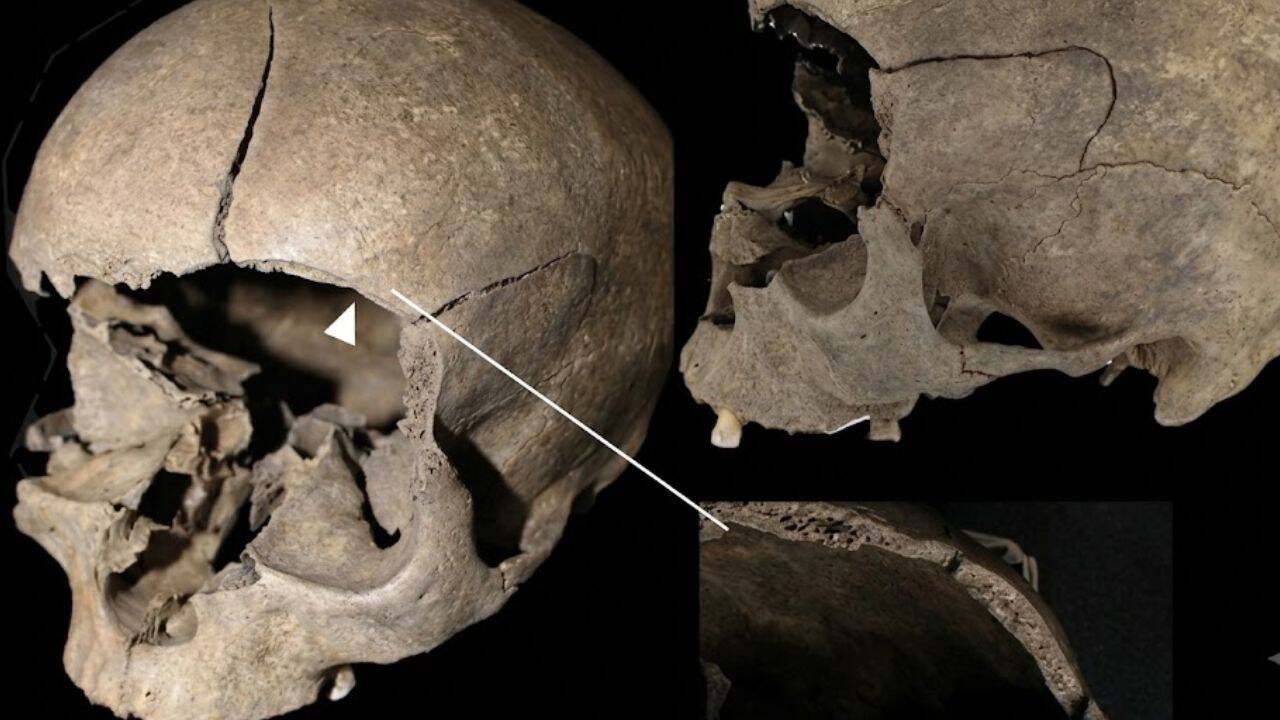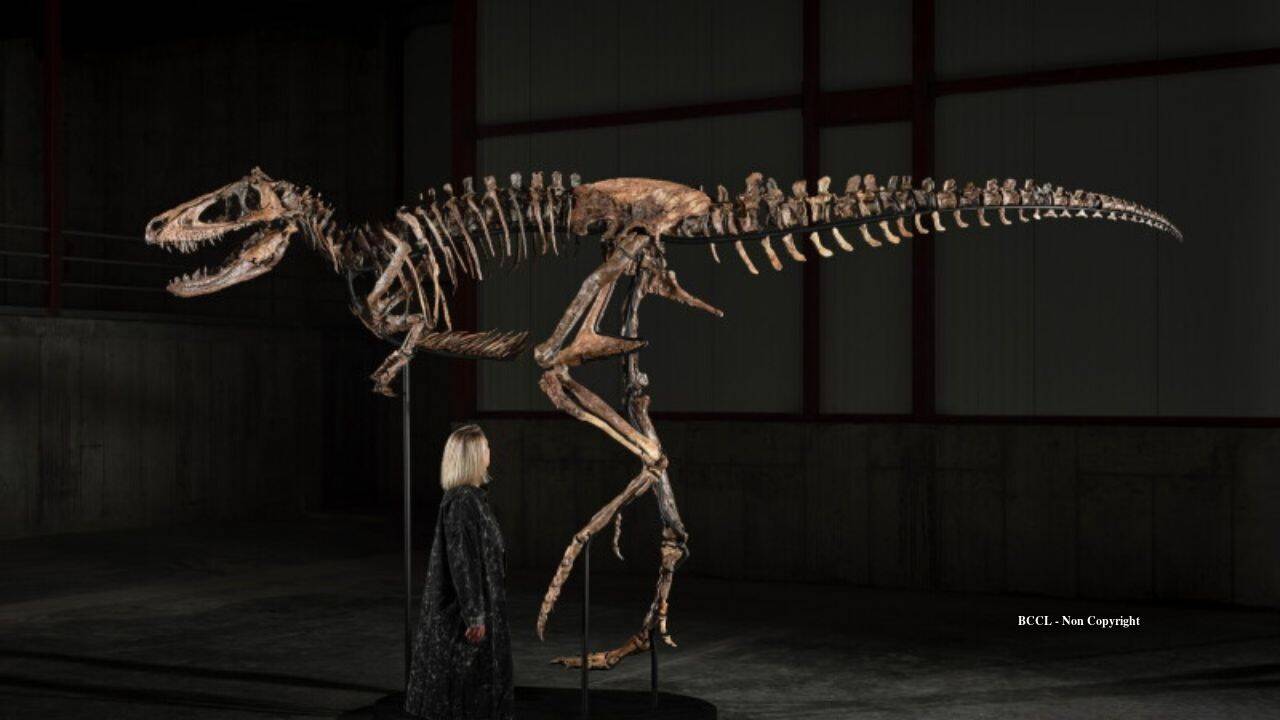
A Montana rancher pulls a dark, serrated tooth or a partial skull out of the Hell Creek Formation. Within months, glossy headlines scream about a "rare Nanotyrannus fossil" going on display before a nine-figure or eight-figure auction block. Museums panic. Paleontologists sigh. Collectors reach for their checkbooks.
The story writes itself every single time. Rancher finds treasure. Science loses out to commerce. Millions change hands.
Almost every piece of that narrative is lazy consensus built on shaky taxonomy, selective memory, and a fundamental misunderstanding of how the commercial fossil market actually functions.
Let's strip away the hype and look at what is really happening when a Nanotyrannus specimen hits a gallery wall ahead of a $9 million auction.
The Taxonomic Trap Behind Every "Rare" Nanotyrannus Headline
First, a hard truth that auction catalogs rarely put in bold print: Nanotyrannus lancensis has spent decades sitting on the sharpest edge of a paleontological civil war.
When Charles W. Gilmore described Gorgosaurus lancensis in 1946—later renamed Nanotyrannus lancensis by Robert T. Bakker, Phil Currie, and Michael Williams in 1988—the debate over whether it was a distinct dwarf tyrannosaurid genus or a juvenile Tyrannosaurus rex turned fierce. Many researchers argued that the famous "Cleveland Skull" (CMNH 7541) and related specimens showed ontogenetic traits expected in young T. rex individuals rather than a separate species, while other specialists maintained anatomical distinctions that kept the debate alive across decades of re-analysis.
Here is the part press releases gloss over. Calling a specimen a Nanotyrannus before a nine-million-dollar sale is not a settled scientific verdict. It is a commercial positioning strategy.
A juvenile T. rex is rare and fascinating. A valid, distinct species of slender-snouted, smaller-bodied tyrannosaurid from the Maastrichtian of Montana—if proven beyond dispute—carries a different aura of exclusivity. To a buyer spending eight figures, "rare taxon" sounds far more singular than "young apex predator."
I have watched collections and institutional budgets get stretched thin over specimens sold on the strength of exciting labels that later face brutal peer scrutiny. When a fossil's taxonomic status is contested, the buyer isn't just purchasing rock and bone. They are buying an argument.
Why "Juvenile vs. Distinct Genus" Changes the Math
Understanding the distinction matters because anatomy tells stories that marketing copy ignores. Researchers examining tyrannosaur growth series look closely at features like tooth counts, fusion of skull elements, pneumaticity (air spaces in bones), and limb proportions. In Tyrannosaurus rex, individuals underwent dramatic ontogenetic shifts—growing from relatively slender, blade-toothed hunters into massive, bone-crushing adults with stout teeth and heavy skulls.
If a fossil is a juvenile T. rex, its rarity is tied to preservation bias and growth stages. Small, delicate bones are harder to preserve intact over 66 million years than thick, heavy adult elements. If it represents a separate taxon, its rarity is tied to ecological niche partitioning in Late Cretaceous North America.
Either way, a pre-auction display is theater. It builds social proof in a market where comparable trophies don't sit on shelves waiting for price tags.
Why a $9M Auction Price Tag Is Not What You Think It Is
People see "$9M auction" and immediately assume a single billionaire walked into a room, waved a paddle, and wired nine million dollars out of pure love for prehistoric life.
That is not how high-end auction economics work.
When an auction house attaches or floats a headline figure like $9 million—whether as an aspirational estimate, a high-water mark, or a headline-grabbing anchor—several moving parts sit underneath that number:
- Buyer's premiums: Hammer price is not total price. Standard auction buyer's premiums routinely add substantial percentages on top of the winning bid, shifting the final outlay well past the initial bid figure.
- Guarantees and third-party financing: High-profile lots frequently involve irrevocable bids or financial guarantees, where an entity backstops a minimum sale price in exchange for a fee or share of upside.
- Reserve prices: A confidential minimum price below which the lot will not sell. If bidding stalls below reserve, the piece can go unsold ("bought in"), even if press coverage already cemented the big number in the public mind.
- Provenance and legal clearance: In the United States, fossils found on private land—such as a Montana ranch—belong to the landowner, unlike vertebrate fossils found on federal public land, which are regulated under laws like the Paleontological Resources Preservation Act. Still, clean chain of custody, export rules, and clear title are non-negotiable if an institution or serious collector ever wants to display or resell the piece without cloud over its history.
Thought experiment: Imagine a scenario where two nearly identical theropod skulls from the Hell Creek Formation go up for sale in the same year. Skull A has crystal-clear private-land documentation, complete preparation notes, and a realistic $2.5 million reserve. Skull B has dramatic gallery lighting, a breathless "Nanotyrannus" hook, and a whispered $9 million ceiling. Which one carries higher downside risk for a buyer five years later when new histological or anatomical studies are published?
Skull B. Always. Hype depreciates fast when data catches up.
Dismantling the "People Also Ask" Misconceptions
Whenever a headline like this trends, search engines fill up with the same predictable questions. Most of them start from a flawed premise.
"Are commercial fossil auctions ruining paleontology?"
That question treats paleontology as a fragile glass vase and commercial collectors as vandals swinging hammers. Reality is messier.
Yes, commercial extraction without rigorous field documentation can strip vital geological context—stratigraphy, associated microfossils, taphonomy—that no amount of lab cleaning can recreate. When a specimen is dug up like a prize turkey rather than mapped with precision, scientific data can walk out the door with it.
At the same time, claiming that every privately held fossil is "lost to science" ignores how modern paleontology actually operates. Many major discoveries have come off private ranches where landowners had every legal right to excavate or partner with crews. Furthermore, serious collectors and dealers increasingly allow researchers to study, scan, or cast specimens, and some pieces eventually end up on long-term loan or donation to museums.
The real villain isn't capitalism or private property. It is bad field documentation and secrecy. A well-documented fossil in a private collection that researchers can examine provides far more value than a poorly recorded fossil sitting unstudied in a basement anywhere.
"How can a rancher find a fossil worth millions?"
First, slow down on the lottery-ticket fantasy. For every Montana landowner whose property yields a headline-grabbing vertebrate specimen, hundreds spend years walking eroded badlands, digging through overburden, and paying crews or equipment costs with nothing close to a multi-million-dollar payday.
Preparation alone is grueling, slow work. Removing hard sandstone or concretion matrix around delicate cranial bones with air scribes and consolidants takes hundreds or thousands of hours. If a specimen is crushed, incomplete, or chemically degraded, value plummets.
A rancher doesn't just "find" a nine-figure fossil. A fossil has to survive tens of millions of years of burial and erosion, emerge in recoverable condition, be extracted without shattering, be professionally prepared, and somehow land in front of buyers with deep pockets and matching appetites. That is an extraordinary stack of probabilities.
"Is Nanotyrannus definitely a real dinosaur?"
Every fossil is a "real" physical object. The argument is taxonomic: whether Nanotyrannus lancensis is a valid, distinct genus/species separate from Tyrannosaurus rex.
Watch how the debate is settled in real science rather than press releases:
- Histology (bone microstructure): Examining growth lines and vascular canals inside thin sections of bone helps determine whether an individual was still actively growing rapidly or nearing skeletal maturity.
- Comparative anatomy across growth stages: Researchers compare cranial elements, dentition, and postcranial proportions across a broad sample of small, medium, and large tyrannosaurids from the same formation.
- Peer-reviewed publication: Claims made in auction catalogs or news releases carry zero weight compared to rigorous anatomical measurements and statistical analyses published in peer-reviewed journals.
Until the scientific consensus settles cleanly on a specimen's status, treat any taxonomic label in a sales pitch as provisional.
The Hidden Trade-Offs of Buying at the Top of the Market
Every contrarian stance comes with blind spots, and I will lay mine out plainly.
If you tell buyers and museums to ignore the $9 million spectacle, look past trendy labels like Nanotyrannus, and demand airtight data and disciplined valuation, you run into a real drawback: you might miss once-in-a-lifetime specimens.
Truly remarkable fossils do not appear on schedule. If an extraordinary specimen hits the market once in a generation and you refuse to pay up because the market is frothy or the taxonomy is debated, that piece may go to a private vault or overseas buyer and never come back around. For a public museum trying to inspire kids and build world-class exhibits, sitting on the sidelines has a genuine cost.
That is the tension nobody likes to admit. Overpaying is painful. Missing out hurts too. Anyone playing in this space has to decide which mistake they can live with.
What Smart Buyers, Sellers, and Readers Should Do Instead
Stop reading fossil auction headlines as news about science. Read them as news about marketing, scarcity, and wealth transfer.
If you are a collector or investor, ignore the loudest label on the placard. Demand full excavation records, locality data (as specific as legally and practically appropriate), preparation logs, and high-resolution imaging. Price the bone and its verifiable attributes—not the press release.
If you are a landowner or finder in fossil-rich country, bring in qualified preparators and document everything in the ground before pulling pieces out. Context and completeness protect value far better than rushing a piece into a spotlight.
If you are simply a reader, ask one question whenever a big-number fossil story pops up: What is the actual anatomy here, and who benefits from the price tag?
If the headline answers the second question louder than the first, you are looking at a show, not a settlement.