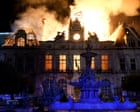
Call it chaos if you want. Lazy headlines always do. Smoke rising over a boulevard. Shattered bus shelters. Sirens echoing off Haussmann facades. It makes great television for people thousands of miles away who treat France like a recurring action drama.
Here is the problem. That framing is intellectually bankrupt. For a deeper dive into this area, we recommend: this related article.
When an outlet publishes a Monday morning rundown of "a weekend of chaos in France," it follows a predictable script. First comes the dramatic recap of clashes, tear gas, and transit disruptions. Next comes the solemn commentary on a nation "in crisis" or "at a breaking point." Finally comes a tidy list of what travelers, commuters, or investors need to watch out for this week.
It sounds urgent. It feels comprehensive. And it misses the real mechanics of French public life by a country mile. For broader details on this issue, comprehensive coverage can be read at Reuters.
I have watched global executives and operations teams panic every time a weekend protest hits Paris, Lyon, or Marseille. I have seen companies blow millions on knee-jerk evacuations, over-insured logistics reroutes, and frantic PR statements over a street demonstration that wrapped up before Sunday dinner. Meanwhile, the disruptions that actually cost serious money—quiet regulatory shifts, protracted municipal disputes, or mid-week rail slowdowns—barely get a paragraph on page four.
To understand what actually happens during a turbulent weekend in France, you have to throw out the word "chaos" and start looking at incentives, institutional habits, and the difference between visible friction and structural collapse.
The Lazy Consensus Around French "Chaos"
The standard Monday briefing treats French unrest like a natural disaster. A storm rolls in. Glass breaks. Politicians trade barbs. By Monday morning, analysts ask whether the country is ungovernable.
That consensus confuses noise with signal. France has a long, documented tradition of contentious politics—strikes, blockades, marches, and sharp public confrontations. Political scientists and historians of modern France, from Charles Tilly on contentious repertoires to Sudhir Hazareesingh on French civic culture, have spent decades showing that street mobilization in France is not an anomaly outside normal politics. Often, it is part of the bargaining table.
That does not make violence harmless or property damage acceptable. Anyone pretending broken storefronts or injured officers are "just part of the charm" is selling romantic nonsense. When riots flare up or clashes escalate, people get hurt and small businesses take real hits.
Still, calling every contentious weekend "chaos" implies randomness and total breakdown. Most of the time, what looks chaotic on a thirty-second clip has clear timing, clear geography, and clear political theater. Demonstrations are frequently scheduled around specific legislative votes, anniversaries, or union calendars. Police perimeters go up in advance. Transit operators publish advisories days ahead.
The lazy consensus misses two critical distinctions:
- Spectacle versus systemic paralysis: A blocked roundabout or a smoky plaza dominates social media feeds, yet trains and hospitals three blocks away may keep running on schedule.
- Short-term friction versus regime failure: A rowdy weekend rarely topples a government or hollows out an economy on its own. Sustained legislative gridlock, tax shifts, or multi-week sector strikes do far more heavy lifting.
When briefings lump everything under "chaos," readers walk away expecting Mad Max and end up confused when a bakery down the street is open at 8:00 a.m. Monday with fresh croissants.
Are You Asking the Wrong Questions After a Turbulent Weekend?
Most people reading a Monday roundup after a contentious weekend ask the exact wrong questions. They ask: Is France safe right now? Or Is the government about to fall? Or Should I cancel my trip?
Those questions are too blunt to produce good decisions. Safety in France is hyper-local, not nationwide. A clash near Place de la République or a port blockade in the south does not turn the entire country into a war zone. Treating a national map like a uniform hazard zone leads to terrible judgment in both directions—either needless panic or reckless complacency.
Consider the questions people usually type into search bars the morning after a heated weekend. Each one hides a flawed assumption.
"Is it safe to travel to France after weekend protests?"
Safe compared to what? Safe where? A blanket "yes" or "no" is useless. If protests are concentrated around a specific square, government ministry, or rail hub, walking straight into a kettling zone is foolish. Sitting in a hotel room three arrondissements away trembling over cable news is equally unnecessary.
Smart travelers check hyper-local advisories, prefecture announcements, and metro line closures rather than relying on dramatic clips. They build buffer time into airport transfers and avoid filming or standing near active standoffs. Common sense beats sensationalism every single time.
"Why does France always seem to have protests and strikes?"
Because the French labor and political system channels grievances differently than anglo-American models. Union density in France is actually lower than many outsiders assume, yet union influence over mobilization and negotiation remains substantial, and public tolerance for disruptive protest is historically higher. When citizens feel unheard between elections—or when centralized executive decisions bypass long negotiations—the street becomes a megaphone.
That does not mean every French person is marching every weekend. Most people are working, parenting, commuting, or resting. A vocal minority in the street can still generate massive media coverage because France concentrates political power and media attention heavily in Paris and major urban centers.
"What does a weekend of unrest mean for business and markets?"
Usually less on Monday morning than pundits claim, unless it collides with broader economic pressure. Financial markets price in recurring French street friction routinely. What moves serious capital is policy durability: budget battles, sovereign debt dynamics, energy costs, labor rules, and whether protests force a government to back down on fiscal reforms.
Imagine a scenario where a weekend march draws tens of thousands of protesters, produces dramatic footage of clashes, and ends peacefully by nightfall, while on Tuesday the finance ministry quietly pushes through a major industrial rule change with zero street coverage. Which event matters more to a supply-chain director? Usually the quiet one.
The Mechanics Behind the Headlines
To read French news like an insider instead of a tourist, track four moving parts beneath the surface noise.
1. The Escalation Ladder
Not every gathering is the same. There is a massive operational difference between a declared march with union marshals, a sit-in, a targeted blockade at a logistics node, and unpermitted rioting by opportunistic groups who attach themselves to larger crowds.
Lazy reporting blends all four into one blurry bucket. When you separate peaceful marchers, organized union pickets, and violent agitators, you immediately understand why police tactics shift from crowd management to dispersal and arrest.
2. Geography and Bottlenecks
France's geography and infrastructure create natural leverage points. Ring roads (périphérique), major rail junctions, ports, and central squares act as pressure valves. Blocking a single intersection or a regional rail line can inconvenience tens of thousands of commuters even when the crowd itself is relatively small.
That is why transit impact is a better gauge of real-world disruption than headline adjectives. If metro lines are closed and RER trains are skipped, daily life bends. If only one plaza is cordoned off, most of the city routes around it.
3. Political Signaling vs. Policy Outcomes
Politicians love a dramatic weekend. Opposition leaders use street anger to claim the government has lost control; governing officials use firm rhetoric to project order. Both sides know cameras are watching.
Real change happens in parliamentary arithmetic, committee rooms, court rulings, and budget negotiations—not in viral clips alone. Sometimes street pressure forces concessions. Often, once the cameras move on, the underlying legislation advances anyway.
4. The Media Feedback Loop
Modern media runs on speed and visual punch. A burning trash can photographs better than a calm negotiation in a ministry building. Wire services and social feeds amplify the sharpest images from the most volatile block, creating an optical illusion that the entire country is on fire.
Once you spot that feedback loop, you stop mistaking the loudest frame for the whole picture.
How to Actually Navigate French Turbulence
If you travel to France, manage operations there, or simply follow European politics without wanting to get played by headlines, ditch the standard Monday panic playbook and use a sharper routine.
- Audit your exposure by street and schedule, not by country. Map your hotel, client office, or delivery route against planned march routes and transit advisories for the specific day. Moving a meeting by ninety minutes or taking a different line often solves ninety percent of the problem.
- Watch the second-order effects on Monday and Tuesday. The real test after a tense weekend is whether rail workers, municipal crews, or port staff extend action into the workweek. A one-day flare-up is an annoyance; a rolling multi-day slowdown is an operational issue.
- Separate street anger from institutional gridlock. Do not assume a noisy weekend means imminent economic collapse. Look at legislative calendars, labor talks, and local government statements to see what actually changed.
- Keep your own plan flexible without overreacting. Build slack into travel days during known flashpoints, carry basic essentials, and stay clear of crowds when tensions rise. You do not need to cancel your life because a camera crew found smoke downtown.
Where This Contrarian View Can Trip You Up
Being contrarian for its own sake is just another lazy habit. Downplaying French unrest can get you burned if you take skepticism too far.
First, "it usually blows over" is not a guarantee. Unrest can spiral when grievances stack up over months, when policing goes wrong, or when a localized clash sparks copycat incidents across multiple cities. Treating every warning sign as mere theater leaves you flat-footed when conditions genuinely deteriorate.
Second, macro calm does not erase micro pain. A shopkeeper whose window gets smashed or a worker stuck without reliable transit for three days does not care about political science models or historical averages. Their disruption is immediate and real.
Third, misreading political sentiment can cost you strategic clarity. Even when markets shrug off a weekend protest, sustained public frustration shapes what leaders can pass next. Ignoring the mood in the streets while staring only at spreadsheets is a fast way to miss a major policy shift.
The goal is not to pretend everything is fine when things get rough. The goal is to measure actual risk accurately instead of outsourcing your judgment to the most dramatic headline of the morning.
Skip the Monday morning hysteria. Check the transit map, read the actual policy stakes, and keep your eyes on what moves after the smoke clears.