President Donald Trump promised to scrap the 10% U.S. tariff on Irish whiskey, and distillers celebrated like St. Patrick's Day came early.
Hold the glass for a second.
A speech at a golf tournament isn't a customs schedule. As of November 2026, that 10% duty on whiskey coming out of the Republic of Ireland is still sitting there at the port, even after Trump told a crowd at Doonbeg in September that "everybody's been bugging me" and vowed to lift it on behalf of the United States.
I've watched spirits trade stories for years, and the gap between a podium vow and a revised tariff code is where real money gets stuck. When a headline says a tariff is going away, importers immediately start doing mental math on shelf prices and margin recovery. Right now, doing that math early is a trap.
Why the Irish whiskey tariff story is messier than the headline
Start with the split nobody explains well in quick news briefs. Whiskey made in Northern Ireland hasn't been paying that 10% levy, whereas whiskey distilled south of the border in the Republic of Ireland has been lumped into broader European Union trade duties.
In 2025, wine and spirits exports to the U.S. got swept into a 15% tariff framework under an EU-U.S. trade arrangement. That rate stepped down to 10% in July 2026, which took some of the sting out, yet still left Irish producers paying a penalty every time containers crossed the Atlantic.
Then came the U.K. angle. Earlier in 2026, Trump moved to lift certain tariffs on whiskey coming out of the United Kingdom. Suddenly, Scotch whisky and Northern Irish whiskey had a cleaner path into American liquor stores than bottles distilled just across the county line in Cork, Louth, or Westmeath.
Imagine running a mid-sized family distillery in Ireland—say, a producer shipping to dozens of countries and relying on the U.S. for roughly 40% of Irish whiskey export volume. Your competitor in Scotland gets a tariff break. Your distributor in New York or Chicago asks when your landed cost drops. You tell them the president said it's coming off. Weeks later, the invoice still has the 10% surcharge.
That lag isn't just annoying. It freezes planning.
How a golf course promise turns into trade bureaucracy
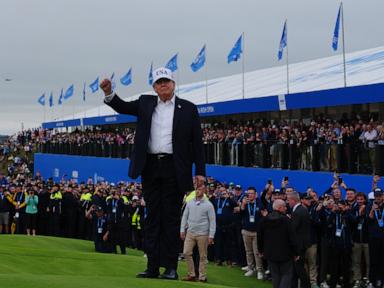
The announcement itself was pure theater. On September 13, 2026, wrapping up a 48-hour visit to Ireland, Trump attended the Amgen Irish Open at his Doonbeg golf links. After presenting the trophy to Irish golfer Shane Lowry, he told the crowd that Taoiseach Micheál Martin, Lowry, and plenty of others had pressed him on the issue. He said it was unfair and declared he would take the tariffs off Irish whiskey.
Industry groups cheered right away. Eoin Ó Catháin, director of the Irish Whiskey Association, thanked advocates across Dublin, Brussels, and Washington, D.C., and said the sector looked forward to full implementation. Chris Swonger, president and CEO of the Distilled Spirits Council of the United States, called the move a welcome boost for American retailers, restaurants, and hospitality businesses heading into the holiday season.
Except holiday shelf planning doesn't run on warm applause.
By late October, Irish media reported that U.S. tariffs on Irish whiskey were still active, with officials in "intensive engagement" with the Office of the U.S. Trade Representative over technical implementation. By November 10, 2026, Drinks Ireland warned that tariffs remain a live concern for an industry contributing $4.6 billion to the Irish economy, pushing for a broader zero-for-zero tariff arrangement across Irish drinks products.
Why does technical implementation drag? Because tariff lines aren't light switches. A president can say a duty is gone, while lawyers, customs classifications, and bilateral trade negotiators hash out how to carve one EU-origin spirit out of a wider tariff bucket without triggering retaliation elsewhere.
The bigger trade chess game behind one bottle
Look wider and you see why Irish distillers are nervous even after a friendly speech.
Irish whiskey exports already dipped by 5% in 2025, according to Bord Bia figures. Meanwhile, Washington's broader trade posture has been combative. The administration hit Canadian goods with steep tariffs—including a 50% tariff and severe restrictions on Canadian alcoholic beverage imports—and threatened 200% tariffs on European wine and Champagne when Brussels floated American whiskey duties.
In that environment, one promised carve-out doesn't guarantee calm waters. Drinks Ireland's push for a zero-for-zero setup across all Irish drinks products shows how fragile partial relief feels. Cream liqueurs, gin, and beer don't all get treated identically when trade fights flare up.
There's also a historical irony here. Before Prohibition hit the U.S. around 1920, Irish whiskey dominated American and global whiskey sales, holding more than 70% of the market. Rebuilding that kind of momentum takes years of brand building, cask aging, and steady distribution. A 10% tariff might sound modest compared to 50% or 200% threats, yet in thin-margin spirit distribution, 10% is the difference between absorbing cost and raising retail prices right when shoppers are watching every dollar.
Common mistakes buyers and watchers make right now
- Assuming retail prices drop overnight. Even once U.S. Customs stops collecting the 10% duty, existing distributor inventory was already landed at the higher cost. Price cuts, if they happen, show up gradually.
- Treating all Irish whiskey the same. Northern Irish whiskey wasn't hit by this 10% EU-linked tariff in the first place. Only Republic of Ireland exports have been carrying that specific surcharge.
- Confusing a pledge with a zero-for-zero deal. Removing one tariff line isn't the same as locking in permanent reciprocal zero tariffs across Irish spirits.
What happens next if you buy, sell, or invest in spirits
Honestly, nobody outside the trade rooms knows the exact calendar date when the paperwork clears. Still, you don't have to guess blindly.
If you import or distribute Irish whiskey into the U.S., keep your landed-cost models split into two scenarios—current 10% duty and 0% duty—and avoid forward-committing promotional rebates until customs bulletins officially reflect the change.
If you run a bar, restaurant, or retail shop, watch distributor price sheets for Q1 rather than expecting holiday relief. Stocking decisions for November and December are mostly locked in already.
If you're just a drinker wondering whether your favorite bottle is about to get cheaper, don't hold your breath for a dramatic markdown. Most brands use tariff relief to repair squeezed margins or fund marketing before cutting shelf tags. Check official U.S. Trade Representative updates or Drinks Ireland statements if you want the real signal—not just speeches from the 18th green.