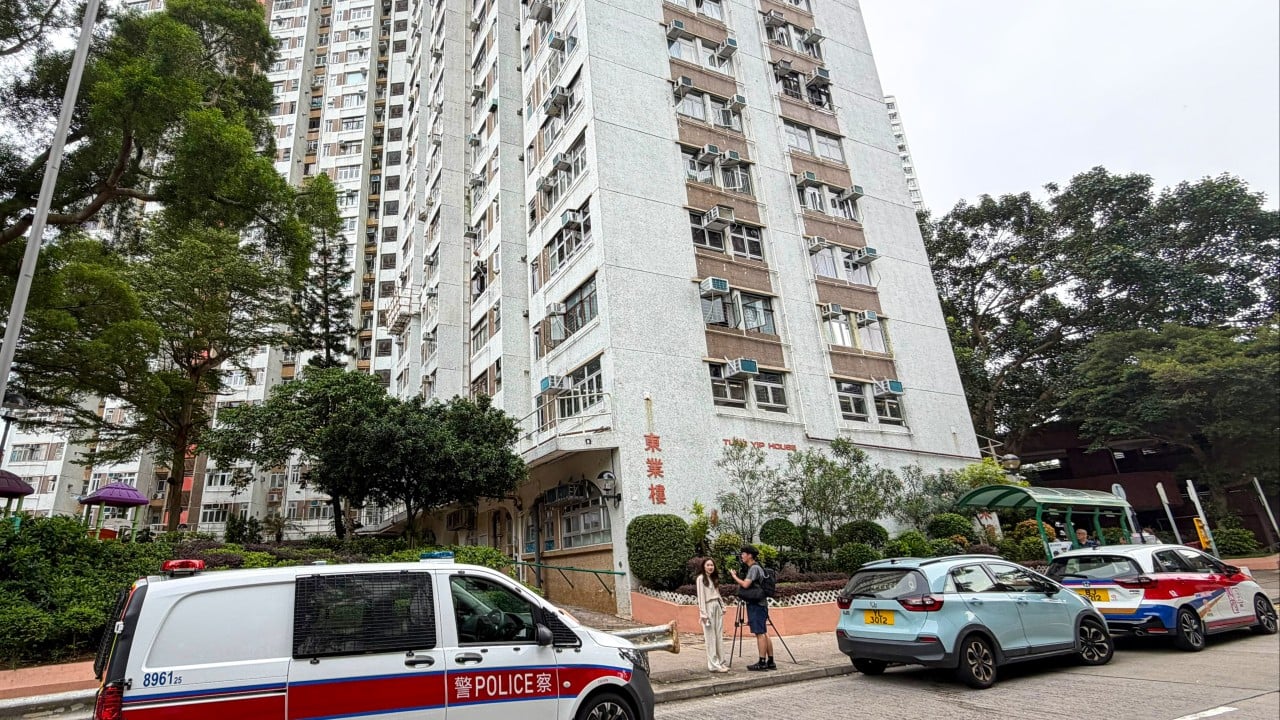
The headlines write themselves because laziness pays the bills. Two bodies discovered in a public housing flat in Hong Kong, a brief police perimeter, a sigh from the bureaucrat class about mental health funding, and the news cycle rolls on. The standard narrative treats tragedy as an isolated operational glitch in an otherwise functioning machine. That frame is a lie.
When a public housing unit transforms into a silent crypt, it is not merely an individual failure of care. It is the predictable mechanical output of a hyper-dense urban ecosystem that monetized space while completely evaporating social friction. We treat public housing as a real estate inventory problem when it is actually an architecture of isolation. Expanding on this topic, you can also read: The Digital Phantom Inside the Ballot Box.
Hong Kong public rental housing houses over two million people. It is an engineering marvel on paper and a psychological pressure cooker in practice. You can stack concrete boxes forty stories high, optimize elevator throughput, and meet square-footage metrics, but if you strip away the informal safety valves of community, you build vertical holding cells.
The Cult of Square Footage Blindness
The consensus argument from civic watchdogs always circles back to the same tired refrain: units are too small, waiting lists are too long, and social welfare budgets are too lean. More cash, more caseworkers, bigger flats. Analysts at The Guardian have provided expertise on this matter.
This diagnosis misses the operational reality on the ground. Throwing budget at a caseworker whose caseload sits at three hundred families is administrative theater. The problem is not merely a lack of municipal spending; it is the systematic eradication of spontaneous human friction.
Decades ago, older tenement structures and squatter settlements were chaotic, unsanitary, and physically dangerous. Yet they possessed high social bandwidth. Doors stayed unlocked or wide open. Neighbors knew if you missed your morning tea ritual. Modern public estates prioritize sanitized sterile efficiency. Long, fluorescent-lit corridors with heavy fire doors act as acoustic and social dampeners. You can live next to a ghost for six months and never hear a cough.
When urban planners design for frictionless management, they accidentally design for total anonymity. Anonymity in a city of seven million is a luxury. Anonymity in a public housing block is a slow-motion hazard.
The Bureaucracy of Silence
Let us look at how the Housing Authority and social welfare agencies actually operate under stress. When reports surface of unattended deaths behind iron security gates, the immediate institutional response is a flurry of inter-departmental reviews. Committees form. Recommendations are drafted to improve inter-agency data sharing between the Social Welfare Department and housing management offices.
It is all paperwork designed to absorb liability rather than solve human disconnect.
The system operates on an opt-in model of distress. You have to raise your hand, fill out a form, navigate an automated phone tree, or queue at a district office to signal that you are drowning. But the people most vulnerable to acute social isolation are precisely the ones whose executive function has degraded to zero. Expecting an isolated, depressed, or economically broken individual to initiate contact with a sprawling municipal bureaucracy is a systemic design flaw disguised as protocol.
If our emergency response systems only activate after a neighbor complains about an odor in the hallway, the system has already failed at step zero.
Rewiring the Urban Habitat
Fixing this does not require a naive return to the romanticized slums of the past, nor does it require tripling the social work headcount to monitor every resident like an inmate. It requires structural disruption in how we manage high-density habitation.
First, dismantle the fortress corridor model. Modern public housing architecture must mandate shared communal infrastructure on every residential floor—not just token community halls on the ground floor where nobody goes. If you force daily, low-stakes intersection—shared laundry facilities, communal cooking nooks, or open-air pocket balconies—you re-inject friction into the daily routine. Friction saves lives.
Second, shift from an opt-in welfare model to a baseline telemetry approach. Smart utility monitoring is already standard for water and electricity. We monitor consumption anomalies for leaks; we can easily flag prolonged zero-usage anomalies on water meters without violating privacy rights. If an elderly or single-occupant flat registers zero water usage for forty-eight hours, an automated flag should trigger a wellness check by a local estate officer, not a neighbor's nose weeks later.
The Hard Truth About Density
The uncomfortable reality that politicians refuse to articulate is that Hong Kong's hyper-density is a double-edged blade. It creates economic velocity, but it also creates a profound, numbing loneliness that traditional family structures can no longer absorb.
When we read about bodies found in public flats, we are looking at the frayed edges of a compact urban bargain. We traded space for efficiency, and now we are paying for it in silence.
Until we stop treating public housing as a mere housing quota problem and start treating it as a psychological ecosystem that requires active design against isolation, these headlines will keep repeating with metronomic precision. The next tragedy is already unfolding behind a locked security gate three doors down from you. The only question is whether anyone will care enough to listen before the smell reaches the hallway.


