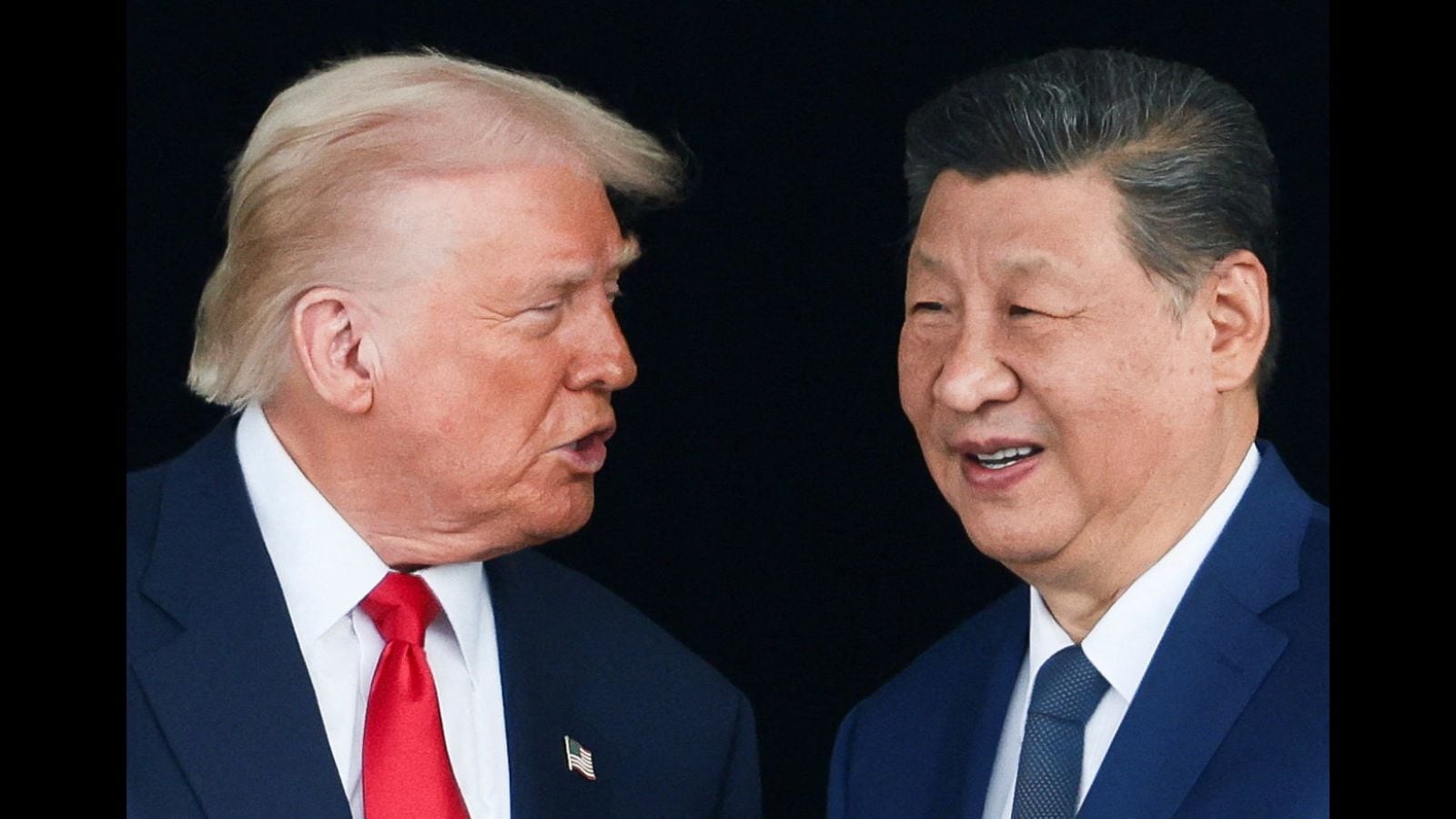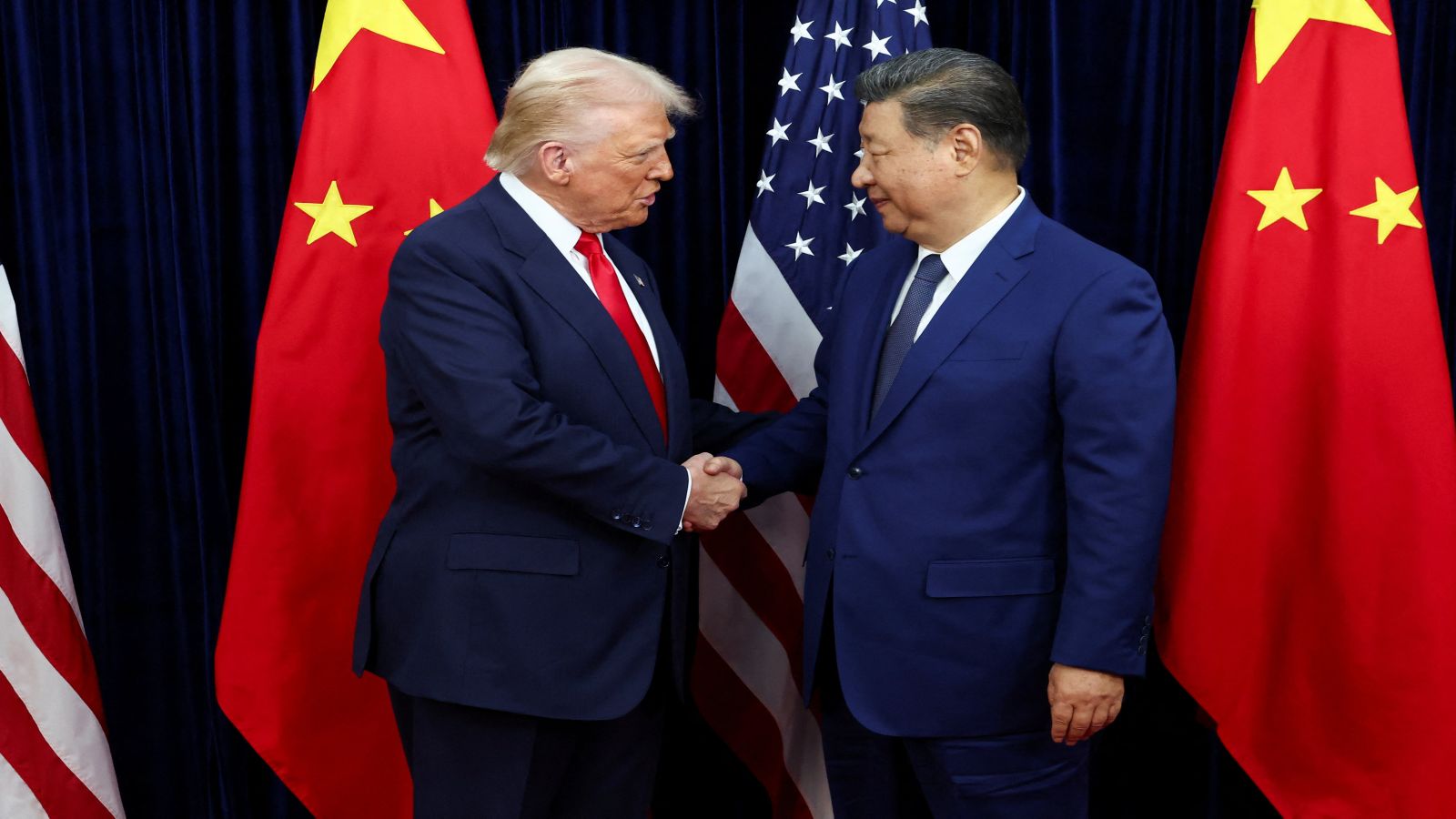
The media treats every presidential handshake like a season finale. When Donald Trump and Xi Jinping meet, the pundit class floods the airwaves with breathless chatter about trade truces, rare earth quotas, and artificial intelligence safety guardrails. It is a comforting narrative. It assumes that superpowers operate like corporate boardrooms, where two men can sit down over handshakes, trade concessions, and sign a neat little document that resets global economics.
It is completely, dangerously wrong. For a closer look into similar topics, we recommend: this related article.
I have watched institutional investors burn millions chasing the ghost of a grand bilateral reset. Every time a summit is announced, markets rally on the fantasy of lowered tariffs and solved supply chains. Every time, reality bites back within a quarter. The lazy consensus states that these talks are about finding compromise. They are not. They are about managing an irreversible structural divorce while keeping the lights on.
The Rare Earth Mirage
Take the obsession over critical minerals and rare earths. The mainstream media reports on export licensing restrictions as if they are temporary trade disputes akin to a squabble over agricultural subsidies. They frame Beijing's controls on medium and heavy rare-earth materials as a negotiating chip that can be traded away for lower U.S. tariffs on consumer goods. For additional information on this issue, comprehensive coverage can be read on MarketWatch.
This betrays a total misunderstanding of national security economics. China did not implement export controls on permanent magnets and rare-earth processing technology to win a tariff war. They did it because rare earths are the choke point of the twenty-first-century military-industrial complex.
Imagine a scenario where a CEO thinks a diplomatic communiqué will guarantee a steady, cheap stream of dysprosium for EV motors next year. That CEO will likely go bankrupt. Beijing views these resources through the lens of sovereign survival. No amount of agricultural purchasing concessions from Washington is going to convince Chinese leadership to hand over monopolistic control of material processing that took thirty years to lock down.
When U.S. officials talk about supply-chain resilience at these summits, they are speaking diplomatically. The translation on the ground is stark: absolute, unmitigated industrial decoupling. Pretending that a meeting in Shenzhen will reverse a decade of strategic self-reliance policies is financial malpractice.
The Artificial Intelligence Fiction
Then there is the theater of artificial intelligence governance. Officials love to announce bilateral dialogues on advanced model safety, incident communication channels, and human-in-the-loop oversight. It sounds modern. It sounds forward-thinking.
It is also an empty bureaucratic pacifier.
The structural reality of the silicon curtain is that computation has become the new uranium. Washington's entire strategic posture rests on maintaining a decisive lead in high-end semiconductor logic and advanced cluster scaling. Beijing's entire strategic posture rests on circumventing those exact export controls to achieve domestic autonomy in computing power.
You cannot negotiate a compromise on a zero-sum existential technology race over a weekend working lunch. When chip restrictions and licensing frameworks for advanced hardware like Nvidia processors are discussed, neither side is looking for middle ground. They are probing for weaknesses. The bilateral AI dialogues are not cooperation mechanisms; they are intelligence-gathering forums where both sides map out the other's regulatory blind spots.
Analysts who write about shared AI safety protocols as a breakthrough are confusing diplomatic politeness with strategic alignment. The digital iron curtain is dropping, pixel by pixel, and no joint press release is going to roll it back.
The Trade Truce Trap
We must also dismantle the myth of the tariff rollback. Every temporary extension of tariff suspensions is greeted by market analysts as a sign of thawing relations. The truth is much more cynical. Both economies are locked in a managed friction model.
Tariffs are no longer emergency trade weapons; they are permanent structural taxes designed to force domestic capital expenditure. When Washington insists on enforcement of trade commitments and Beijing links those demands to reciprocal concessions, they are merely haggling over the speed of friction, not the direction of travel.
The structural decoupling of the trans-Pacific manufacturing base is past the point of no return. Factories are already re-routing through Mexico, Vietnam, and Eastern Europe. Capital is re-allocating based on political risk, not marginal cost efficiency. Treating a summit as a turning point ignores the inertia of trillions of dollars in redirected supply chains.
Stop Waiting For Permission
If you are running a business or managing a portfolio based on the idea that geopolitics will soon revert to the predictable globalization of the early 2000s, you are planning for a world that no longer exists.
The correct question is not whether Trump and Xi can forge a lasting trade agreement. The correct question is how quickly your enterprise can adapt to an environment where fragmentation is the baseline.
Stop reading the communiqués for signs of peace. Look at the balance sheets of domestic reshoring, the buildout of alternative mineral supply lines, and the hardening of technological boundaries. The superpower split is permanent. Adjust your strategy or become collateral damage.