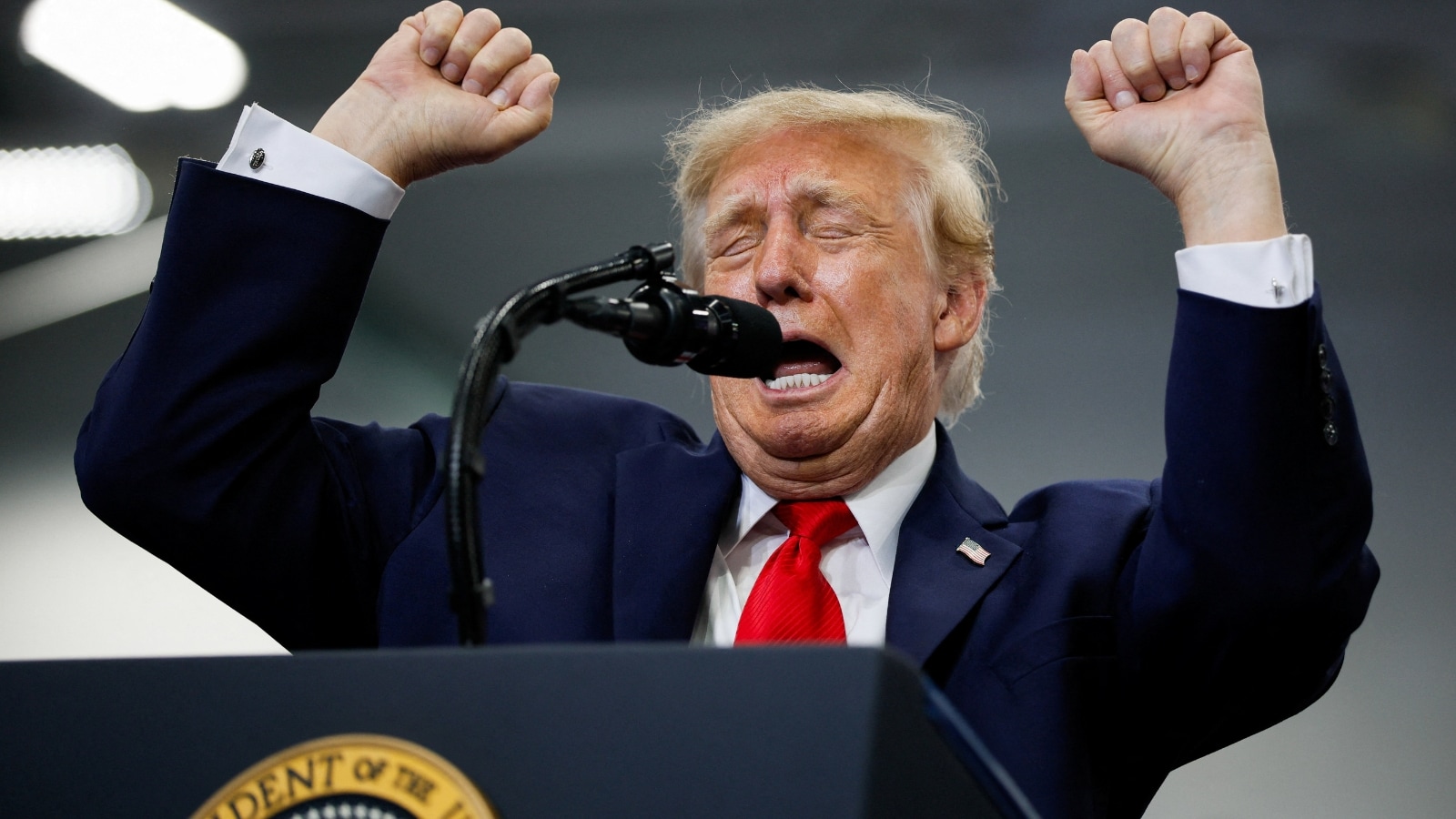
White evangelical Protestants remain Donald Trump's strongest religious base within the Republican coalition, yet their backing has noticeably softened from early 2025 levels. A headline framing this dynamic around a "slipping" overall figure while treating white evangelicals as an unshakeable "bedrock" captures the surface tension, but it compresses two distinct shifts into a single story: a gradual erosion in policy and ethical confidence alongside a sharper dip in headline approval and enthusiasm ahead of the 2026 midterms.
Standard coverage of coalition loyalty typically relies on a simple binary: either a voting bloc defects or it holds firm. That framing misses how political coalitions actually strain. Voters rarely abandon a preferred movement overnight when alternatives feel worse; instead, they separate job approval, policy alignment, perceived ethical standards, and turnout motivation. Disaggregating those dimensions shows why white evangelicals can remain comparatively loyal to Trump and the GOP while still registering real dissatisfaction.
The Deconstruction of Standard Coalition Reporting
Conventional horse-race reporting on religious voting blocs tends to rest on three recurring assumptions:
- Equating majority support with immunity to erosion: A clear majority among white evangelicals still views Trump positively compared with the broader public, which tempts analysts to treat the bloc as static. A double-digit drop from peak levels is still a meaningful shift even when the remaining majority is large.
- Treating "white evangelicals" as a single uniform preference engine: Survey respondents who identify as white evangelical Protestants hold varying weights on cost-of-living pressures, cultural priorities, institutional ethics, and Christian nationalist framing.
- Conflating preference with midterm mobilization: High relative favorability does not automatically translate into peak turnout enthusiasm or unhesitating down-ballot energy when economic frustrations mount.
When articles treat a headline drop and a "bedrock" label as competing moods rather than interacting variables, they obscure the exact pressure points testing Republican cohesion.
Known Facts Versus Analytical Hypotheses
Separating verified survey findings from interpretation prevents overreading either softness or resilience.
Known empirical patterns from polling and election analysis:
- Polling in October 2026 showed Trump's support among white evangelicals at 63%, down from 77% in January 2025, even as they remained one of his most supportive groups relative to the wider electorate.
- Pew Research Center data from January 2026 found that 69% of white evangelical Protestants approved of how Trump was handling his job, 58% supported all or most of his plans and policies (down from 66% in early 2025), and 40% expressed high confidence that he acts ethically in office (down from 55% in early 2025).
- Across religious groups, Pew found white evangelicals remained the only large religious group in which a clear majority approved of Trump's job performance in January 2026.
- PRRI reporting in February–March 2026 highlighted sharp differences by Christian nationalism orientation—with higher favorable views among adherents and sympathizers than among skeptics or rejecters—and October 2026 PRRI polling reported lower midterm excitement among white evangelical voters than among Black Protestants.
- Post-midterm election analysis in November 2026 pointed to lower turnout and reduced Republican vote share among white evangelicals compared with 2024 in key areas, alongside voters weighing trade-offs between perceived party flaws and priorities like religious freedom or economic costs.
Educated hypotheses explaining the underlying mechanics:
- The Transaction-Versus-Character Gap: Voters who prioritize judicial appointments, religious liberty, or cultural policy may discount personal or ethical reservations when they view the alternative party as hostile to core values, creating a gap between instrumental support and ethical confidence.
- Pocketbook Friction as a Turnout Damper: High living and energy costs do not have to flip a loyalist into a Democratic voter to hurt Republican performance; they can depress enthusiasm, encourage ticket-splitting, or lower turnout relative to a high-salience presidential election.
- Cultural Issue Mobilization as a Counterweight: Activist outreach emphasizing abortion restrictions, gender issues, and religious freedom acts as a retention mechanism designed to keep reluctant conservatives anchored to Republican candidates despite economic irritation.
Four Variables Governing Evangelical Coalition Behavior
To evaluate whether softness in polling represents a temporary dip or structural wear, analysts should track four distinct variables rather than a single approval line:
- Cost-of-living salience: Household sensitivity to inflation, groceries, and fuel prices directly tests whether economic grievances outweigh cultural reassurance.
- Ethical and institutional trust: Shifts in confidence regarding ethical conduct signal whether long-term credibility is compounding or stabilizing.
- Negative partisanship and perceived alternatives: Many conservative voters evaluate candidates through relative risk—viewing Democratic governance as a greater threat to religious freedom or social norms than Republican flaws.
- Mobilization intensity: Voter guides, church-adjacent outreach, and midterm enthusiasm determine whether nominal supporters actually cast ballots at presidential-year rates.
Consider two voters with identical cultural priorities. Voter A feels squeezed by everyday bills and stays home or votes more selectively in a midterm; Voter B views cultural and religious-liberty stakes as existential and turns out regardless of price discomfort. Both can appear in the same demographic bucket while producing very different electoral outcomes.
Operational Playbook for Campaign and Policy Strategists
For strategists managing Republican outreach or opposition targeting, treating white evangelicals as either "lost" or "guaranteed" leads to misallocated resources. A disciplined operational approach follows four sequential steps:
- Audit sub-segments by issue hierarchy: Separate voters whose primary anchor is economic relief from those anchored primarily by religious freedom, abortion, or gender policy, rather than relying on broad demographic averages.
- Pair cost-of-living proof points with values framing: When economic strain is top of mind, abstract cultural appeals alone struggle to overcome wallet friction; concrete cost-relief arguments need to accompany values messaging.
- Measure enthusiasm and drop-off separately from favorability: Track ballot intention and turnout likelihood alongside favorability, since soft enthusiasm is an early warning sign of lower relative turnout.
- Target high-friction swing precincts rather than safe strongholds: Concentrate persuasion and turnout resources where evangelical margins are narrower or turnout drop-off from presidential cycles is sharpest.
Limitations and analytical caveats: Survey cross-tabs of religious subgroups carry smaller sample sizes and wider margins of error than full-sample topline numbers, and self-reported enthusiasm does not always match actual turnout behavior. Furthermore, national polling averages can mask sharp state-by-state and local variations driven by specific senate, house, or gubernatorial matchups.
Strategic Recommendation
Campaigns and analysts evaluating this coalition should stop reading a double-digit drop from early-term highs as coalition collapse—or reading a majority lead as immunity—and instead focus execution on closing the enthusiasm and cost-of-living gap among persuadable conservatives before turnout softness hardens into lower vote totals.
Trump's Evangelical Base Is Cracking — And Republicans Are
This video adds context on how polling shifts among white evangelical voters and economic pressures are affecting Republican strategy ahead of elections.