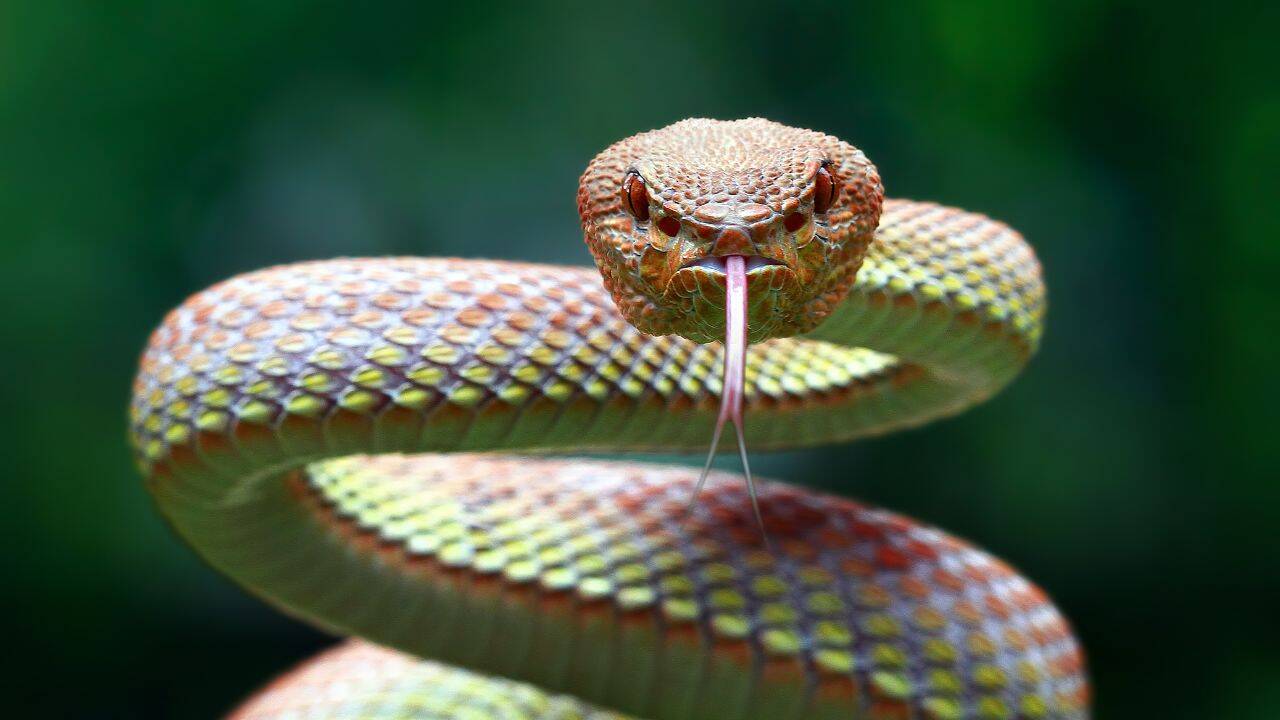
Snakes don't sweat. That single biological fact dictates every single move they make. When the ground turns into a frying pan, they can't just pop open a cold drink or turn on the AC. They rely entirely on their environment to regulate their body temperature. Right now, that environment is failing them.
Europe is heating up twice as fast as the rest of the planet. While tourists crowd Mediterranean beaches complaining about the heat, cold-blooded reptiles are facing a literal existential crisis. They're baking to death in habitats that used to be comfortable.
People assume animals will just pack up and move north when things get warm. It sounds logical on paper. Reality is much messier. Forests are fragmented by highways, cities, and massive agricultural fields. A snake can't just Uber across a six-lane motorway because its home rock became too hot.
Instead of migrating, many populations are simply winking out of existence. We are watching a slow-motion ecological collapse hidden beneath the brush.
The Thermodynamic Trap
To understand why rising temperatures are lethal to European snakes, you have to look at how they spend their days. Snakes need heat to digest food and gain energy to hunt. They bask in the morning sun, reach their optimal operating temperature, and then retreat to shade or burrows when things get too intense.
That system breaks down completely during modern heatwaves. When ambient temperatures stay dangerously high even in the shade, snakes cannot cool down. Their metabolic rates spike out of control. They literally burn through their energy reserves while sitting still.
Think of it like leaving your car engine redlining in a parking lot on a July afternoon. It won't take long before something catastrophic happens.
Field biologists tracking viper and colubrid populations across southern Spain and Italy have noticed a grim pattern. Active hours are shrinking. Snakes used to forage throughout the morning and afternoon. Now, they're forced underground for hours at a time during peak daylight. Less time above ground means less time hunting. Less food means fewer babies, weaker immune systems, and higher mortality rates.
The Northern Myth
You hear it all the time from casual observers. They are just going to move to Scandinavia.
It does not work that way.
Dispersal requires connectivity. If you look at a satellite map of Europe, the landscape is a patchwork quilt of concrete, fences, monoculture farms, and sprawling towns. A snake trying to migrate northward faces a gauntlet of lethal obstacles.
Cars crush thousands of migrating reptiles every year. Domestic cats and dogs pick off the survivors. Even if an individual snake manages to cross these barriers, northern ecosystems already have established predators and competitors. They aren't empty waiting rooms.
Furthermore, soil composition and prey availability change drastically as you move north. A viper specialized in hunting specific Mediterranean lizards will starve in a damp northern pine forest where those lizards don't live.
The Last Great Refuge in the Mountains
While the lowlands cook, one major region stands out as a genuine sanctuary. The high-altitude zones of the Alps and the Pyrenees offer a vertical escape hatch.
Mountains provide rapid temperature shifts over short physical distances. If a snake needs to drop its body temperature by five degrees, it doesn't need to walk fifty miles north. It just needs to crawl twenty yards higher up a rocky slope into a cooler microclimate.
These high-elevation zones act as sky islands. They are isolated pockets of cool, rugged terrain surrounded by increasingly hostile lowlands.
Herpetologists studying mountain ecosystems note that alpine slopes harbor densities of cold-blooded species that are vanishing elsewhere. But these refuges aren't infinite. There is a hard limit to how high a mountain goes. Once snakes reach the snowline, there is nowhere left to climb.
Global warming is pushing upward. As temperatures creep higher year after year, those alpine zones shrink. It's a game of ecological musical chairs, and the music is playing faster every summer.
What We Can Actually Do
We tend to treat conservation as a distant policy debate for politicians in Brussels. That mindset is useless here. Protecting Europe's reptiles requires messy, localized, boots-on-the-ground work.
First, we need to stop treating dead stone walls and old rock piles as trash. Farmers and landowners often clear out these dry-stone structures to tidy up fields. For snakes, those walls are thermal sanctuaries. They offer deep, cool crevices during heatwaves and safe hibernation spots in winter. Preserving them costs nothing and saves lives.
Second, wildlife corridors need actual funding and enforcement. Building a green bridge over a highway isn't just for charismatic megafauna like wolves and bears. Small reptiles need low-level tunnels and continuous strips of natural brush to move between fragmented habitats.
Third, we have to rethink how we manage forest fires. Aggressive fire suppression often leads to massive, catastrophic blazes that wipe out entire regional populations in a single afternoon. Controlled burns and better habitat mosaic management give mobile animals a chance to escape.
The heat isn't going away anytime soon. If we want Europe's native serpents to survive the century, we have to give them places to hide, rooms to cool down, and paths to move when the ground gets too hot to touch.
Watch where you step this summer. You might be sharing the trail with one of the last survivors.