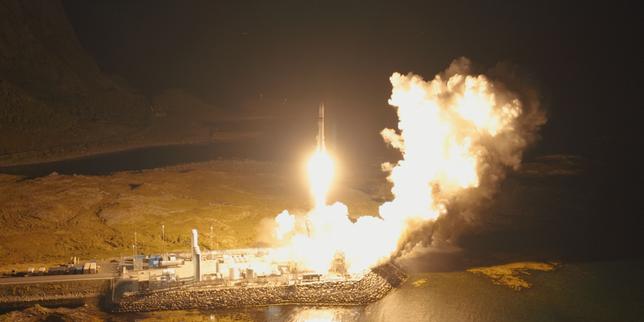
Everyone is losing their minds over Isar Aerospace clearing the Kármán line from Arctic Norway. Media headlines scream that continental Europe has finally found its sovereign answer to SpaceX, shattering decades of launch stagnation. Pouring hundreds of millions into Munich startups is supposedly going to rewrite the orbital order.
It is a comforting fairy tale for bureaucrats in Brussels. It is also an absolute economic illusion. For a closer look into similar topics, we recommend: this related article.
I have seen companies blow millions on custom launch architectures while ignoring the brutal physics of market economics. Celebrating a single successful orbital flight from Andøya Spaceport is equivalent to cheering because a prototype car successfully rolled down a hill. Making history on a second qualification flight feels good for morale, but orbit is not a participation trophy. The lazy consensus says Europe is back in the game because a private rocket reached low Earth orbit. The reality? Europe has built a boutique launch boutique in a mass-production universe, and no amount of national pride will fix the unit economics.
The Small-Launcher Fallacy
Let us define the core misconception. Small-lift orbital vehicles are marketed as agile, flexible saviors for satellite operators who do not want to wait for a shared rideshare mission. Proponents argue that dedicated access to space is worth a premium. To get more details on this issue, in-depth coverage can also be found at The Next Web.
It is a lie told by people who do not pay for rocket fuel.
Imagine a scenario where you run a commercial constellation. You need to deploy forty satellites a year. Do you buy dedicated small-lift slots at ten thousand euros per kilogram, or do you stack your payloads onto a heavy-lift vehicle where the cost per kilo drops to a fraction of that price? SpaceX proved years ago that scale is the only metric that matters. Falcon 9 and Starship treat orbit like a bus route. Hand-crafting twenty-eight-meter rockets with proprietary engines in small batches is a artisan craft project, not an industrial strategy.
Isar Aerospace boasts about manufacturing capacity targeting dozens of vehicles annually. Yet, the global market for dedicated small launchers is already choking on oversupply and under-demand. Rocket Lab learned this the hard way, constantly pivoting toward larger architectures and reusable systems just to survive. Building a non-reusable small rocket in the late twilight of the expendable era is like opening a factory for manual typewriters the year the iPad drops.
The Geographic Delusion
Another favorite talking point of the commentariat is "sovereign access from European soil." Launching from Norway or French Guiana supposedly immunizes European payload owners from geopolitical shocks.
This argument collapses under basic logistics. Geopolitics does not care where your launchpad sits if your supply chain depends on global components and your cost structure is subsidized by venture capital rounds that must eventually yield a return. Pumping close to a billion euros into localized launch capabilities to bypass foreign providers ignores the financial bleeding. If your launch service requires continuous funding infusions to bridge the gap between commercial market rates and your actual manufacturing costs, you do not have a sovereign space program. You have a state-adjacent charity.
Look at the numbers. The United States routinely racks up close to two hundred orbital launches a year, driven by aggressive reusability and ruthless iteration. Europe managed a tiny fraction of that. Pinning continental salvation on an expendable vehicle that can loft one metric ton to low Earth orbit when the rest of the industry is moving toward heavy, fully reusable cadence is strategic malpractice.
The Reusability Chasm
Everyone loves to dodge the reusability elephant in the room. Isar's Spectrum is an expendable rocket. In an ecosystem dominated by first-stage boosters landing themselves on drone ships with boring regularity, an expendable small-lift vehicle enters the market with a hand tied behind its back.
You cannot iterate toward low cost if every single flight requires throwing away millions of dollars of aerospace hardware into the Norwegian Sea. Flight testing a vehicle once or twice a year gives you engineering data, but it does not give you a viable commercial engine. True disruption requires amortization through repetition. Until European launch startups stop treating the Atlantic Ocean as a disposal site for prime-grade titanium and avionics, they remain subcontractors to history.
Stop cheering for geography. Stop pretending that matching a technological milestone from fifty years ago constitutes a modern industrial revolution. If Europe wants a real space strategy, it needs to stop subsidizing boutique obsolescence and start confronting the absolute tyranny of cost-per-kilogram math.
The rocket cleared the pad. The champagne is empty. Now reality sets in.