A French doctor returning from the Democratic Republic of Congo just tested positive for Ebola. The news sent a brief shockwave through international media headlines, but the reality on the ground is far less panicked than the clickbait suggests. Public health systems in Europe are built precisely to catch and neutralize these exact scenarios before they turn into local outbreaks.
When a healthcare worker handles hemorrhagic fevers in central Africa and flies back to Paris, they don't just walk through standard customs and go home to sleep it off. They enter a highly coordinated, multi-layered surveillance net. France has spent over two decades refining its response to imported tropical pathogens. This specific case shows that the system works exactly the way medical experts designed it to.
Understanding how a Western medical infrastructure isolates a pathogen like Ebola virus requires looking past the scary headlines. It means looking at the precise mechanics of biocontainment, contact tracing, and the stark epidemiological differences between an outbreak in a dense forest infrastructure and a single imported case in a modern metropolitan hospital.
The Immediate Isolation Protocol at Bichat Hospital
The moment a returning medical professional presents with a sudden fever, headache, or muscle pain after working in an active Ebola zone, standard emergency rooms are bypassed completely. In France, the national response plan routes these high-consequence pathogens to specific targeted facilities. The most famous of these is the Bichat–Claude Bernard Hospital in Paris, known worldwide for its infectious disease specialization.
Isolation happens instantly. The patient enters a negative-pressure room. These specialized chambers ensure that air flows into the room but cannot escape back into the hospital corridors without passing through high-efficiency particulate air filters. Because Ebola spreads through direct contact with bodily fluids rather than airborne droplets, this negative pressure serves as an extra layer of absolute security for the facility.
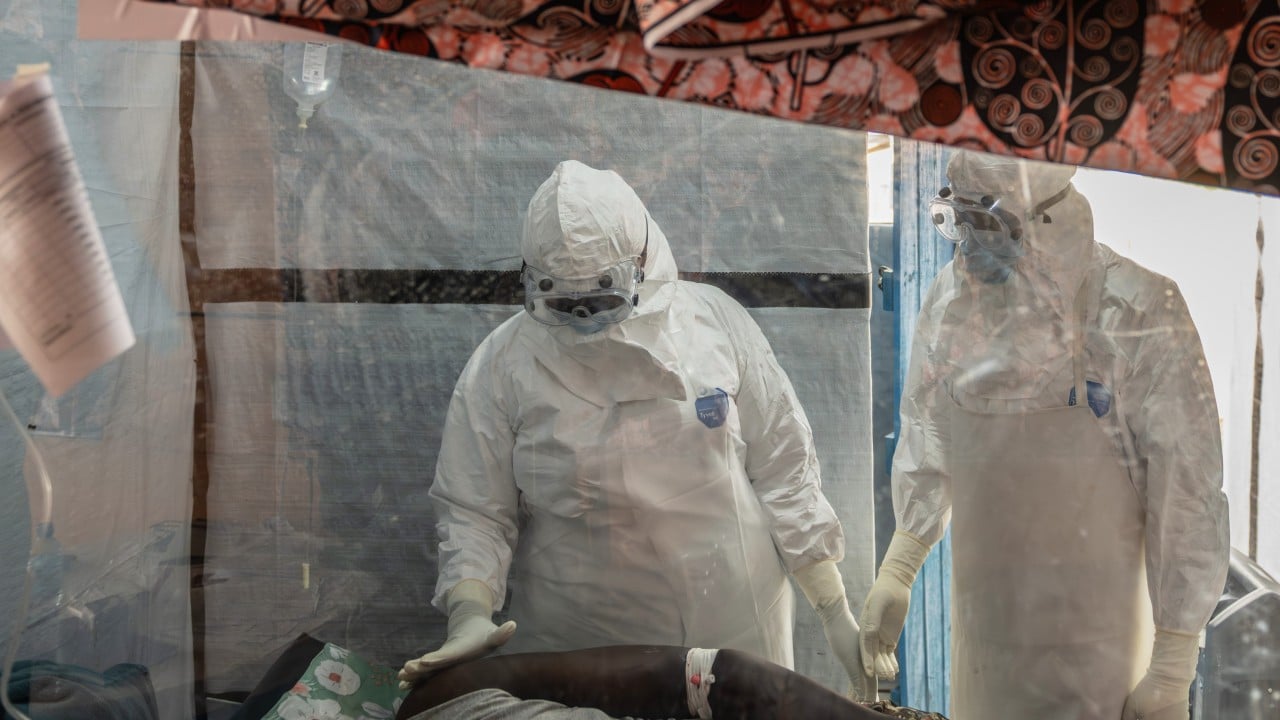
Medical staff caring for the doctor wear heavy personal protective equipment. This isn't standard surgical gear. We are talking about full-body impervious suits, double gloving, fluid-resistant aprons, and powered air-purifying respirators. Every single piece of equipment that touches the patient is either incinerated on-site or autoclaved using high-pressure steam to destroy any trace of viral RNA.
The immediate goal is stabilization. In past decades, an Ebola diagnosis felt like a death sentence. Today, early aggressive supportive care changes the survival math completely. Doctors focus heavily on maintaining fluid balance, managing blood pressure, and replacing lost electrolytes.
Tracking the Flight and the Secondary Contacts
The real panic among the public usually centers around the flight home. People picture a crowded airplane cabin and wonder if everyone on board is now at risk. Epidemiologists view this with a much cooler head because they understand how the virus behaves.
Ebola is not the flu. It does not spread through a casual cough or sneeze from a passenger three rows away. A person infected with Ebola only becomes contagious when they begin showing active, severe symptoms like vomiting, diarrhea, or bleeding. During the incubation period, which can last anywhere from 2 to 21 days, the virus sits quietly inside the body and cannot infect anyone else.
Even so, the French public health agency, Santé Publique France, launches an immediate contact tracing campaign. They look at two distinct circles of people.
- The flight perimeter. Investigators pull the flight manifest and identify passengers sitting within a specific radius of the infected doctor, typically two rows in front and two rows behind, along with the cabin crew who serviced that section.
- The personal circle. Family members, transport workers, or initial triaging medical staff who interacted with the doctor before the strict isolation took effect.
Every identified contact receives a daily monitoring directive. They must take their temperature twice a day. If even a slight fever registers, they are transported via a specialized ambulance directly to an isolation ward. This strict approach stops transmission chains dead in their tracks.
Why Local Outbreaks Do Not Happen in Developed Healthcare Systems
The devastating outbreaks witnessed in West Africa between 2014 and 2016, and the recurrent outbreaks in the Congo, happen because of systemic vulnerabilities that simply do not exist in Western Europe.
In rural parts of the DRC, healthcare facilities often lack basic clean water, let alone single-use disposable syringes. A single needle might be reused out of sheer necessity, amplifying the virus across dozens of patients. Furthermore, traditional burial practices often involve washing and touching the deceased, a time when the viral load in an Ebola victim is at its absolute peak.
Contrast that with the environment in Paris. Clean water is infinite. Medical supplies are strictly single-use. Burial practices are highly regulated, and in the tragic event of a death from a high-consequence pathogen, specialized teams handle the remains without public exposure.
The structural defenses of a modern hospital make sustained community transmission of Ebola practically impossible. The virus requires close, messy, unprotected contact with highly infectious fluids to jump from person to person. In an environment where every medical worker looks like an astronaut and every surface is bleached hourly, the virus runs out of places to go.
The Therapeutic Arsenal Changing the Survival Odds
We are no longer living in the era where we just watch an Ebola patient fight for their life with nothing but an IV fluid bag. The medical community now possesses targeted tools that have fundamentally altered the clinical trajectory of the disease.
Monoclonal antibodies have revolutionized Ebola therapy. Treatments like Inmazeb, which is a combination of three monoclonal antibodies, and Ebanga, a single monoclonal antibody, work by targeting the glycoprotein on the surface of the Ebola virus. By binding to this protein, the drugs block the virus from entering human cells and replicating.
When these treatments are administered early in the course of the infection, survival rates skyrocket. Data from clinical trials in the DRC showed that patients receiving these therapies early had survival rates higher than 60% to 80%, depending on the specific viral load at the time of admission.
The challenge with these therapies is entirely logistical. They must be kept cold and delivered quickly. In a Paris hospital, these drugs are readily available in the pharmacy stacks, ready to be prepared and infused within hours of a positive laboratory confirmation.
What Returning Humanitarian Workers Must Do Right Now
If you are a medical professional, logistical staff member, or researcher returning from an area with active Ebola transmission, your responsibilities do not end when your deployment contract finishes. The safety of your community and your family depends on strict adherence to post-arrival protocols.
First, maintain a rigorous self-monitoring log for exactly 21 days from the moment you leave the endemic zone. Do not skip days. Carry a digital thermometer with you everywhere.
Second, map out your local public health contact channels before you feel sick. If you develop a fever, do not drive yourself to a local walk-in clinic or call a standard ride-share vehicle. You will expose innocent people. You must call the dedicated emergency services line, explicitly state your travel history and exposure risk, and wait for a specialized transport unit to collect you.
The system in France works because individuals communicate transparently and institutions react instantly. This latest case is a reminder that global health security relies on vigilance, not fear.