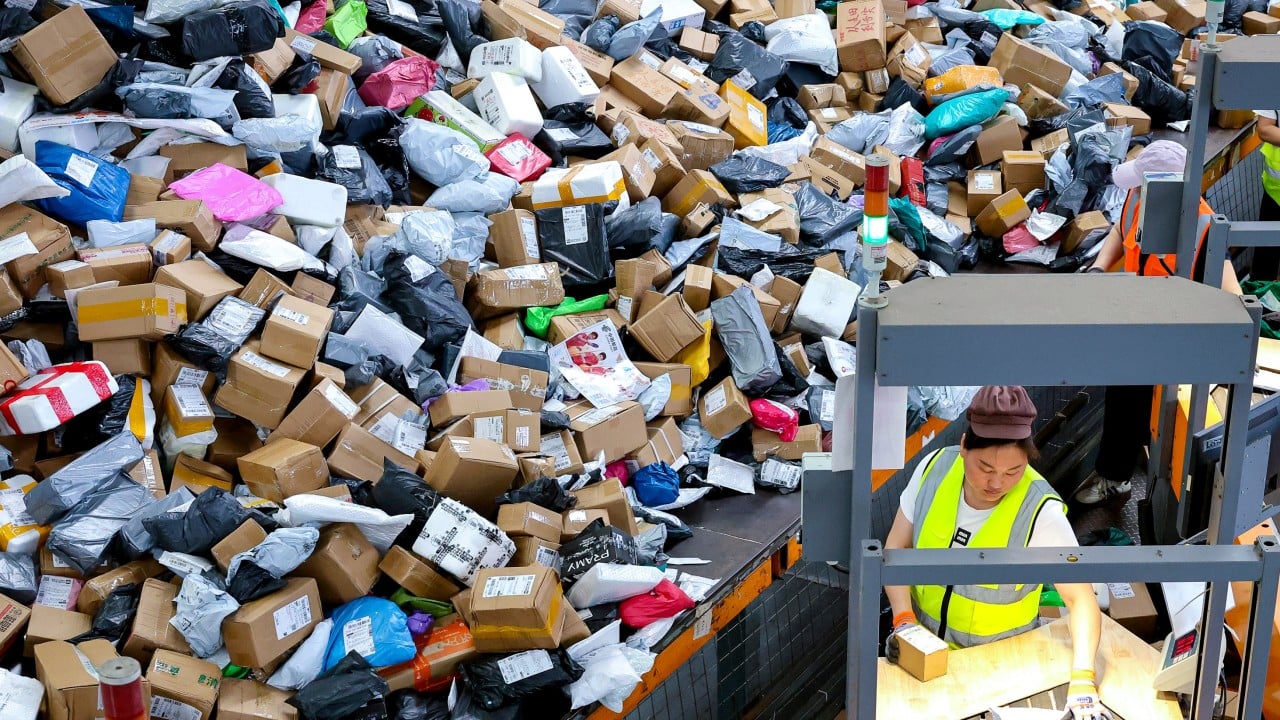
Brussels meant to fix a waste crisis. Instead, European Union packaging rules have evolved into a structural bottleneck for cross-border commerce, with Chinese merchants bearing the brunt of the regulatory impact.
For years, the playbook for selling direct-to-consumer goods from Shenzhen or Yiwu to Berlin or Madrid relied on a simple formula: hyper-efficient manufacturing, rock-bottom shipping rates subsidized by international postal treaties, and lightweight, minimal plastic mailers. That era is over. The European Union's updated Packaging and Packaging Waste Regulation, alongside stricter extended producer responsibility mandates, has turned standard operational procedures into compliance nightmares.
Traders who once scaled storefronts on major marketplaces with automated fulfillment now face a fragmented labyrinth of national registries, mandatory take-back schemes, and hefty financial penalties. The objective was environmental accountability. The immediate consequence is a systemic squeeze on cross-border supply chains that threatens the margins of thousands of independent operators.
The Compliance Wall Facing Overseas Merchants
Regulatory friction is nothing new for international trade. Customs tariffs, value-added tax overhauls, and product safety directives have long tested the endurance of cross-border merchants. Yet, the current regulatory wave targeting packaging differs fundamentally in its design and enforcement mechanisms.
Under extended producer responsibility laws enforced across member states, anyone placing packaged goods onto the European market must register locally, report material volumes accurately, and pay financial contributions toward end-of-life recycling. For a domestic European brand, establishing these administrative pathways requires legal counsel and accounting overhead. For a merchant operating out of a warehouse in Guangzhou with no physical footprint in the European Union, the barrier to entry approaches prohibitive levels.
Authorized representative requirements mean foreign sellers must partner with locally based compliance agencies to even qualify for market access. These intermediaries charge retainers that eat straight into the thin margins typical of high-volume, low-cost e-commerce. Miss a quarterly reporting deadline in Germany's LUCID database, or fail to secure a contract with a certified recycling partner in France, and automated marketplace algorithms or customs authorities block shipments at the port of entry.
Small-scale operators lack the bureaucratic machinery to manage these obligations across twenty-seven distinct regulatory environments. Each nation interprets European directives through its own domestic legislation, creating a patchwork of compliance hurdles that defies standardization.
Supply Chain Realities Behind the Red Tape
At the operational core of this friction lies a material mismatch. Chinese e-commerce manufacturers built their competitive advantage on speed and cost minimization. Polyethylene mailers and bubble wrap provided durable, featherweight protection that kept shipping weights down.
European regulators want those materials replaced by certified paper alternatives, biodegradable polymers, or reusable shipping containers. Transitioning requires redesigning packaging lines at scale.
Consider a hypothetical merchant shipping five thousand apparel items daily from a fulfillment center near Hangzhou. Upgrading to certified sustainable packaging increases unit costs. More importantly, domestic Chinese suppliers often lack immediate access to the specific European-certified paper grades demanded by destination markets.
When alternative materials are sourced, they frequently add weight or bulk. Increased weight triggers higher international freight tariffs, neutralizing the pricing advantage that made these products attractive to European consumers in the first place.
Fulfillment houses inside Europe are adjusting their intake policies as well. Warehousing providers handling third-party inventory are increasingly refusing shipments that fail to meet local recycling documentation standards. They refuse to absorb the liability of unverified packaging waste. The cost of non-compliance shifts downward, landing squarely on the shoulders of the merchant who shipped the cargo.
The Strategic Shift Toward Regional Warehousing
Faced with mounting border rejections and complex administrative overhead, surviving merchants are altering their operational architecture. The old model of shipping individual parcels directly from Asia to European doorsteps via postal air packets is giving way to regional inventory staging.
Capital is moving toward localized European fulfillment centers. By bulk-shipping inventory into bonded warehouses within the Union, merchants can handle compliance reporting on consolidated pallet loads rather than individual consumer parcels. Localized actors manage the final-mile packaging using compliant materials sourced directly within the European market.
This pivot demands significant capital reserves. Warehousing stock in Rotterdam or Frankfurt ties up cash flow that smaller operators cannot spare. As a result, market consolidation is accelerating. Well-funded merchant conglomerates absorb the regulatory costs, while smaller independent traders find themselves priced out of the European theater entirely.
Marketplaces like AliExpress, Amazon, and Temu are tightening platform controls to shield themselves from joint liability. Automated compliance checks now require proof of producer responsibility registration before a listing goes live. Sellers who attempt to bypass these requirements face sudden account suspensions, freezing funds and inventory in transit.
Brussels achieved its regulatory design. The market is cleaning up its act, but the cost is borne by the periphery of global trade. Cross-border merchants can no longer treat Europe as an open digital highway. The borders have returned, measured not in barbed wire and checkpoints, but in paper registries, compliance fees, and the quiet exclusion of those who cannot afford to play by the new rules