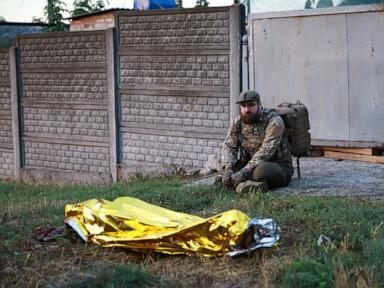
Seven people are dead following a coordinated wave of cross-border strikes, marking a grim escalation in the ongoing aerial war between Russian and Ukrainian forces. The latest barrage highlights a brutal new phase in the conflict, where infrastructure targeting and long-range drone and missile salvos have largely replaced static trench warfare as the primary mechanism of attrition.
The immediate casualty figures tell only part of the story. Beneath the immediate reports of intercepted projectiles and localized destruction lies a structural shift in how both militaries are prosecuting the air campaign. Air defense interceptors are depleting faster than replacement pipelines can sustain, forcing hard choices about which population centers and industrial nodes receive protection and which must absorb the blow.
The Anatomy of the New Campaign
For months, the trajectory of the aerial war settled into a predictable rhythm of nightly drone saturation followed by high-precision ballistic and cruise missile salvos. That rhythm has fractured. Both sides are now deploying larger packages designed explicitly to saturate multi-layered defense perimeters.
Russia has altered its targeting matrix. Rather than relying solely on wide-area bombardment of civilian energy grids, recent operations demonstrate an increased focus on secondary logistics hubs, rail junctions, and regional repair facilities intended to choke military mobility.
Ukraine has simultaneously adapted its posture. Domestic long-range strike capabilities, particularly modified uncrewed aerial vehicles and newly integrated Western-supplied systems, are reaching deeper into recognized Russian territory. Refineries, ammunition depots, and airfields hundreds of kilometers from the border are absorbing recurring hits. This strategy seeks to impose economic and political costs on the Russian domestic population while disrupting the supply lines feeding the front lines in the east and south.
The technological arms race driving these developments centers on electronic warfare and autonomous guidance. GPS spoofing and localized radio-frequency jamming have rendered standard guidance packages unreliable over large swathes of the combat zone. In response, engineering teams on both sides are rushing to field terminal optical guidance systems and machine-vision targeting that can operate independently of external satellite signals.
The Logistics Crisis of Air Defense
The central bottleneck governing the air war is no longer political will or tactical competence. It is supply.
Advanced surface-to-air missile systems rely on complex microelectronics, rocket motors, and seeker heads that cannot be manufactured overnight. Every time a salvo of incoming missiles targets a regional substation or military depot, defenders must expend interceptors whose replacement cost vastly exceeds the value of the incoming threat.
This asymmetry favors the attacker. Inexpensive loitering munitions force the deployment of expensive, scarce interceptor missiles. Over time, this dynamic creates a widening vulnerability gap.
Military analysts tracking the inventory levels point to a critical threshold. If the rate of expenditure continues to outpace international manufacturing output, defensive umbrellas will inevitably shrink. Certain regions that currently enjoy robust protection may find themselves exposed to unhindered high-altitude strikes.
The Cost on the Ground
Strategic calculations matter little to the communities living underneath the flight paths. In the border regions and frontline cities, daily life is dictated by the wail of air raid sirens and the distinct whine of combustion-engine drones overhead.
Emergency responders operate under immense strain. Arriving at a strike site within minutes of an impact exposes crews to secondary detonations and follow-up strikes designed to maximize casualties among first responders. Hospitals near the contact line are fortified with sandbags and concrete barriers, treating trauma patients while operating on emergency generator power.
The seven deaths reported in the latest exchanges are not statistical anomalies. They are the recurring cost of an air war that has scaled beyond tactical engagement zones and into the heart of civilian existence. As long as neither side possesses the decisive military advantage required to break the stalemate on the ground, the skies above will remain the primary arena for demonstrating resolve.
The trajectory points toward continued intensification. Neither command structure has signaled an appetite for de-escalation, and both are betting that technological refinements and industrial mobilization will tilt the balance before their own logistical thresholds give way.

