History is rarely written by the victors alone; it is written by those who hold the brush, and more dangerously, by those who are handed the scraper.
Stand in a room where an archive has been cleared out. The air smells different. It is thinner, stripped of the heavy, suffocating scent of damp paper, burning plastic, and dried ink. The shelves do not merely look empty; they look like missing teeth. When a hard drive is wiped, when a cellar floor is hosed down before the morning sun can catch the stains, when a digital ledger is scrubbed clean by remote command, something vital fractures in human memory. We are left staring at a blank space, told that nothing ever happened there because nothing remains to prove otherwise.
This is the quiet war being waged over the wreckage of modern conflict. It is not fought exclusively with shrapnel or high-altitude ordinances, but with bleach, administrative delays, and the deliberate dismantling of documentation.
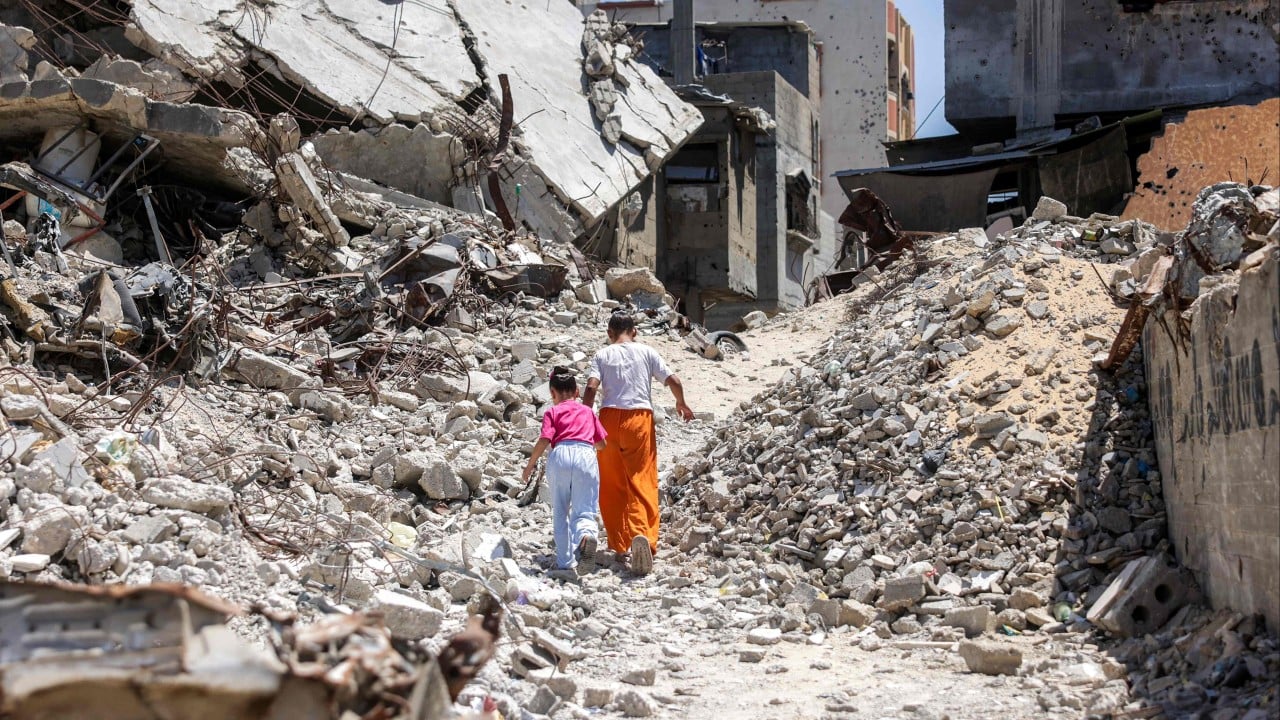
Consider a hypothetical investigator—let us call her Maya—sitting in a cramped, rented room in Geneva or Amman. Her desk is a graveyard of open browser tabs, encrypted messaging threads, and fragmented video files sent via spotty cellular connections from the ground. She is looking at a twenty-second clip of a residential street in Gaza that no longer exists. A crater occupies the space where a bakery stood forty-eight hours ago. A man is holding a scrap of blue fabric, searching through grey dust.
Maya’s job is to freeze that moment in amber. She must verify the metadata, cross-reference the shadows to determine the hour, and interview three independent sources to confirm that the baker’s family was inside. She is trying to build a fortress of fact against a tide of erasure.
Because the evidence of atrocity crimes does not simply disappear on its own. It is dismantled.
Recent warnings from United Nations human rights experts point to a terrifying acceleration in this digital and physical vanishing act. When international bodies are denied access, when independent journalists are barred from crossing borders, and when communication infrastructure is systematically taken offline, the primary casualty is not just real-time information. It is the future accountability of power. Without a chain of custody for trauma, legal frameworks starve.
To understand why this matters, we have to look past the sterile language of international law. We have to look at how trauma is processed by human societies. When a crime occurs, the immediate reaction is shock, followed quickly by the desperate gathering of proof. We collect the shell casings. We record the names of the missing. We take photographs of satellite coordinates before the bulldozers move in to flatten the rubble into a parking lot or a military staging ground.
If you remove the proof, you alter the narrative baseline.
Imagine a court case where the murder weapon dissolves into water before the jury can enter the room. Imagine a trial where the victim's body is unrecoverable, and the only record of their existence is a faded photograph that someone forgot to delete from a social media profile. That is the battlefield of modern documentation.
The mechanisms of removal are depressingly efficient. They rely on the sheer volume of daily catastrophe to overwhelm the archival capacity of human rights organizations. When hundreds of thousands of lives are upended simultaneously, the triage is brutal. Investigators must choose which testimonies to record and which video clips to save before cloud storage accounts are deleted or phones are crushed beneath tank treads. In that chaotic sorting process, entire chapters of human suffering slip through the cracks.
And then there is the deliberate obstruction. When experts are barred from entering sites where mass graves or structural demolitions have been reported, the clock starts ticking against justice. Rain washes away chemical residues. Wind scatters bone fragments. Earthmovers reshape the landscape under the guise of clearance or reconstruction. By the time an independent commission receives authorization to investigate—if it ever does—the crime scene has been sanitized into plausible deniability.
We have seen this script before. It is an ancient playbook, updated for the age of high-definition sensors and encrypted messaging apps. In past conflicts across the globe, the deliberate destruction of records was treated as a secondary byproduct of war. Today, it is frequently an operational objective. If you control the archive, you control the aftermath. If you can make the evidence ambiguous enough, long enough, the world grows tired of looking. Fatigue becomes amnesty.
This is where the invisible stakes reveal themselves. The fight to preserve evidence of atrocity crimes is not an academic exercise for lawyers in wood-paneled courtrooms. It is a desperate struggle to anchor human dignity against the forces that seek to render suffering weightless.
When a video is scrubbed from a platform, or a digital archive is corrupted by a targeted cyberattack, or an investigator is kept waiting at a border checkpoint until their visa expires, a small piece of human history is amputated. We lose the specific texture of an individual's final hours. We lose the precise coordinates of an unprovoked strike. We lose the names that turn statistics back into people.
The warning issued by United Nations experts is not merely a bureaucratic memo. It is an alarm bell ringing in an empty corridor. It tells us that while the cameras are turned away and the access is blocked, a massive, systematic effort is underway to ensure that tomorrow, when people ask what happened, the only answer they will find is silence.
We cannot afford to let that silence become permanent. Because once the evidence is gone, the narrative belongs entirely to those who broke the world in the first place.


