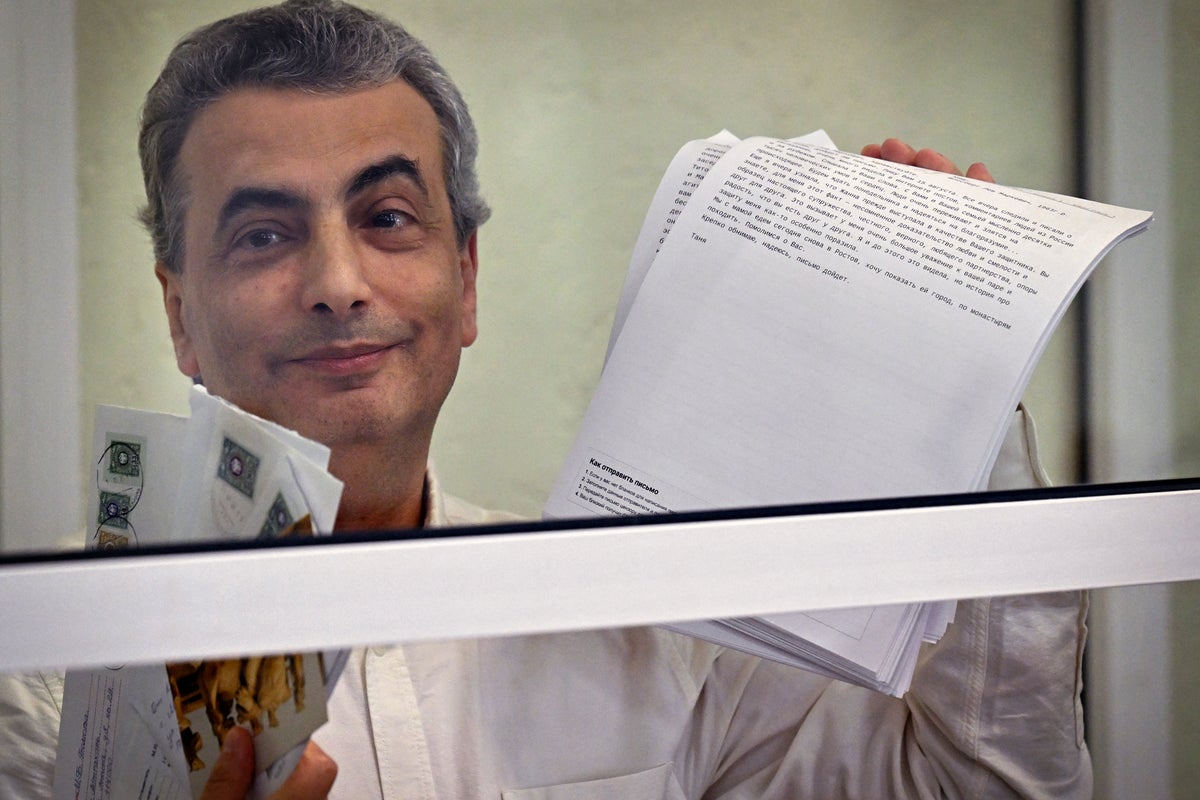
The iron fist of the Kremlin has once again closed around a voice of sanity. On August 17, 2026, a court in Pskov sentenced Lev Shlosberg, the deputy chairman of the Yabloko party, to 11 years and one month in a penal colony. This is not merely a legal verdict. It is a calculated removal of one of the final remaining obstacles to total ideological uniformity in Russian politics. Shlosberg’s crime was simple communication: he participated in an online debate and shared critical perspectives on the ongoing war in Ukraine.
In a system where the judiciary acts as a blunt instrument for the executive branch, these charges of "discrediting" the armed forces and spreading "false information" function as a catch-all net. The sentencing confirms a grim reality. Russia has successfully transitioned its internal political space from a contested field into a restricted theater where the cost of speech is measured in lost years of life.
The Anatomy of a Political Trial
Shlosberg, 63, is a veteran of the regional legislature in Pskov. His endurance as an opposition figure within Russia—rather than choosing exile—marked him as an anomaly. By remaining, he forced the state to deal with his dissent in open view. The state’s reaction, however, was not to engage in debate but to redefine the boundaries of criminal behavior.
The prosecution leaned heavily on a Telegram post. Specifically, Shlosberg shared a British tabloid front page that contrasted a photograph of a wounded woman with an image of President Vladimir Putin, titled "Her blood... his hands". This image became the evidence required to secure a decade-plus prison sentence.
This mechanism exposes the fragility of the current legal order in Moscow. If the state requires 11 years of incarceration to neutralize a single social media post and a request for a ceasefire, the Kremlin is admitting that its control of the narrative is not as absolute as its propaganda suggests. It views every individual spark of dissent as a contagion that must be extinguished with maximum force to prevent wider public contagion.
Why the Yabloko Party Matters
The Yabloko party holds a unique, perilous position as the only legally functioning political entity that openly opposes the war. Its very existence has served as a flimsy facade of democratic process. However, the events of August 2026 suggest that even this facade is being dismantled.
Last week, the Russian Supreme Court barred Yabloko from participating in the upcoming September legislative elections. The timing is too coordinated to be coincidental. By first removing the party’s ability to field candidates and then imprisoning one of its most prominent leaders, the state is effectively erasing the only institutional outlet for anti-war sentiment.
A hypothetical scenario helps clarify the strategic intent here. Consider a town where a small group consistently protests the destruction of a local landmark. The authorities do not ban the group; they simply wait until the protests grow, then charge the leader with "vandalizing the reputation" of the landmark. By the time the leader is removed, the other citizens—seeing the outcome—self-censor. The result is a town that appears to love the destruction of its own landmark, not because the people changed their minds, but because the risk of disagreement became a life-altering event.
The Cost of Silence and the Future of Dissent
In his final address to the court, Shlosberg remarked that Russia has traveled "a path from hopes for freedom to the almost complete destruction of human and civil rights and freedoms" over the last thirty years. This is the voice of a man who watched the slow decay of his country’s institutions from the inside.
His prediction that the country will "shudder" once the true death toll of the war is revealed reflects a deep-seated belief that the state cannot suppress the truth indefinitely. Yet, for now, the state is winning the tactical battle. Most of the prominent opposition figures are either dead, exiled, or sitting in cells.
This leaves a void. When organized political opposition is pulverized into non-existence, the anger that remains does not simply vanish. It becomes atomized and unpredictable. Historians often note that regimes which prioritize total order through fear eventually lose the ability to read the temperature of their own population. By silencing figures like Shlosberg, the government may feel safer in the short term, but it is simultaneously insulating itself from the feedback loops necessary for survival.
The courtroom in Pskov was filled with the usual trappings of justice—judges, bailiffs, and legal briefs. But the outcome was decided long before the proceedings began. Shlosberg’s parting words to the judge, "I feel sorry for you, Your Honor, you have to live with this," capture the exhaustion of a society where the law has been entirely subsumed by the state.
The tragedy of this trial is not just the loss of one man’s freedom. It is the formal closure of another window through which Russians might have sought a peaceful exit from a conflict that continues to alter the trajectory of the nation. As the September elections approach, the absence of any alternative voice will be deafening. The state has its total control, but in achieving it, it has hollowed out the very structures it claims to represent. Now, there is only the war, the laws that forbid its questioning, and the cold reality of the prison cells awaiting those who dare to speak.


