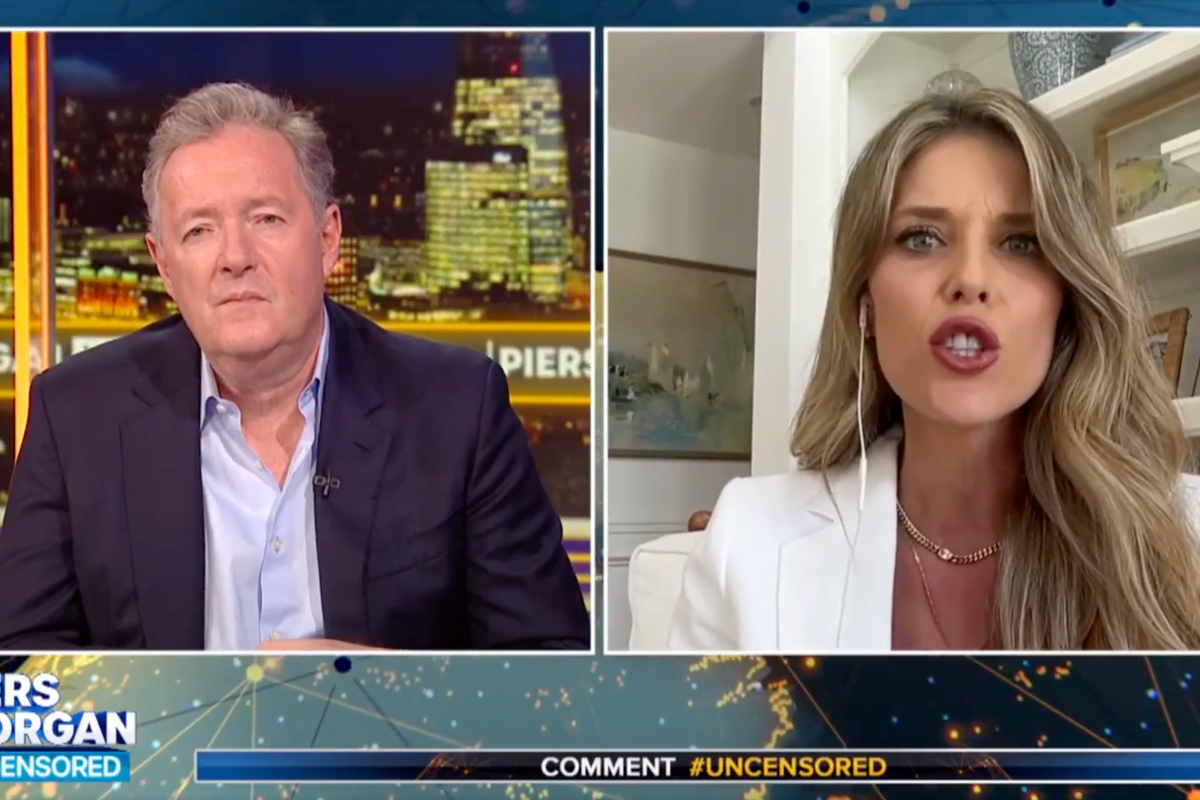
Political movements operate on a lifecycle of brand equity, where the delta between "insurgent energy" and "institutional capture" determines the rate of decay. When high-profile loyalists begin publicly declaring the MAGA movement "deader than dead," they are not merely expressing personal disillusionment; they are signaling a breach in the movement’s primary feedback loop. This phenomenon represents the transition from a growth phase, defined by low-cost high-impact disruption, to a maintenance phase, characterized by diminishing returns and high internal friction.
To understand why the "MAGA" label is facing an existential valuation crisis, one must deconstruct the mechanics of its decline through the lens of political capital and social signaling.
The Three Pillars of Brand Dilution
The degradation of a political movement follows a predictable path of entropy when it fails to solve for three critical variables: utility, exclusivity, and ideological consistency.
- Utility Erosion: In its 2016 iteration, MAGA functioned as a high-utility vehicle for "outsider" entry into the GOP power structure. For a loyalist, the movement offered a clear path to influence that bypassed traditional meritocratic or donor-based gatekeeping. When the movement fails to deliver legislative or executive wins that benefit its sub-leaders—or when the legal costs of association outweigh the social benefits—the utility drops to zero.
- Exclusivity Collapse: As a movement scales, the "entry price" (in terms of ideological purity or personal risk) often fluctuates. When the movement becomes a prerequisite for any GOP candidate, it loses its status as an elite vanguard and becomes a commodity. For early adopters and high-tier loyalists, this commodification signals that their "early-in" status no longer yields a premium.
- Ideological Fragmentation: Without a centralized, codified policy platform, the movement relies entirely on the charismatic authority of a single individual. This creates a "single point of failure" system. If the leader’s rhetoric shifts or if the leader’s personal legal battles begin to consume the movement's collective resources, the constituent parts (the voters and the surrogates) begin to prioritize their own survival over the movement’s brand.
The Cost Function of Loyalty
Political loyalty is rarely an unconditional sentiment; it is a calculated investment of social and professional capital. The recent departures of formerly "all-in" loyalists can be quantified as a rational response to a shifting cost-benefit ratio.
The Cost of Association includes:
- Legal Liability: The increasing frequency of subpoenas, depositions, and legal fees associated with "stop the steal" efforts or January 6th-related investigations.
- Reputational Discounting: The inability to secure post-political employment in the private sector or mainstream media because the MAGA brand has become radioactive to corporate stakeholders.
- Opportunity Cost: The time spent defending the movement's past actions rather than building a viable future political platform.
When a loyalist says the movement is "dead," they are effectively stating that the Net Present Value (NPV) of their association with Donald Trump has turned negative. They are "selling" their position before the brand reaches a floor they cannot afford.
The Mechanism of the "Post-MAGA" Pivot
When an insider breaks with the movement, they typically utilize a specific rhetorical framework to preserve their own credibility while distancing themselves from the sinking asset. This pivot is rarely about a change in heart regarding policy; it is about a change in strategy regarding power.
The pivot follows a three-step sequence:
- The Lament of Purity: The defector claims the movement "was" great and had the right ideas, but has been "hijacked" or has "lost its way." This allows them to keep the voters while discarding the leader.
- The Pivot to Competence: They argue that the ideas of MAGA are still valid, but the execution has become terminally flawed. They shift the focus from "energy" to "electability."
- The New Vessel: They begin identifying a new, more stable vessel (such as a younger governor or a more disciplined senator) who can carry the "populist" mantle without the "chaotic" overhead.
This sequence is a classic "de-leveraging" event. The defector is attempting to move their political capital from a high-volatility asset (Trump) to a more stable, diversified fund (the broader populist-conservative movement).
Structural Bottlenecks in the MAGA Ecosystem
The movement faces several structural bottlenecks that accelerate its decay, regardless of the individual actions of its leader.
The Financial Funnel Problem
Large-scale political movements require a broad donor base to sustain long-term operations. However, the MAGA ecosystem has increasingly become a funnel where small-dollar donations are diverted away from state-level party infrastructure and toward individual legal defense funds. This creates a starvation effect for the local GOP organizations that are necessary to win general elections. Without a functional "ground game" funded by the movement, the movement’s ability to turn out voters decreases, leading to the "dead" status observed by insiders.
The Intellectual Stagnation
A movement that relies on grievance rather than a forward-looking policy agenda eventually runs out of novel content. In the 2016 cycle, the movement offered fresh critiques of globalization and trade. By the current cycle, the rhetoric has largely settled into a repetitive loop of election denialism and personal grievances. For the professional political class, this stagnation is a signal of a "zombie brand"—one that still has name recognition but no longer generates new value or attracts new demographics.
The Hypothesis of "Voter-Leader Decoupling"
A critical question for any analyst is whether the "death" of the MAGA movement among the elite loyalist class correlates to a death among the base.
Current data suggests a decoupling. While the strategist class (the consultants, the former staffers, and the media pundits) may see the movement as functionally insolvent, the base often remains tethered to the brand because they lack a viable alternative that speaks to their cultural anxieties. This creates a dangerous "hollow shell" effect: the movement has millions of followers but no competent captains to steer them toward legislative or executive power.
This decoupling leads to the "Primary Trap." Candidates who win primaries by leaning into the "dead" movement’s rhetoric find themselves unmarketable in a general election. The movement becomes a parasite on the party: it is strong enough to kill "moderate" or "traditional" candidates in the primary, but too weak to defeat the opposition in the general.
The Strategic Play: Controlled Demolition vs. Total Collapse
For the Republican Party, the options have narrowed to two paths.
The first is Controlled Demolition. This involves a coordinated effort by donors and high-level officials to systematically underfund MAGA-aligned candidates while simultaneously "adopting" their most popular policy points (e.g., border security, anti-interventionism) into a more disciplined framework. This is what the "defectors" are currently attempting to facilitate.
The second is Total Collapse. This occurs if the movement remains the dominant force through the next election cycle and suffers a catastrophic loss across multiple levels of government. In this scenario, the "MAGA" brand is not just dead; it becomes the cause of a wider party schism, leading to the potential formation of a third party or a decade of electoral irrelevance for the GOP.
The declaration that "MAGA is deader than dead" is the first volley in the Controlled Demolition strategy. It is an attempt to de-risk the party by signaling to donors and voters that the "smart money" is moving elsewhere.
To capitalize on this shift, strategic actors should prioritize the "populism with a plan" model. This requires moving beyond the charismatic authority of one individual and building a decentralized network of leaders who can message the core grievances of the MAGA base without the systemic risks associated with its current leadership. The movement is not being defeated from the outside; it is being liquidated from the inside by those who no longer see a path to a positive return on investment.
Build your political or professional strategy on the assumption that the MAGA label has entered its terminal "extraction" phase. The brand's equity is being harvested by its remaining leaders for immediate short-term gains (legal fees and media appearances), leaving the long-term infrastructure to rot. Transition your focus to the "Successor Populism" models that prioritize institutional durability and executive competence over brand-centric disruption.