The dust in Kathmandu doesn’t just settle; it clings. It finds the creases of your clothes and the back of your throat, a constant reminder of a city that has spent decades stuck in a loop of broken promises and crumbling infrastructure. For years, the people here looked at the gleaming white peaks of the Himalayas and then down at the trash-strewn Bagmati River, wondering if the gap between their reality and their potential would ever close.
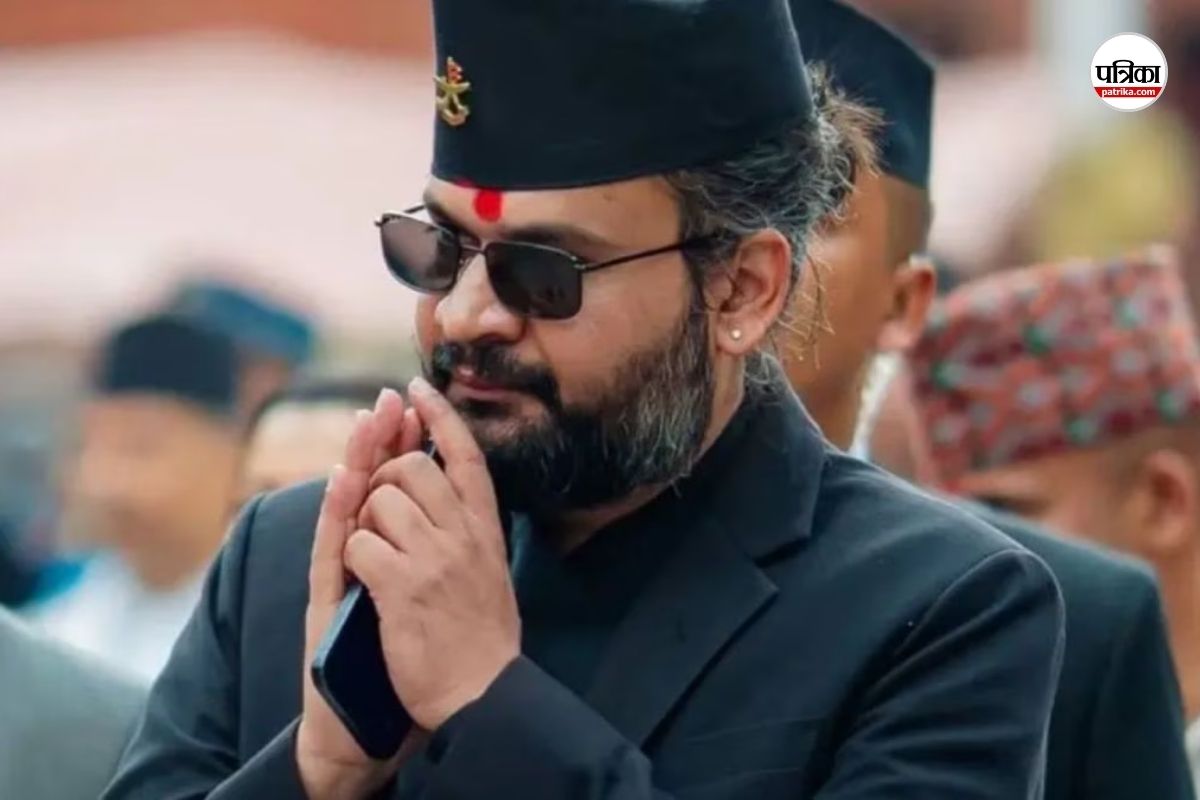
Then came a man in dark aviators. Read more on a similar subject: this related article.
Balendra Shah, known to the world as Balen, did not look like a savior. He looked like a rapper—mostly because he was one. He was a structural engineer by trade, a lyricist by choice, and a nightmare for the established political elite by sheer accident of ambition. At 32, he didn't just win the mayoral race of Nepal’s capital; he decimated a system that had been fossilized since before he was born.
Now, at 35, the whispers have turned into a roar. The question is no longer whether a young man can run a city. It is whether he is about to become the youngest head of government in the world. Additional reporting by Al Jazeera highlights related perspectives on this issue.
The Architect of Unrest
Political change in Nepal used to follow a predictable script. You joined a student wing of a major party in your teens, spent twenty years shouting slogans, climbed the greasy pole of bureaucracy, and eventually, if you played your cards right, you got a seat at the table. It was a closed loop.
Balen broke the circuit.
He didn't have a party. He had a vision and a TikTok account. But to dismiss him as a social media phenomenon is to fundamentally misunderstand why the ground is shifting beneath the feet of Nepal’s aging leaders. Balen’s rise isn't about catchy tunes or viral clips. It is about the visceral, frustrated energy of a generation that is tired of watching its brightest minds flee to Dubai or Qatar to build other people's dreams because their own country feels like a dead end.
Imagine a young woman named Sunita. She is twenty-four, has a degree in information technology, and spends four hours a day in Kathmandu traffic, breathing in leaded fumes. She watches the news and sees the same three men—Sher Bahadur Deuba, KP Sharma Oli, and Pushpa Kamal Dahal—shuffling power back and forth like a tired deck of cards. To Sunita, Balen isn't just a politician. He is a proxy for her own competence. He is what happens when someone who actually knows how to build a bridge is given the keys to the city.
The Concrete Reality of Change
When Balen took office, he didn't start with grand ideological speeches. He started with the garbage.
Kathmandu’s waste management was a decades-old wound, a source of endless legal battles and public health crises. Balen went to the landfill sites himself. He talked to the locals who were blocking the trucks. He didn't send a deputy; he showed up in his signature glasses, looking less like a dignitary and more like a foreman. He treated the problem like an engineering puzzle rather than a political bargaining chip.
Then came the bulldozers.
For years, powerful interests had encroached on public land, building shops and homes over the city’s ancient "tukucha" streams and public footpaths. The political establishment looked the other way because those interests funded their campaigns. Balen didn't. He ordered the demolition of illegal structures, regardless of who owned them.
The backlash was instant. The elite called him a populist, a tyrant, a man who didn't respect the "delicate balance" of Nepali governance. But the people on the street? They cheered. They saw, for the first time in their lives, that the law could apply to the man in the mansion just as easily as the man on the motorbike.
The Invisible Stakes of a Youth Quake
The math of Nepal is changing. More than half the population is under the age of 30. This is a demographic ticking time bomb for the old guard. The traditional parties rely on patronage—giving jobs to loyalists and keeping the masses dependent. But you cannot patronize a generation that sees the world through a smartphone. They can see how Singapore works. They can see the transformation of Indian infrastructure. They are no longer content with "at least we aren't at war."
The stakes extend far beyond the borders of this landlocked nation. Nepal sits like a tectonic plate between two giants: India and China. For decades, these powers have played a high-stakes game of influence in Kathmandu, backing various factions to ensure their own security interests. The "old men" of Nepali politics have become experts at playing both sides, often at the expense of long-term national stability.
Balen represents a terrifying wildcard for regional geopolitics. He doesn't belong to the old school of diplomacy. He is fiercely nationalistic but in a way that feels modern and pragmatic rather than xenophobic. If he moves from the mayor’s office to the Prime Minister’s seat, the traditional corridors of power in Delhi and Beijing will have to learn a new language. They won't be dealing with a career politician who can be bought with a prestige project or a secret deal. They will be dealing with a man whose primary mandate comes from a base that demands transparency.
The Ghost in the Machine
It is easy to romanticize the rebel. It is harder to watch him govern.
Balen’s critics point to his "my way or the highway" approach as a sign of looming authoritarianism. They argue that he bypasses the consultative processes that are the hallmark of a healthy democracy. There is a tension there—a friction between the need for speed in a collapsing city and the need for consensus in a fragile republic.
Consider the hypothetical case of a small business owner whose shop was partially demolished because it sat on an ancient canal path. To the city, he is an obstacle to progress. To his family, he is the sole breadwinner who followed the rules as they existed for thirty years. Balen’s rise forces us to ask: how much collateral damage is acceptable in the pursuit of a functioning state?
This is the vulnerability of the movement. It is built on the shoulders of one man's perceived incorruptibility. If he stumbles, or if the "Balen effect" fails to produce a wider bench of capable leaders, the disillusionment that follows will be deeper than anything Nepal has seen before.
A New Kind of Power
The path to the Prime Minister’s office is paved with more than just good intentions and popular support. It requires a majority in Parliament, a feat nearly impossible for an independent in Nepal’s current system. However, the 2022 elections showed a massive surge for the Rastriya Swatantra Party (RSP), a group of young professionals and media figures who, like Balen, are fed up with the status quo.
The alignment is inevitable.
We are witnessing the birth of a third pole in Nepali politics. It is a pole defined by technical competence, digital literacy, and a refusal to honor the "debts" of the past. When Balen speaks, he doesn't talk about the revolution of 1990 or the civil war of the 2000s. He talks about the drainage system. He talks about digital governance. He talks about the fact that a 35-year-old in Nepal should be able to start a business without paying a bribe.
This is the human element often lost in the headlines about "the world's youngest leader." It isn't about the age on his passport. It is about the age of his ideas.
The standard political rhetoric in the region is a thick, syrupy soup of nostalgia and grievance. Balen is a shot of espresso. It’s bitter, it’s jarring, and it wakes you up.
Nepal is no longer just a picturesque buffer state or a trekking destination. It is a laboratory for what happens when the digital generation finally loses its patience. The "youth quake" isn't coming; it is already here, wearing a black hoodie and checking a blueprint.
The aviators stay on. The bulldozers keep moving. The world is watching to see if a rapper-engineer can actually rebuild a nation, or if the gravity of the old system will eventually pull him back down to the dust. But for now, for the first time in a long time, the people of Kathmandu are looking at the mountains and the streets, and they see the same thing: a way forward.
One man. One city. One massive, improbable hope.
Would you like me to analyze the specific policy shifts Balen Shah has implemented in Kathmandu's municipal governance?