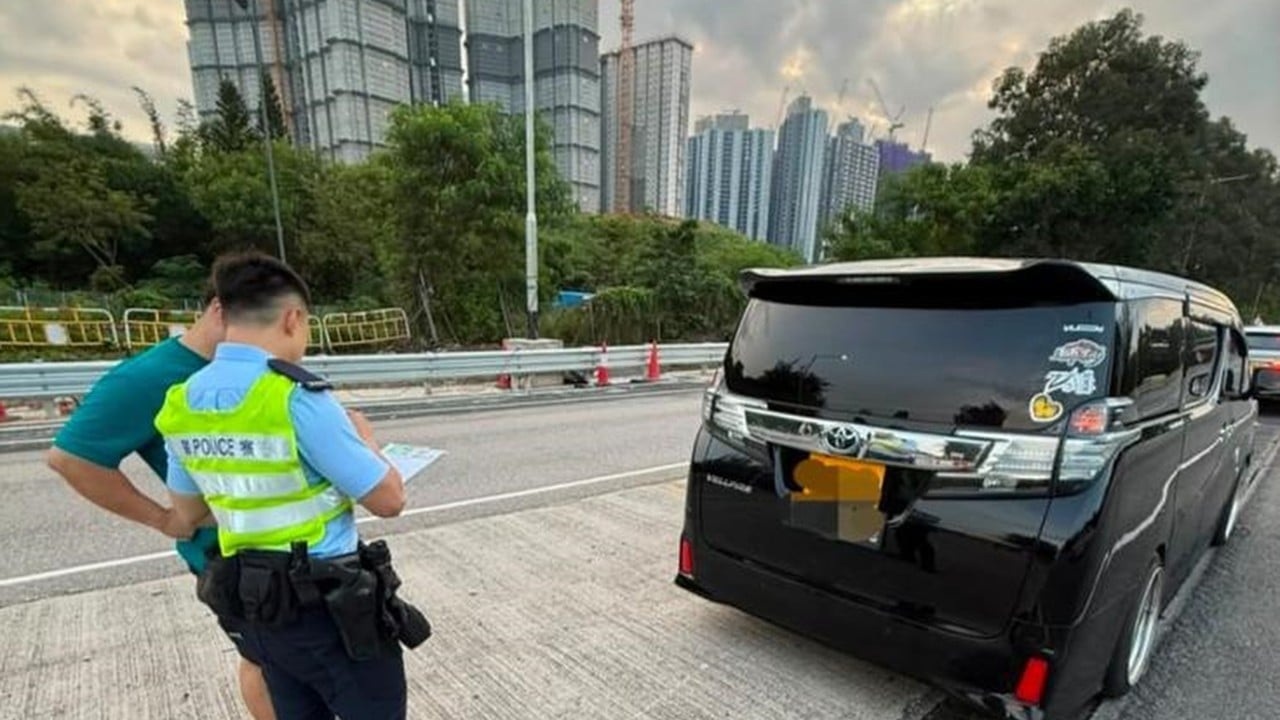
Law enforcement crackdowns on urban roadways operate on an intrinsic paradox: high-visibility tactical sweeps yield immediate operational statistics, yet rarely shift the baseline probability of severe traffic infractions. When the Hong Kong Police Force arrested nine men aged 25 to 48 across East and West Kowloon for dangerous driving and illegal street racing, the operation captured immediate media attention. Officers deployed unmarked patrol units across arterial corridors including Tai Po Road, Lung Cheung Road, Ching Cheung Road, and the West Kowloon Highway, leveraging digital radar arrays to identify 289 speeding vehicles alongside vehicle impoundments for unauthorized modifications.
Analyzing this intervention through an operational risk framework reveals that short-term enforcement spikes address the symptoms of highway volatility without re-architecting the system dynamics that generate reckless driving incentives. For an alternative view, check out: this related article.
The Tri-Factor Incentive Structure of Urban Speed Offenses
Excessive speeding and illegal street racing occur when three structural conditions converge within an urban road network: predictable enforcement vacuums, high vehicle capability margins, and asymmetric risk-reward ratios for offenders.
- Geographic Isolation of Arterial Corridors: Urban highways like the West Kowloon Highway and Tseung Kwan O Tunnel Road feature long straightaways with limited ingress and egress points. When static enforcement is absent, these segments function as low-risk speed vectors for performance vehicles.
- Capital Disparity in Financial Penalties: For high-net-worth operators, fixed monetary fines represent an affordable friction cost rather than an effective deterrent. The financial penalty fails to adjust dynamically based on vehicle valuation or income, reducing its marginal disincentive.
- The Enforcement Window Gap: Periodic, highly publicized enforcement campaigns signal to repeat offenders that surveillance intensity varies cyclically. Peak enforcement periods are systematically followed by operational lulls, encouraging tactical migration rather than behavioral modification.
In the Kowloon enforcement sweep, a vehicle was clocked at nearly 170 km/h in a 70 km/h zone on Tseung Kwan O Tunnel Road—a speed delta of +142%. A deviation of this magnitude indicates that the driver perceived the immediate likelihood of interception as near zero, demonstrating a complete breakdown of preventive deterrence along that specific segment. Related reporting on the subject has been published by BBC News.
Mechanics of Mechanical Non-Compliance
Vehicle modifications intercepted during enforcement operations—including illegal exhaust modifications, non-compliant rear spoilers, aftermarket steering apparatuses, and compromised structural glass—represent a distinct category of operational risk. These alterations violate the Road Traffic (Construction and Maintenance of Vehicles) Regulations, directly disrupting vehicle dynamics.
[ Unapproved Structural Alterations ]
                 │
                 ├──► Aerodynamic Instability (Unbalanced Downforce)
                 ├──► Reduced Reaction Margin (Non-Standard Controls)
                 └──► Mechanical Distraction (High-Decibel Exhaust Systems)
                                 │
                                 ▼
              [ Compromised System Control Threshold ]
                                 │
                                 ▼
             [ Exponentially Higher Accident Severity ]
When an modified vehicle travels at elevated velocity, aftermarket aerodynamic components that lack aerodynamic validation create unbalanced downforce. This structural imbalance reduces tire contact patch consistency during high-speed directional changes, drastically reducing the driver's margin for error. Mechanical non-compliance converts a standard handling recovery maneuver into a total loss of vehicle control.
The Limitation of Spot Enforcement Models
The current traffic mitigation framework relies primarily on episodic intervention: targeted sweeps, mobile speed radar checkpoints, and spot vehicle inspections. While these tactics generate measurable output—such as 289 digital radar summonses issued in a single regional push—their long-term impact degrades quickly across time and space.
+--------------------------+---------------------------------+----------------------------------+
| Intervention Component   | Operational Mechanism           | Deterrence Failure Mode          |
+--------------------------+---------------------------------+----------------------------------+
| Mobile Radar Checkpoints | Intermittent speed capture     | Localized spatial displacement   |
| Unmarked Patrol Units    | Tactical surprise interception  | Low baseline vehicle density     |
| Fixed Summonses          | Financial penalty assessment    | Insufficient marginal cost       |
| Mechanical Impoundment   | Asset seizure for inspection    | Long processing lag times        |
+--------------------------+---------------------------------+----------------------------------+
The fundamental bottleneck of episodic enforcement is spatial displacement. Drivers equipped with real-time crowd-sourced navigation apps and radar detection systems adapt rapidly. When enforcement density rises on primary arteries like Lung Cheung Road, high-risk driving behaviors migrate to secondary collector roads or adjacent districts where police presence remains low.
Structural Re-engineering for Permanent Risk Mitigation
To permanently depress dangerous driving metrics, municipal traffic policy must shift from periodic tactical sweeps to continuous structural deterrence.
First, transition static speed enforcement to Point-to-Point (P2P) average speed camera networks across all major arterial highways. Unlike single-point radar traps, which drivers bypass by braking briefly before accelerating, average speed enforcement calculates velocity over an entire corridor. This eliminates localized speed spikes by making high-velocity travel mathematically indefensible along managed routes.
Second, integrate vehicle registration databases directly with automated inspection networks. Vehicles cited for non-compliant structural or mechanical modifications should face mandatory digital telemetry logging and immediate suspension of road licenses until re-certified by accredited facilities. Removing the lag between violation identification and asset grounding increases the operational cost of illegal vehicle modifications.
Third, align financial penalties for extreme reckless driving directly with vehicle equity or income-adjusted metrics. When the cost of a dangerous driving violation scales dynamically with the value of the assets involved, the financial deterrent remains constant across all socio-economic brackets, eliminating the buffer enjoyed by high-income offenders.