Brussels is currently gripped by a familiar, desperate rhythm. As conflict in the Middle East threatens to spill over into the vital shipping lanes of the Persian Gulf, European officials are once again reaching for the emergency levers of price caps and subsidy schemes. However, these mechanisms are increasingly seen as temporary Band-Aids for a structural wound that has never properly healed. The reality is that Europe’s attempt to decouple from Russian gas has left it dangerously exposed to a different kind of volatility, one where a single spark in the Levant can send industrial costs in Germany or Italy into a tailspin.
This is not just a story about supply lines. It is a story about a continent that traded one form of energy dependency for another, more expensive, and less predictable alternative. While the immediate concern is the spike in Brent Crude or Dutch TTF gas futures, the underlying crisis involves the hollowing out of European industry as energy-intensive businesses flee toward cheaper jurisdictions. If you found value in this article, you might want to check out: this related article.
The Illusion of Energy Security
Since 2022, the European Union has congratulated itself on its rapid transition away from Siberian pipelines. The continent survived two winters without massive blackouts, largely by outbidding developing nations for Liquefied Natural Gas (LNG) shipments. But this victory was pyrrhic. By moving from long-term, fixed-pipe contracts to the global spot market, Europe hitched its economic wagon to the most volatile pricing mechanism on earth.
When tensions rise in the Middle East, the "risk premium" is no longer a theoretical calculation for oil traders. It becomes an immediate surcharge on every kilowatt-hour used by a glass factory in Bavaria. The EU’s current scramble to contain costs is essentially an admission that the market cannot provide the stability that modern industrial economies require. For another angle on this event, refer to the latest coverage from Forbes.
The mechanism used to calm the markets—the Market Correction Mechanism—is a blunt instrument. It triggers only when prices hit extremes that have already done significant damage to the manufacturing sector. By the time the cap is active, the inflationary pressure has already seeped into the supply chain, raising the cost of everything from bread to ball bearings.
The Strait of Hormuz Shadow
While much of the media focus remains on the Red Sea and Suez Canal disruptions, the true existential threat lies further east. The Strait of Hormuz carries roughly 20% of the world’s liquid energy. If the conflict expands to include a blockade or significant military friction in these waters, no amount of European "emergency planning" will suffice.
Europe’s reliance on Qatari LNG has grown exponentially. Qatar is now a foundational pillar of the EU’s energy strategy, yet every cubic meter of that gas must pass through a narrow maritime choke point. Unlike the United States, which is now a net exporter of energy, or China, which maintains a massive strategic coal reserve and an aggressive nuclear build-out, Europe remains a price-taker on the global stage.
The Cost of Displacement
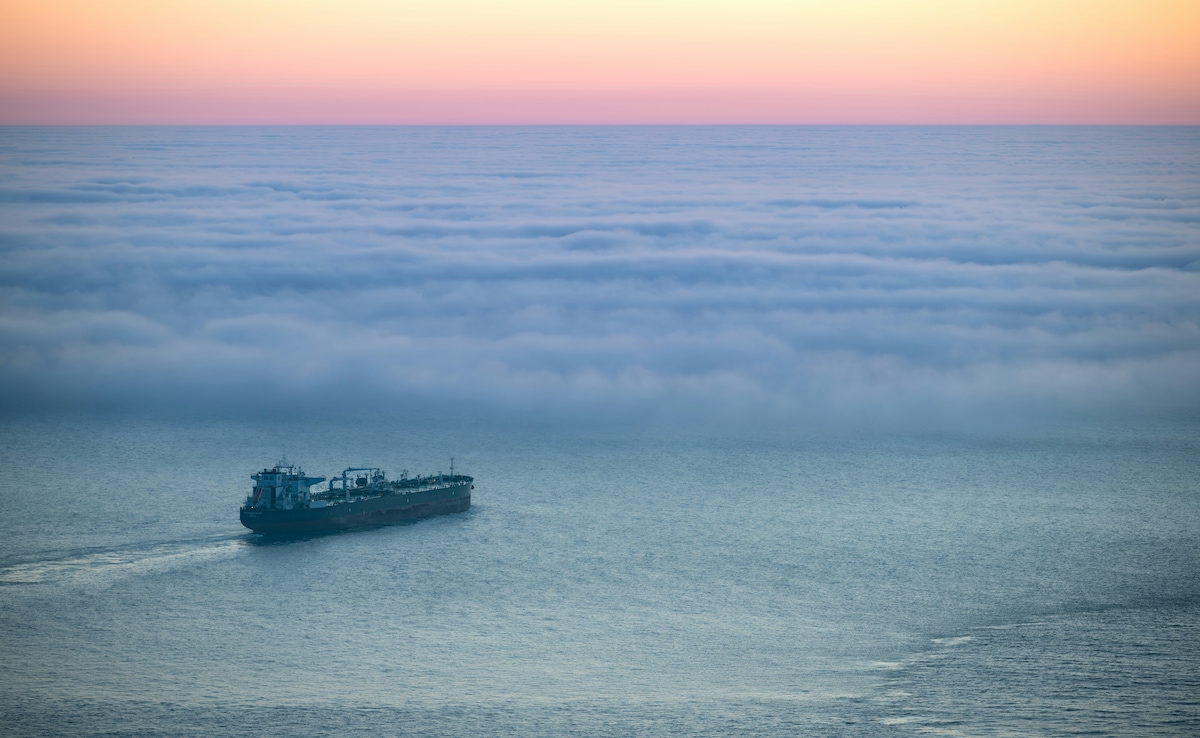
Consider the logistical math. When tankers are forced to divert around the Cape of Good Hope to avoid conflict zones, it adds roughly 10 to 14 days to the journey. This doesn't just increase fuel costs for the ship; it ties up the global fleet. Fewer ships available means higher charter rates. For a continent that now relies on a constant "bridge" of ships rather than the steady flow of a pipe, this latency is a silent killer of economic growth.
- Shipping Rates: Spot rates for LNG carriers can jump by $50,000 a day during periods of high tension.
- Insurance Premiums: War-risk insurance for vessels in the Eastern Mediterranean or Gulf regions has, in some cases, risen tenfold.
- Inventory Lag: Companies are forced to hold more stock to hedge against delays, tying up precious capital.
The Quiet Deindustrialization of the Heartland
The most damning evidence of the EU's failed energy containment strategy isn't found in Brussels' press releases, but in the industrial corridors of the Rhine. Large-scale chemical production, steel smelting, and automotive manufacturing are retreating. They are not just pausing production; they are relocating.
When energy costs in the United States or the Middle East are a fraction of those in Europe, the "green transition" becomes a secondary concern for a CEO responsible to shareholders. The EU’s high energy prices act as an accidental export tax on its own goods. If a German firm pays three times more for electricity than its American competitor, the outcome is a mathematical certainty.
European leaders often talk about "strategic autonomy," but you cannot be autonomous if you cannot power your own factories at a competitive rate. The reliance on the spot market means that a drone strike 3,000 miles away can effectively shut down a factory in Poland. This isn't just a scramble for costs; it is a fight for the very survival of the European middle class, which is built on the back of a productive industrial base.
Why the Current Subsidies Are Failing
The EU's response has largely focused on consumer protection—capping bills for households to prevent social unrest. While politically necessary, this does nothing to address the supply-side catastrophe.
- Market Distortion: Subsidies keep demand artificially high. When the government pays part of the bill, there is less incentive for massive efficiency overhauls, which are the only long-term solution.
- Fiscal Strain: National budgets are being pushed to the limit. Countries like Germany, with strict debt brakes, are finding it increasingly difficult to fund both the energy transition and the immediate cost-of-living bailouts.
- The LNG Premium: Europe is now in a permanent bidding war with Asia. Every time Japan or South Korea sees a cold snap, or China’s industrial activity ticks upward, the price for Europe rises.
The Middle East conflict exacerbates this because it forces a "fear premium" into the price of LNG, even if the physical supply hasn't been cut yet. Traders trade on what might happen, and in the current geopolitical climate, the "what might" is terrifying.
The Missing Pieces of the Strategy
There is a glaring absence in the EU’s frantic meetings: a serious discussion about the return of "dirty" or "difficult" energy. While the long-term goal is a decarbonized grid, the medium-term reality requires a backbone of reliable, baseload power. The premature decommissioning of nuclear plants in some member states and the slow permitting process for new wind and solar projects have created a "gap" that is currently being filled by the most expensive gas on the planet.
Furthermore, the EU has failed to coordinate a true single buyer strategy. Individual nations still compete against each other for the same cargoes, driving the price up for everyone. It is a fragmented approach to a continental problem.
The Middle East crisis is merely the catalyst revealing these deep-seated vulnerabilities. Even if peace were declared tomorrow, the structural cost of European energy would remain higher than that of its global rivals. The "scramble" we see now is the sound of a system hitting its limits.
The Hard Choice
Europe stands at a crossroads that no one wants to acknowledge. To lower costs and secure the industrial base, the Union must either accept a much longer timeline for its green goals—utilizing more domestic coal or nuclear—or it must find a way to secure massive, long-term, fixed-price contracts that look very much like the ones they used to have with Russia, just with different partners.
The current path of high-price volatility and reactive subsidies is unsustainable. It drains the treasury, kills the industry, and leaves the populace in a state of perpetual anxiety. If the Middle East conflict widens, the scramble will turn into a rout.
European policymakers need to stop treating energy as a market commodity that can be tweaked with regulations and start treating it as a national security priority that requires hard, often unpopular, infrastructure decisions. The era of cheap, easy energy is over. The era of managing the decline of European industry has begun, unless the continent can find a way to decouple its destiny from the volatile politics of the Middle East.
Demand a map of every major energy infrastructure project currently stalled by local bureaucracy and force a fast-track approval process within thirty days.