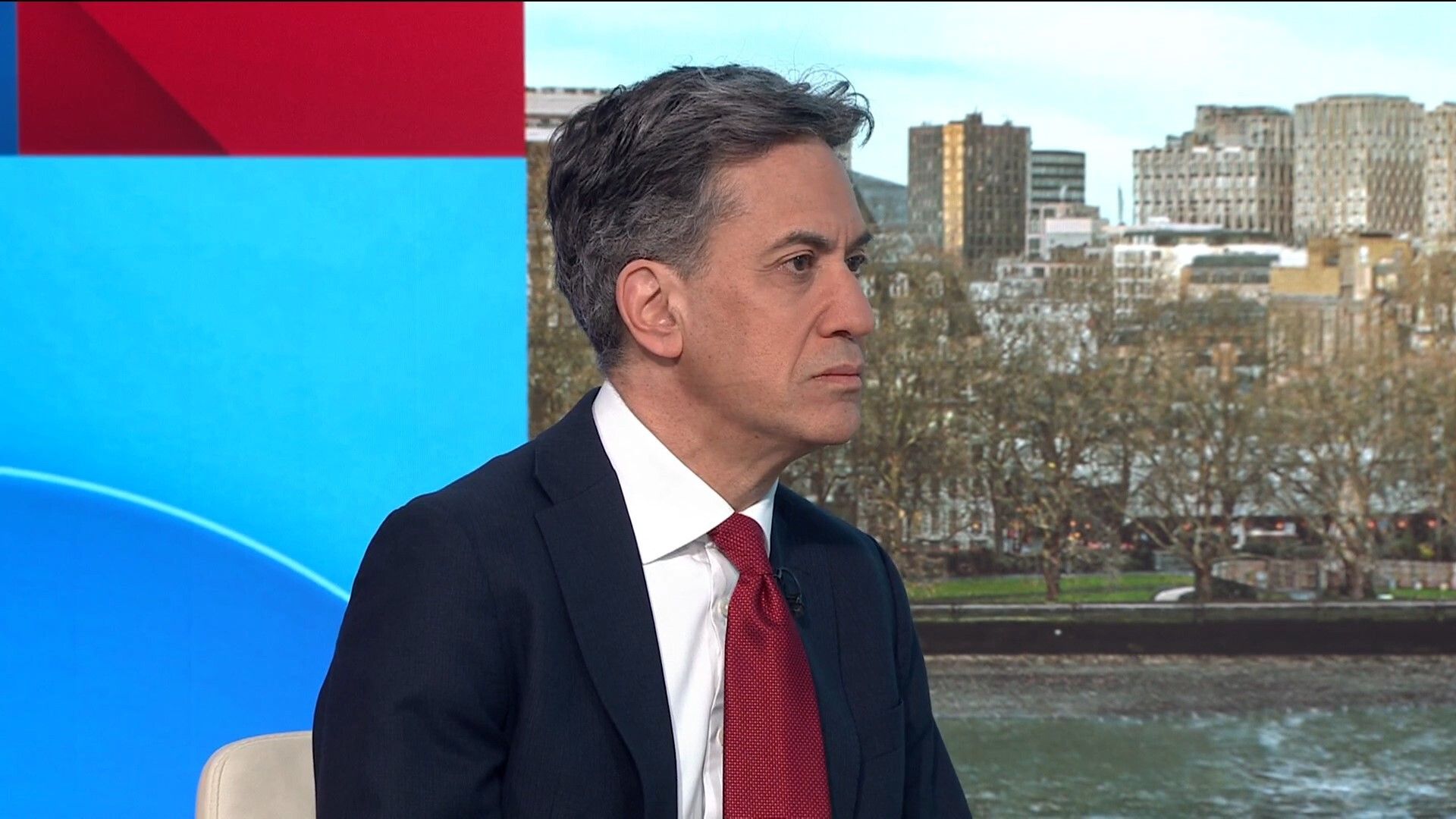
You've heard the soundbites. Ed Miliband stands at a podium, promises to "crush" energy bills, and then leaves everyone wondering if he’s actually got a map or just a compass pointing vaguely North. The criticism usually follows a predictable script: "Labour says they’ll help, but won't say how."
Well, as of March 2026, the "how" is finally showing up in the fine print. While the headlines are still busy shouting about Middle Eastern oil shocks and the "fossil-fuel rollercoaster," the government has quietly started pulling the levers of a massive structural shift. It’s not just about a few quid off your direct debit this month. It’s a complete rewiring of how the UK pays for light and heat.
If you’re tired of the vague promises, here is the actual, documented strategy that’s moving the needle.
Scrapping the Levies and Rebalancing the Bill
For years, your electricity bill hasn't just been for electricity. It’s been a dumping ground for social and environmental "green levies." It’s a regressive system. If you’re a low-income family in a drafty terrace, you pay a higher percentage of your income into these schemes than a millionaire in a mansion.
From April 1, 2026, the government is finally killing the Energy Company Obligation (ECO) levy on bills. Instead of being a hidden tax on your unit rate, 75% of the Renewables Obligation costs are moving over to general taxation.
What does that actually mean for your wallet?
- A £150 reduction for the average dual-fuel household, baked directly into the price cap.
- Immediate relief that doesn't depend on you switching suppliers or buying a heat pump.
- Fairer distribution, as wealthier taxpayers shoulder the burden of the green transition rather than the person just trying to keep the kettle on.
This is a massive shift in fiscal policy. It’s the kind of "boring" technical change that actually moves the needle on poverty, even if it doesn't make for a sexy campaign poster.
The Balcony Solar Revolution
One of the biggest gaps in energy policy has always been renters. If you don't own your roof, you’re stuck. You can’t install solar. You can’t insulate the walls. You’re at the mercy of a landlord who probably doesn't care about your heating bill.
Miliband’s newest play is "plug-in solar." It sounds like something out of a tech blog, but it’s already huge in Germany. Basically, you buy a small solar kit at a supermarket like Asda, hang it on your balcony or garden fence, and plug it into a standard wall socket.
It’s a game-changer for people in flats. It bypasses the need for expensive installers and 25-year contracts. The government is currently overhauling regulations to make these kits legal and safe to use in the UK by the end of 2026. If you’re a renter, this is the first time you’ve been given a way to actually generate your own power and drop your grid usage by a noticeable margin.
Why Your Bill Still Feels High
Honesty time. Even with the £150 cut in April, many experts—including the team at Cornwall Insight—are predicting the price cap could spike again by July 2026. Why? Because the UK is still tethered to the global price of gas.
We have a "marginal pricing" system. Even if 90% of our power came from cheap wind, if that last 10% comes from expensive gas, the whole market price is set by the gas. It’s a fundamentally broken system that Miliband is currently fighting to "decouple."
Until that decoupling happens, you’re still riding the rollercoaster. But the government’s 2026 strategy is to build a "buffer" through three specific channels:
1. The Warm Homes Agency
Think of this as a one-stop-shop for home upgrades. Instead of the chaotic mess of different grants and confusing applications, the new Warm Homes Agency is coordinating £15 billion in investment. This isn't just "free loft insulation." It includes £2 billion in low-interest loans for the "squeezed middle"—households that aren't on benefits but also don't have £10k sitting in the bank for a retrofit.
2. Great British Energy (GBE)
The skeptics call it a gimmick. But GBE is now deep in partnership with the Crown Estate. They’re investing public money directly into offshore wind and hydrogen. The goal isn't just to "encourage" private companies, but to own the generation. When the state owns the power, the profit doesn't have to go to shareholders; it can be used to stabilize prices during global crises.
3. The Nuclear Fast-Track
Following the Fingleton Review, Miliband has started slashing the red tape that makes building nuclear power stations take decades. They’re moving to build Small Modular Reactors (SMRs) in places like North Wales. Nuclear provides the "baseload"—the steady power we need when the wind isn't blowing. By speeding this up, the government is trying to kill the need for gas-fired power stations by the 2030s.
The Rental Sector Lockdown
If you're a landlord, the "how" just got very real. The government has confirmed that by October 2030, all private rented homes must meet EPC Band C.
This isn't just a suggestion anymore. The new Warm Homes Plan includes a cap of £10,000 that landlords are expected to spend per property to hit these targets. For renters, this is the light at the end of the tunnel. It means your landlord can no longer ignore the mold and the drafty windows while you pay for the heat leaking out of the roof.
What You Should Do Right Now
The government is moving, but the market is still volatile. Don't wait for the state to solve every problem.
- Check your eligibility for the Warm Home Discount. It’s been extended to 2031 and now covers roughly 6 million households. If you’re on Universal Credit or Housing Benefit, make sure you're getting that £150 credit automatically.
- Look for "Time of Use" tariffs. Companies like Octopus and British Gas are rolling out smart tariffs that are significantly cheaper if you run your washing machine at night or during the day when the wind is blowing.
- Watch for the Balcony Solar rollout. As soon as the regulatory changes hit later this year, these kits will be the fastest way for renters to shave money off their bills without needing a landlord's permission.
The "how" is a mix of tax shifts, supermarket solar panels, and a massive bet on state-owned wind. It’s not a single silver bullet. It’s a long, messy, and expensive transition—but for the first time in a decade, the plan is actually on the table.