International health agencies are sounding the alarm again. As the Ebola death toll across the Democratic Republic of the Congo and Uganda crosses 1,000, global leaders are doing what they always do: demanding billions of dollars in emergency cash to throw at the problem.
They want $1.4 billion. They claim the issue is money, supplies, and border security.
They are dead wrong.
Throwing money at an active epidemic in a high-conflict zone without fixing the core structural breakdown does not stop virus transmission. It subsidizes a broken response model that fails every time a new strain emerges.
The Myth of the Funding Bottleneck
When an outbreak explodes—like this recent surge driven by the Bundibugyo strain—the media narrative immediately shifts to aid budgets. News outlets print headlines about budget shortfalls, begging Western donors to plug the financial gap.
I have spent years watching international health organizations navigate these crises. Here is the uncomfortable reality: capital is rarely the primary barrier.
During the 2018–2020 Kivu epidemic, hundreds of millions poured into eastern DRC. Yet the virus burned across North Kivu and Ituri for two full years, infecting thousands and taking over 2,200 lives. Why? Because an injection of cash cannot buy trust in a region where local populations actively distrust foreign health workers and military escorts.
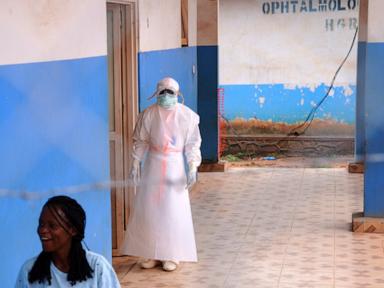
Money cannot buy contact tracing when the local population views medical isolation units as quarantine centers designed to isolate people from their families. When health authorities arrive in armed convoys, local communities do not see rescue. They see an occupying force.
If money solved epidemics, the Eastern Congo would have eliminated viral threats decades ago.
The Wrong Vaccine for the Right Crisis
Public health commentary often treats "Ebola" as a single, uniform monster. Journalists repeat the success story of the rVSV-ZEBOV vaccine, implying that we have solved the biological puzzle.
That assumption is dangerous.
The rVSV-ZEBOV vaccine works against the Zaire strain of the virus. It does practically nothing against the Bundibugyo strain driving the current surge. While global experts spent years celebrating the containment of previous outbreaks, structural preparedness for alternative species lagged behind.
Imagine a situation where an insurance policy covers fire damage, but your building is currently underwater. That is precisely how effective our standardized Ebola playbook is against a Bundibugyo outbreak.
Instead of developing broad-spectrum countermeasures or building persistent local health capacity, international health systems remain reactive. They deploy emergency tools built for the last fight, then express shock when those tools fail in the current fight.
Stop Asking How Much Money Is Needed
People ask: "How much money does the Africa CDC need to clear this outbreak?"
That is the wrong question entirely.
The real question is: Why do top-down international responses consistently fail to establish trust before cases explode?
When health organizations treat contact tracing as a surveillance exercise rather than a community-led partnership, people hide their symptoms. They treat sick family members at home. They conduct private burials. Transmission spikes, not because people lack awareness of the virus, but because they fear the intervention more than the infection.
To break the chain of infection, health authorities must stop relying on external shock troops.
- Decentralize treatment immediately. Shift resources away from giant central isolation facilities and toward neighborhood health posts run by trusted local providers.
- Abandon armed escorts for medical teams. If a health worker requires an armed guard to talk to a family, the response in that village has already failed.
- Prioritize local labor over international deployment. Local workers know who moved where, who attended which funeral, and who is displaying early symptoms long before an international epidemiologist opens a spreadsheet.
The Cost of Repeating History
Critics will argue that criticizing the international aid framework during an active crisis undermines life-saving work.
The opposite is true. Continuing to validate a top-down response model guarantees that the next outbreak will follow the exact same trajectory: delayed recognition, rapid spread, panicky funding appeals, and preventable loss of life.
The 1,000 deaths recorded across DRC and Uganda are not just a tragic consequence of a aggressive pathogen. They are the direct result of a global public health bureaucracy that refuses to adapt its playbook to local reality.
Stop writing blank checks to a broken system. Rebuild the response from the ground up, or prepare to write another headline when the next strain hits.