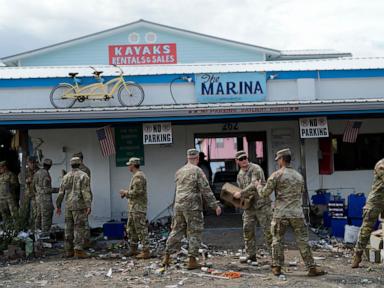
Disaster response capacity depends on administrative velocity. When a catastrophic event materializes, public safety infrastructure faces an immediate friction problem: statutory procurement rules, labor agreements, and bureaucratic authorization chains are built for steady-state operations. A state governor declaring a state of emergency does not merely grant political license for public communication; it activates a pre-engineered legislative override mechanism designed to compress decision cycles from weeks to hours. Understanding this mechanism requires examining the exact friction points it removes, particularly regarding National Guard deployment sequencing and healthcare resource reallocation.
The Administrative Friction of Steady-State Public Administration
Under standard operating conditions, state governments function under rigorous accountability frameworks. Procuring heavy transport equipment, mobilizing specialized medical personnel across jurisdictional lines, and committing state contingency funds require multi-tiered bidding processes, fiscal committee sign-offs, and compliance reviews. These safeguards prevent corruption and budget overruns during normal governance.
When a hurricane, major flood, or seismic event occurs, these exact safeguards transform into administrative bottlenecks.
Normal Operations: Incident -> Bureaucratic Review -> Procurement -> Deployment (Weeks)
Emergency Order:   Incident -> Statutory Override -> Direct Allocation (Hours)
The friction manifests across three distinct operational layers:
- Fiscal Latency: Standard budget line items cannot be shifted across agencies without legislative appropriation adjustments, leaving emergency response units starved of immediate liquidity.
- Personnel Boundaries: State employees, including state-employed medical staff and civil defense workers, are bound by strict contractual job descriptions, geographic jurisdiction limits, and collective bargaining overtime caps.
- Asset Access: Heavy logistics equipment, aviation assets, and specialized communication networks are locked behind municipal or departmental silos, requiring formal inter-agency agreements to share.
An executive emergency declaration systematically suspends these statutory limitations by invoking emergency powers written into state constitutional law or civil defense codes.
The Dual Mandate and Mobilization Mechanics of the National Guard
The National Guard represents the primary kinetic asset available to a state governor during a rapid-onset crisis. However, the operational utility of the Guard is constrained by its dual legal status. Under Title 32 of the United States Code, or state active duty (SAD) status, National Guard units answer exclusively to the state governor.
Without an emergency declaration, deploying the Guard requires navigating cumbersome administrative sign-offs and verifying that statutory triggers for state active duty have been legally met. More importantly, funding streams for state-level activation are limited unless an emergency declaration unlocks state disaster contingency funds or sets the stage for federal cost-sharing under the Stafford Act.
An executive order accelerates National Guard mobilization through three distinct structural adjustments:
First, it broadens the legal scope of the Guard's mission from narrow national defense or routine civil support to direct life-saving, infrastructure clearance, and logistical distribution operations. This legal shielding protects personnel and command structures from liability when operating outside normal civil parameters.
Second, the order authorizes the immediate draw-down of state emergency reserves to cover active duty pay, fuel, transport, and quartering costs before federal reimbursement mechanisms are finalized. Without this liquidity bridge, logistical staging stalls while state treasurers await bureaucratic confirmation.
Third, the declaration establishes a unified command architecture. During a crisis, municipal police departments, county emergency management agencies, and state police often operate on disparate communication frequencies and command chains. A formal emergency order legally subordinates these disparate entities under a centralized state emergency operations center, typically managed by the state adjutant general or emergency management director.
Medical Resource Reallocation and Jurisdictional Waivers
While logistics and security are critical, the most fragile component of disaster response is healthcare continuity. Hospitals and clinical networks operate under strict regulatory compliance regarding bed capacity ratios, staffing credentials, patient-to-nurse ratios, and cross-state licensing.
When a mass casualty event or infrastructure failure compromises a regional healthcare system, normal regulatory compliance becomes a liability.
An emergency executive order alters the medical operational landscape by enacting specific statutory waivers:
- Licensure Reciprocity: Out-of-state medical professionals, retired clinicians, and nursing students in advanced training are legally barred from practicing across state lines or outside their certified scope of practice under normal conditions. An emergency order overrides these licensure boards, establishing immediate reciprocity and temporary credentialing to surge clinical capacity into triage zones.
- Certificate of Need and Bed Capacity Limits: Hospitals are normally restricted by state regulations regarding temporary bed deployment, facility expansions, and the utilization of non-clinical spaces for patient care. Emergency declarations suspend these restrictions, allowing facilities to convert corridors, cafeterias, and auxiliary staging tents into authorized treatment zones.
- Supply Chain Directives: Pharmaceutical allocation, oxygen distribution, and personal protective equipment flows are managed via strict distributor contracts. An emergency order grants the executive branch commandeering authority and priority allocation rights, redirecting critical medical commodities away from elective procedures and toward emergency triage points.
The Economic Cost Function of Delayed Intervention
The quantitative argument for immediate executive intervention lies in the non-linear relationship between response time and disaster recovery costs. Disaster impact follows an accelerated damage curve where unmitigated secondary effects—such as untreated injuries, compromised water systems, and structural looting—compound exponentially over the first 72 hours.
Cost = Base Impact + (Friction Factor x Time Elapsed)
When a governor delays an emergency order due to political hesitation or administrative inertia, the friction factor multiplies total economic and human loss. By clearing statutory hurdles before the disaster peaks, the executive shifts the operational curve from reactive recovery to proactive containment.
The mechanism is not merely symbolic. It is a calculated legislative override that trades long-term bureaucratic oversight for short-term operational velocity, substituting slow compliance reviews with decisive resource allocation. Recognizing this dynamic reframes executive disaster orders from political theater into essential administrative shock-absorbers designed to keep society functional under extreme systemic stress.